


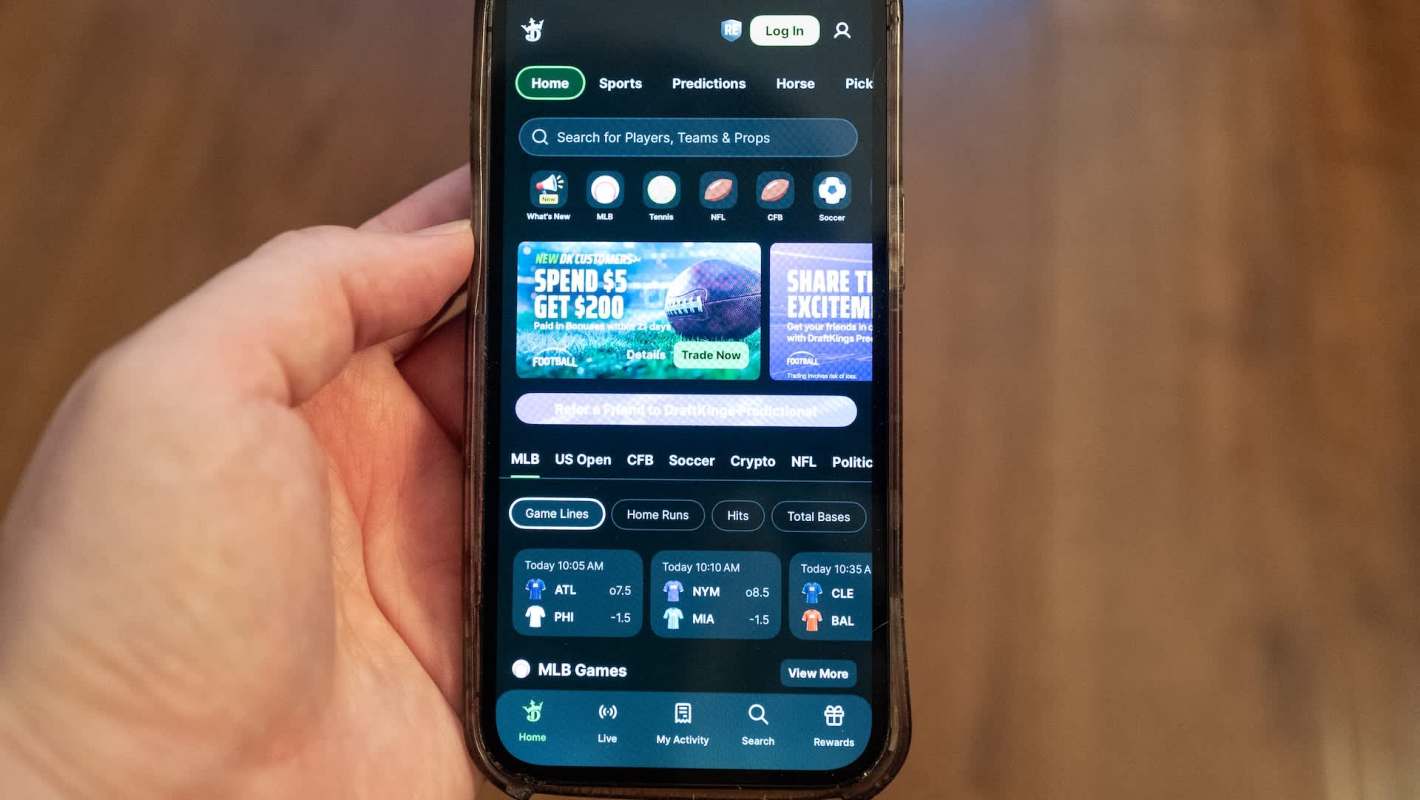
A New York Times investigation is raising new concerns about how artificial intelligence is used in online gambling after former DraftKings employees said the company used machine-learning models to identify customers most likely to respond to promotions by betting more — and losing more.
Here's what to know
According to Jayden Butts, a former DraftKings data analyst, one 2023 assignment involved evaluating a model built to estimate how much casino users might lose after getting a promotion. DraftKings spent hundreds of millions of dollars each year on offers like free bets, profit boosts, and deposit bonuses, and tried to determine which promotions were most effective.
Butts said that goal disturbed him because "the best investment would be a problem gambler."
He was not the only former employee to raise concerns. Six people who worked on promotional targeting said that DraftKings continued improving those methods, while former staffers involved in responsible-gambling efforts said projects aimed at predicting addiction risk were delayed or shut down.
In response, DraftKings said its marketing does not improperly target users and maintained that promotions are directed at "customers who demonstrate sustained, engaged use of our platform, not toward customers based on their losses."
Lori Kalani, the company's chief responsible gaming officer, said DraftKings tracks "potentially risky behaviors." She also said the company chose not to use predictive risk-scoring technology because it had not been shown to be helpful.
TCD Picks » Quince Spotlight
💡These best-sellers from Quince deliver affordable, sustainable luxury for all




More background
Since the Supreme Court's 2018 decision opened the door for states to legalize online sports betting, companies such as DraftKings and FanDuel have helped turn smartphones into always-available gambling platforms. DraftKings says its customer base has grown from five million in 2022 to 11 million.
DraftKings brought in about $8.7 billion in gross revenue in 2025 and gave out roughly $3 billion in promotions, citing Citizens Bank research. Researchers and public health experts have long regarded gambling as addictive, and the paper pointed to signs of mounting strain, including sports-betting-related calls to Ohio's problem gambling help line rising more than fourfold after legalization in 2023.
Former DraftKings data scientist Jacob Shulkin said the offers work in part because of how they feel to users.
"I feel I'm getting free money," he said, "but really it's dragging me back in."
What's being done?
DraftKings says it has a range of safeguards in place, including cool-off periods, self-exclusion lists, help-line information, and a nationwide monitoring program that tracks more than two dozen indicators of potentially risky behavior. If a customer triggers those markers, the company may send responsible-gambling messages, educational videos, questionnaires, or, in some cases, shut the account.
Kalani said that DraftKings does not send promotions to users who have already been flagged or to people who have taken themselves off the platform. The company also said it uses large-language models to review customer messages for signs of distress.
Former employees, however, said that those measures are mostly reactive. A separate internal project led by former data scientist Nestor Hernandez was intended to use machine learning to identify trouble earlier, potentially days or weeks before a customer would otherwise need intervention.
"The idea of this model is to be more proactive instead of being reactive. You will basically predict that a user will be in trouble, let's say, a few days or a few weeks in advance. And you can act accordingly," said Hernandez.
Other gambling companies, including FanDuel and Fanatics, have said they use third-party risk-scoring tools.
"It is as predatory as it sounds. If you lose more, we give you more, so you keep playing more," said a former DraftKings analyst.
Where can I learn more?
The DraftKings report also points to bigger questions about an industry shaped by aggressive promotion, weak guardrails, and growing scrutiny. These articles cover nonstop betting ads aimed at young men, a sports-betting fraud case, criticism of another gambling company, and a separate fight over AI costs.
• Across social media, nonstop gambling ads showed how young men became prime targets.
• In federal court, a sports betting influencer admitted paying a player to alter performance.
• At Penn Entertainment, shareholder criticism of executives deepened questions about conduct across gambling companies.
• In British Columbia, fears over disproportionate energy consumption sparked unusual government precautions on AI.

Get TCD's free newsletters for easy tips, smart advice, and a chance to earn $5,000 toward home upgrades. To see more stories like this one, change your Google preferences here.






