


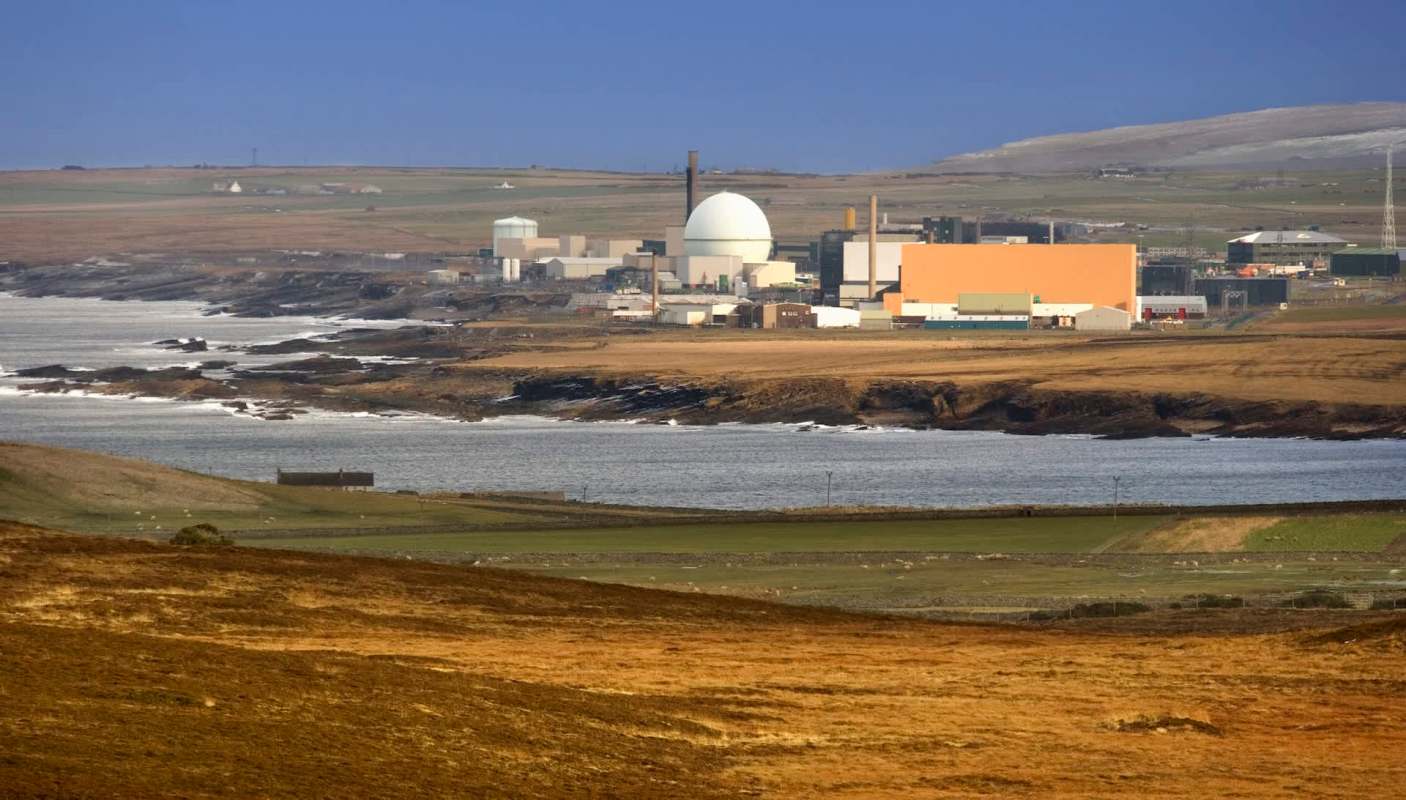
A government investigation got underway after radioactive water leaked from Scotland's Dounreay nuclear site.
What's happening?
Nuclear Restoration Services is a wholly owned subsidiary of the Nuclear Decommissioning Authority, operating on behalf of the United Kingdom's government. The company has been overseeing the decommissioning of the north Caithness complex of Dounreay, a former nuclear research center that is being dismantled after decades of operation. Announced in 2008, the BBC has noted that the decommissioning effort is projected to be fully complete by 2333.
In June 2024, NRS alerted the Scottish Environment Protection Agency (SEPA) to "a potential leak of radioactively contaminated water from a carbon bed filter on the Dounreay site," an agency spokesperson described, according to The National, a Scottish paper. SEPA later confirmed a "small leak" that released different radioactive substances, including Caesium-137 and alpha-emitting radionuclides.
While NRS reported no increase in groundwater radioactivity downstream of the event, SEPA found the company had breached regulations and ordered a full review of its monitoring systems.
The Dounreay site, opened about 70 years ago as the United Kingdom's hub for fast reactor research, has been undergoing decommissioning since the 1990s. The Office for Nuclear Regulation had previously raised safety concerns about corrosion and waste management issues there.
Why is the leak concerning?
Any unintentional release of radioactive material, no matter how big or small, can raise long-term environmental and public health concerns.
TCD Picks » Quince Spotlight
💡These best-sellers from Quince deliver affordable, sustainable luxury for all




The Scottish Greens party called the incident "deeply concerning" in a statement to The National. Ariane Burgess, a member of the Scottish Parliament and the Greens, said, "It is a telling sign that we must move away from unstable, harmful, wasteful energy sources like nuclear immediately."
Radioactive leaks can threaten soil and water systems, making them unsafe for people, animals, and plants. Exposure to radioactive materials over time can increase the risk of cancers and other serious health problems.
Such contamination can also take decades to clean up, with the potential for long-term scarring of the environment and bruising of public trust in what could be a renewable alternative to dirty fossil fuels more richly integrated into the energy mix.
While some world leaders, including U.S. President Donald Trump, push for unprecedented growth in the nuclear sector to expand capacity able to sustain energy-hungry operations such as artificial intelligence, nuclear catastrophes loom large in many minds. A not-so-distant past lack of transparent communications and accountable clean-up efforts has seemed central to public wariness in the energy source.
|
Would you feel safe living close to a nuclear power plant? Click your choice to see results and speak your mind. |
 Absolutely ✅
 What's being done?
NRS claims it had already taken action to stop the release and estimated that the amount of leaked water was "a fraction" of its normally authorized discharges.
Still, SEPA has issued a Regulatory Notice requiring NRS to strengthen groundwater monitoring and fully describe the extent of the contamination.
Separately, the BBC reported in late October that NRS identified a particle of waste originating from the Dounreay facility to be the "most radioactive" detected in three years. It was located along a shoreline that NRS says is not accessed by the public and is regularly monitored, perhaps underscoring the importance of effective, continuous, and resilient monitoring systems.

Join our free newsletter for good news and useful tips, and don't miss this cool list of easy ways to help yourself while helping the planet.






