


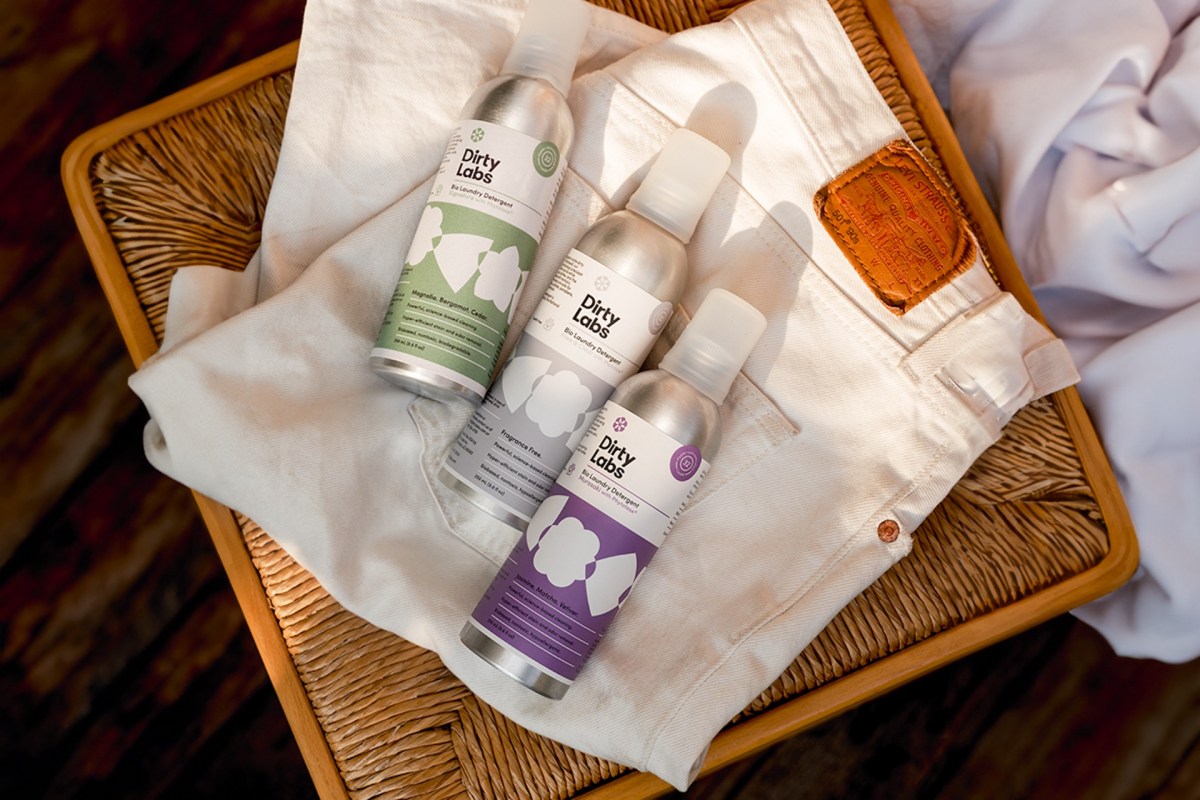
For years, I've been testing dozens of sustainable cleaning products in my home in search of a healthier option for my family that actually works on tough kid stains. Like many people, I've had bad experiences with "green" products that are expensive and just don't work.
But then I discovered Dirty Labs — a company that has figured out how to create laundry and dishwasher detergents, and even toilet bowl cleaners, that are highly effective, safe, and don't rely on harmful chemicals and plastic packaging. I've been a loyal customer ever since.
And I'm not the only one singing their praises: Wirecutter (which independently tests consumer products) ranked Dirty Labs' laundry detergent as one of its top picks, even compared to the biggest detergent brands, and its top choice for the "sustainability conscious."
"This hyper-concentrated liquid detergent is an effective stain remover, with cleaning power that rivals our top picks," the reviewers wrote, comparing it to heavyweight brands like Tide and Persil. "It's free from many potential irritants and comes in a recyclable aluminum bottle."
I wanted to learn more about the science and story behind the brand, so I chatted with Dirty Labs' cofounder and chief scientist, Dr. Pete He (who they call "Dr. Pete"), and Chief Marketing Officer Soyoung Park. Here's what they told The Cool Down about making a detergent "upside down" — which explains why their products are a favorite in my house.
Creating a detergent from scratch, without harmful chemicals
"We actually tried to solve the problem that many 'green' products are not really cleaning well," Dr. Pete said. "We found that many consumers are looking for a good, sustainable, safe product, but many of them were not repeating the purchase because of the performance."
Dr. Pete said the reason many of those "green" cleaners don't work as well is because most of them are formulated in the same way as conventional cleaners but with less-effective plant-based ingredients instead of synthetic cleaning agents.
So the Dirty Labs team challenged themselves to solve the problem by completely reimagining their detergent formulation, using new technologies and innovations in green chemistry.
Their goal: to create a more effective product with stricter safety and sustainability criteria. In other words, "It has to work well, and it has to be safe. It's a hard road to take — solving those unmet needs with safety and environmental sustainability," Dr. Pete explained. "We had to really go hard on innovation to find something nobody has done before."
That included eliminating petro-based chemicals (often included in cleaning supplies even though they're made from fossil fuels like oil and gas) and harsh synthetics used in traditional detergents. It also meant creating a product with — get ready for a lot of insider-baseball terms — no Prop 65 chemicals of concern, 1,4-dioxane, SLS, SLES, or parabens. (The Environmental Protection Agency has identified 1,4-dioxane as "likely to be carcinogenic to humans" and potentially harmful to the environment via water.)
|
Are you concerned about chemicals in cleaning products? Click your choice to see results and speak your mind. |
 Absolutely 💯
 "When they are released into soil or water, they're not going to go away — they're going to accumulate over time," Dr. Pete said of the use of 1,4-dioxane and other "forever chemicals." In fact, 69% of streams in the U.S. contain traces of detergents and disinfectants, according to the U.S. Geological Society.
"We say, if there's an alternative way of not using them, why don't we just get rid of them?" Dr. Pete said. "We take this hard approach to demonstrate to the industry that it's not really worth it to have those chemicals in our products, risking unnecessarily something we don't quite know how to fix in the environment or our health."
Thinking outside the box and 'upside down'
Calling itself a "cleaning innovation lab" rather than a product company, Dirty Labs created its proprietary detergent from scratch — rooted in the latest breakthroughs in green chemistry and biobased technologies rather than white labeling an existing formulation and adding a label or fragrance.
"We created our own authentic formulation which is so different from the currently available laundry detergents — we made it upside down," Dr. Pete said.
TCD Picks » Dirty Labs
💡Dirty Labs makes it easy and affordable to clean your stuff without harsh chemicals

Dr. Pete drew upon his background working at Unilever as one of the lead scientists working on the formulation of Dove soap, and later on Dial soap and clean beauty brand Tasha. He was also motivated by his personal experience living with his young family next to a superfund site in New Jersey, where he became concerned about chemicals entering the soil and water and unexplained illnesses experienced by those living near the site.
"What separates Pete is that he's really a creative chemist," Dirty Labs Chief Marketing Officer Soyoung Park told us. "A lot of chemists are taught how to formulate certain things, and that is how you always formulate something. But for us to create Dirty Labs, Pete was really integral in thinking outside of the box, in order to meet all of those strict criteria, looking at other ingredients from different areas such as food or beauty and not necessarily in the cleaning space.
"It really started from a thesis point that Pete had, that the technology in green chemistry has gotten so good, mostly due to innovative bioselection, biosynthesis, and [gene editing technology] CRISPR technologies to find and create biobased materials with enhanced capabilities, and to compete in efficacy with conventionally petro-based chemicals," Park added.
"The breakthrough innovation we had with our enzyme-driven formulation," Dr. Pete said, "really is about technology inspired by nature." Dirty Labs has a trademark tied to its proprietary Phytolase technology, which uses enzymes as stain fighters to remove them and related smells without damaging the fabrics.
The technology was developed through bioselection and biosynthesis, and uses non-GMO enzymes that were originally discovered in nature. For example, the key ingredient used in Dirty Labs' Bio Enzyme Laundry Booster was discovered in seaweed off the coast of Ireland.
And there's no noticeable difference in performance, Dr. Pete said: "We are either in parity or better, I would say, than the leading brands," he said, while also being an EWG and EPA Safer Choice certified brand.
But how does the team prove their "safer" detergent performs as well if not better than other detergents? In addition to independent testing from Wirecutter and others, they routinely put their products through lab tests that put prepared stains through the typical washing regime and then evaluate them with a spectrometer to see how much stain is still left on the surface. Plus, the team also conducts in-home testing with real people.
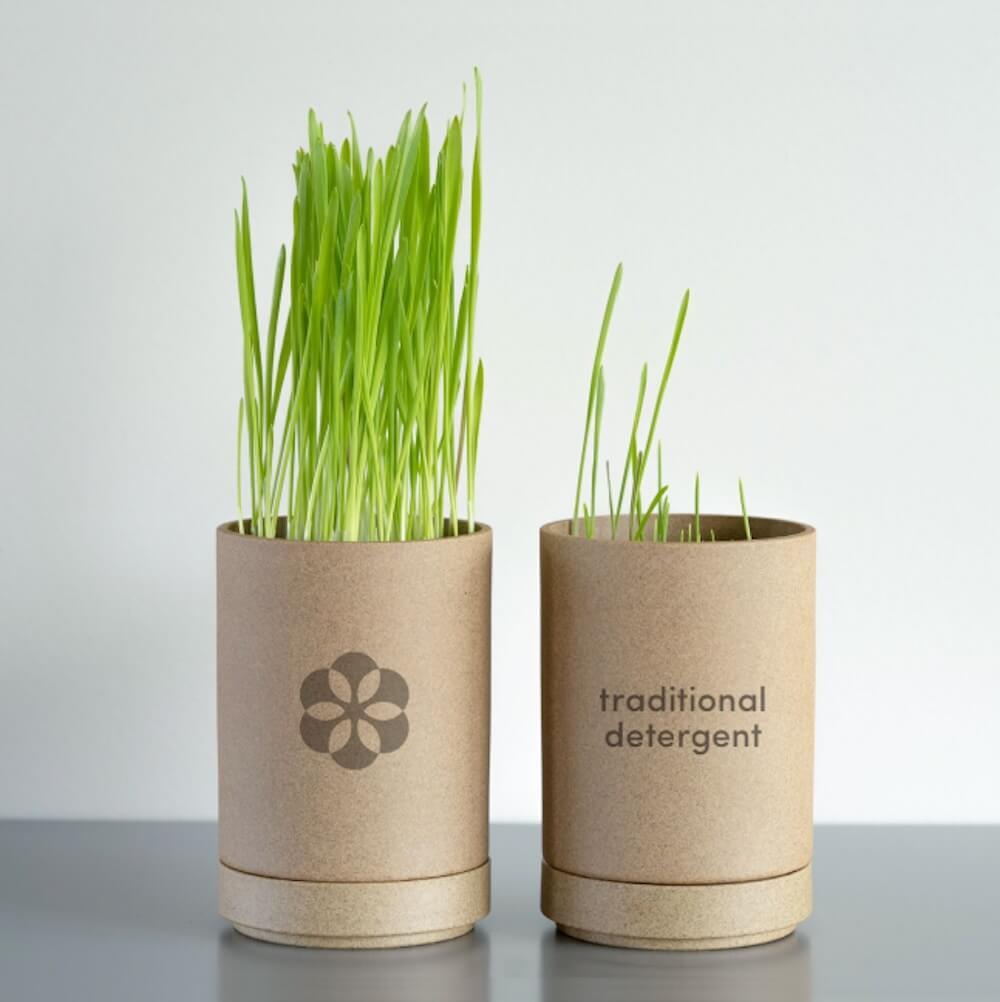
And to show that their bio-based, biodegradable products don't end up causing problems in streams and wastewater, Dirty Labs watered the same cat grass plant with "gray" (discard) water from their detergent and from a leading free and clear conventional detergent for 10 days — you can visually see the difference.
Reducing plastic down to 1%
Another big goal for the founders of Dirty Labs was to dramatically reduce the amount of plastic in their product and packaging, with the goal of decreasing waste and exposure to microplastics, which are showing up in increasing amounts in the human body, and in our wastewater.
"We all know the dilemma and the crisis," Dr. Pete said. "Most of the plastics don't get recycled, no matter if you put it in the recycle bin or not. So we try to reduce single-use plastic as much as possible … down to 1% or below through the whole product life cycle."
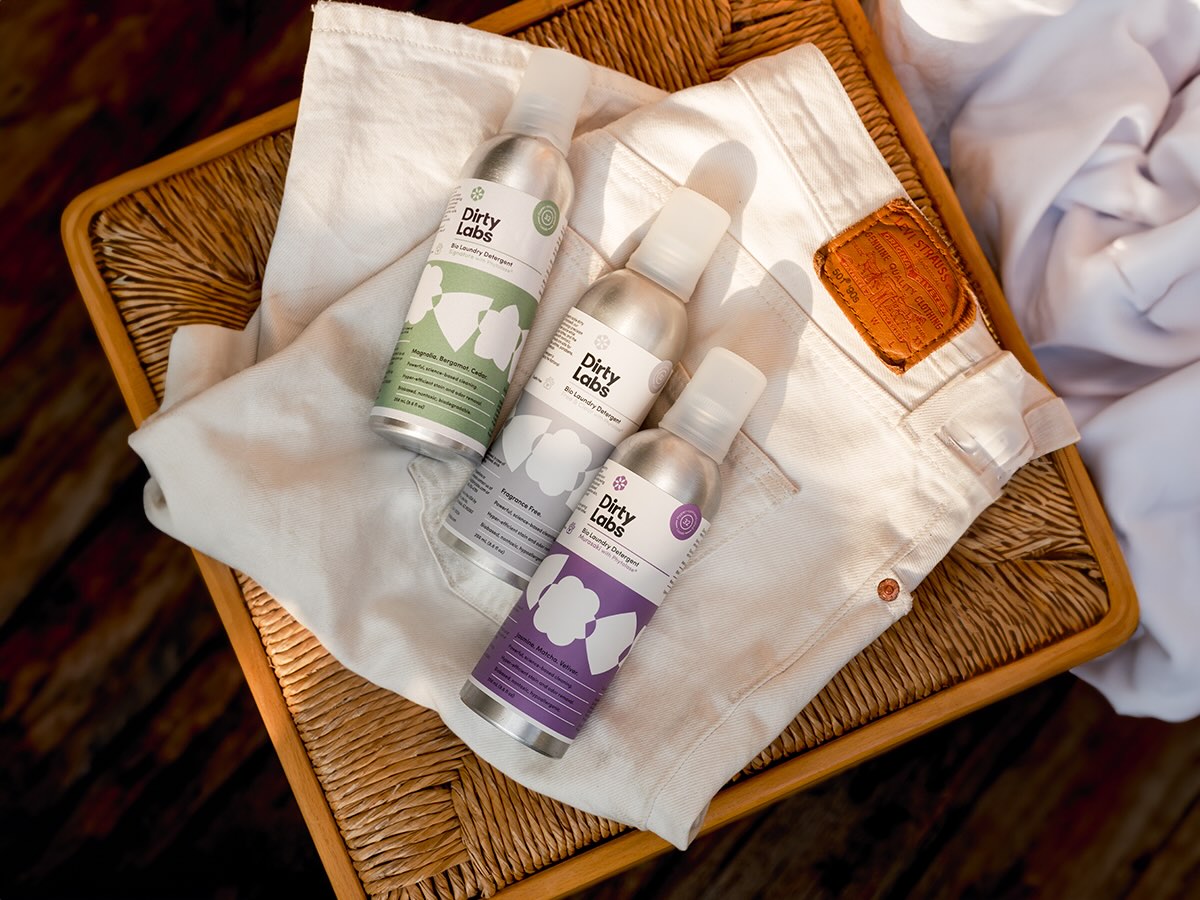
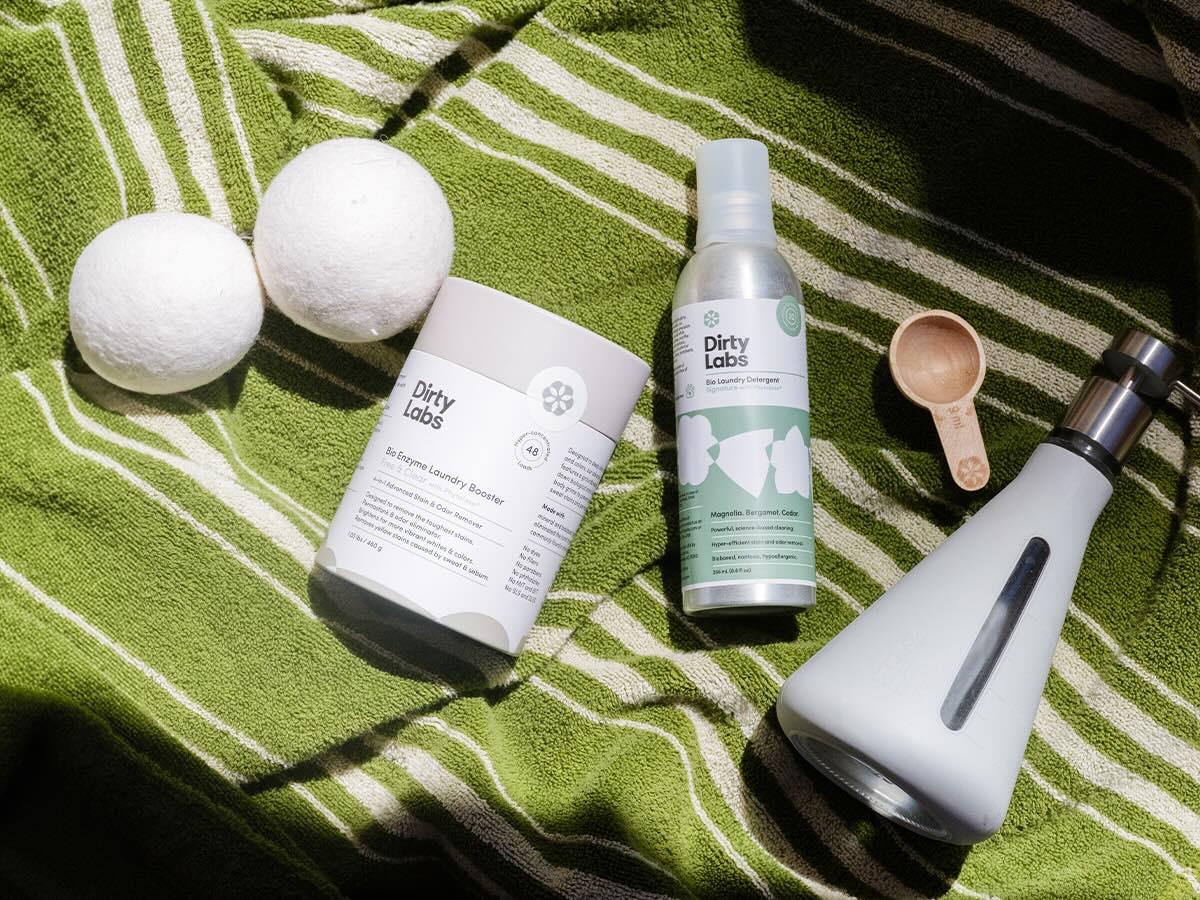
Dirty Labs' detergent comes in recyclable aluminum bottles (I have a glass beaker with a pump nozzle that I refill with their recyclable aluminum bottles), and its dishwasher detergent comes in recyclable cardboard containers.
And while many brands package their detergents in plastic or pods, typically made with polyvinyl alcohol (aka PVA), Dr. Pete said that's not their approach. "The company [Dirty Labs] is not really marketing-driven in the way that we don't say a lot of those cheesy claims — kind of greenwashing," he said.
When it comes to those PVA-based laundry pods that claim they are "plastic-free," he said, "They argue those plastic wraps for the pod are not plastic — that's kind of a joke, right?"
While many do agree, that question draws some debate within the cleaning industry and wider scientific community, which Consumer Reports found doesn't have a firm consensus on PVA. An EPA spokesperson once told a Seattle news outlet that it's "a difficult question to answer" whether PVA should count as a plastic, acknowledging its synthetic polymer status, but the EPA does include PVA on its Safer Chemical Ingredients List, saying that there is "no evidence of toxicity or bioaccumulation potential for the soluble form of PVA used in detergent pods and sheets." It's also worth noting that the Environmental Working Group lists PVA with a rating in the "green" of 1 on a scale of 1 to 10 on its hazard score, though it cites "limited" data.
According to data provided by Dirty Labs, an internal life-cycle assessment of the company's detergent versus typical laundry detergent showed 66% reduced chemical waste, 87% reduced wastewater, and over 99% reduced plastic waste.
Just as important as changing consumer behavior and expectations around packaging was, according to Dr. Pete, proving to the industry that a dramatic reduction in plastic is possible. "If we all do this together, with the industry, we will be able to dramatically reduce the level of microplastics in the soil and water," Dr. Pete said. "We try to demonstrate that it's commercially possible and feasible."
How to level up your cleaning routine with Dirty Labs
Dirty Labs' detergents come in an 11x hyper-concentrated formula, meaning you don't need to use a lot — just half of one of their small silicone measuring cups (8 to 12 milliliters) is sufficient in my household for a regular load of laundry.
For routine laundry use, Dr. Pete recommends washing in cold water on the quickest, easiest cycle, and using a minimal amount of detergent, which can help the environment and also save you money. (Washing in cold water alone can save you $150 a year.)
That said, if your kids have very dirty clothes after sports or some other activity (or someone in your house is sick), Dr. Pete recommended adding the Dirty Labs Bio Enzyme Laundry Booster — or to wash on hot if you need to disinfect something. The company also pointed out that its Bio Laundry detergents have built-in softening and brightening technology and can be used to pre-treat stains, so they can replace multiple products like stain sticks and simplify your routine.
You can opt for scented or unscented products too. Personally, I love the brand's "Signature" clean scent in its laundry detergent, but as someone who can't handle clean dishes having a fragrance, I opt for unscented dishwasher detergent. Ultimately, it's personal preference.
Whole Foods is the brand's main national retail partner, but most of its business is actually done on Amazon and directly on the Dirty Labs website, where the team says customers get the best deals. You can buy products individually or get more discounts by subscribing to auto-ship your products — you'll get prompted to reorder when you're running low.
I'm a subscriber, and when it's time to refill, I get a friendly text or email asking me if I'm ready to re-up or if I want to alter the order at all. If I'm not ready, I can simply ask them to delay my shipment or add another product.
What's next for the 'cleaning innovation lab'?
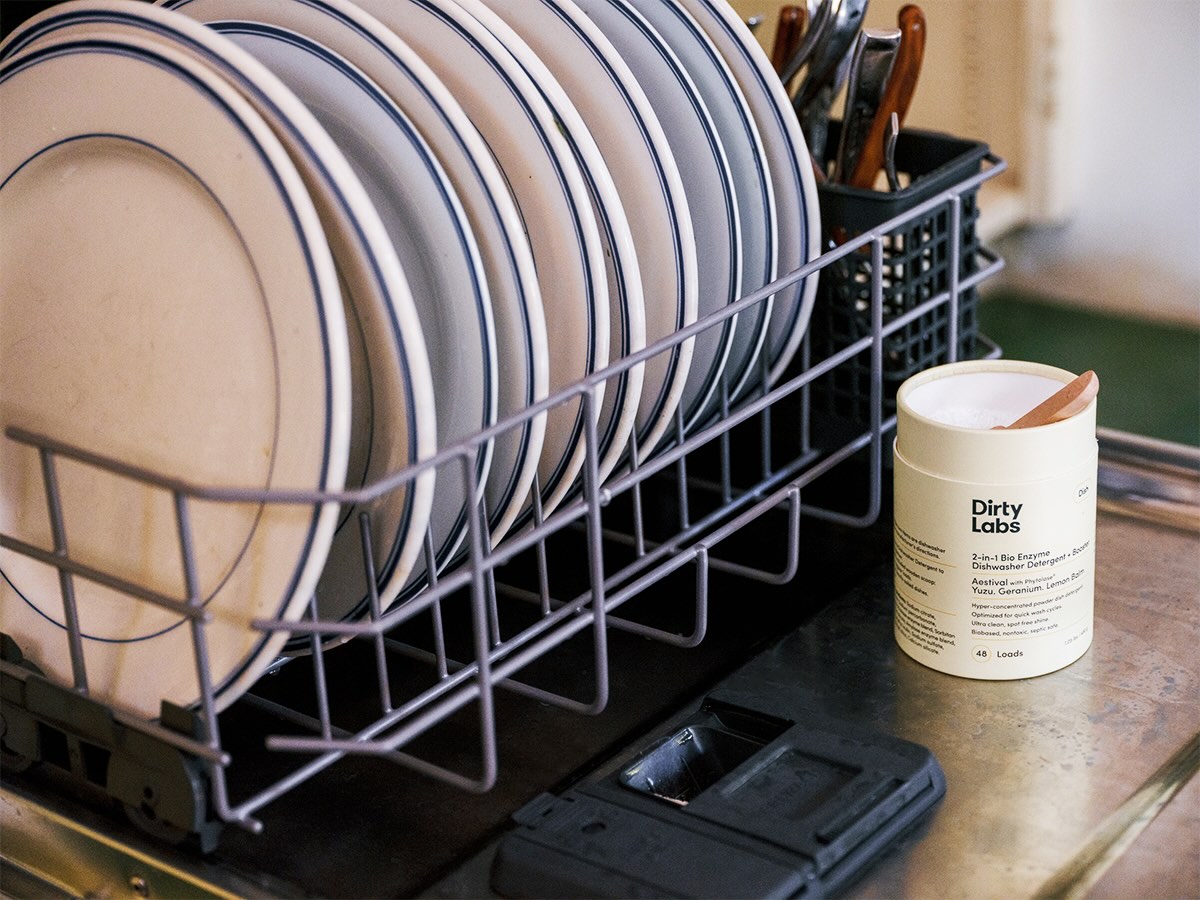
Dirty Labs' product line is intentionally streamlined. After starting with laundry detergent products (including detergent, a booster, and dryer balls), the team expanded to dish products — first a powdered dishwasher detergent and recently a concentrated dish soap that will be available with refills later this fall.
The team's latest launch is a probiotic-based toilet bowl cleaner that uses their proprietary Phytolase enzyme technology in combination with probiotic technology instead of the harsher cleaning agents and ingredients found in conventional toilet bowl cleaners, which can carry significant environmental and safety concerns.
"Every time we look in a category, the first question is what is the biggest unmet consumer need, and how can we be differentiated by solving the problem," Dr. Pete said. "The solution has to be good, safe, and sustainable to the environment."
And just as important as creating a great product for consumers is collaborating with industry peers and showcasing that their cleaner product formulations and reduced packaging can really work. A lot of that stems from Dr. Pete's work helping start the Sustainability Consortium over 15 years ago, which brings together competitive companies in the consumer goods category to create common language and standards around sustainability.
"I still believe that that is the right approach — you bring the companies and the right people together, and some of them are competitors," he said. "When we talk about those things, we also compete at the same time, but that is the beauty of it — through collaboration and competition, eventually something positive may come up."
What's next for Dirty Labs? Dr. Pete said they're open to all possibilities: "We try to make a difference by demonstrating and delivering the benefit to our customers, and also try to influence the industry.
"We're trying to be the change agent and demonstrate the commercial feasibility to the industry that this is doable," he continued. "We know doing it alone may not be enough, but we want to be the company leading the trend."

Join our free newsletter for good news and useful tips, and don't miss this cool list of easy ways to help yourself while helping the planet.






