


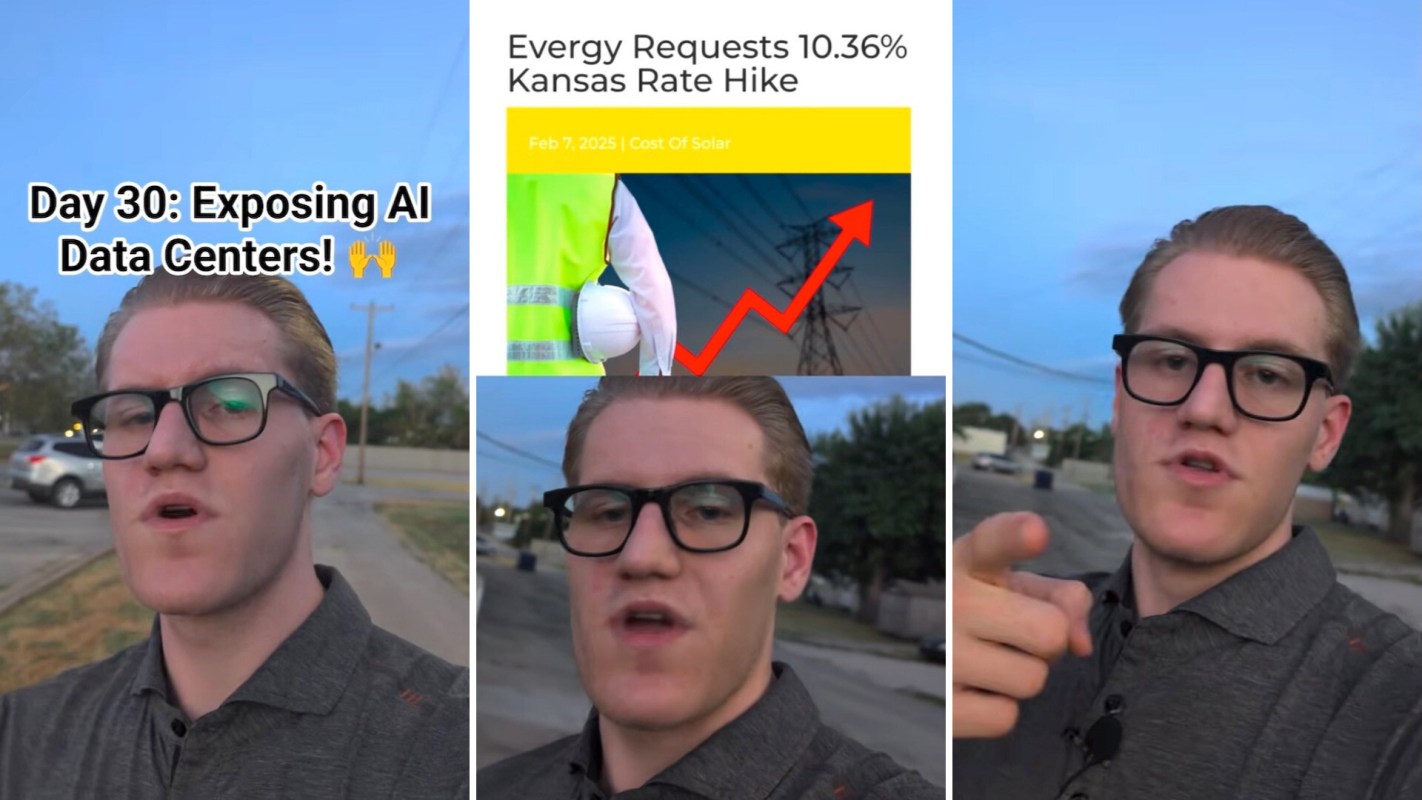
A warning out of Kansas is drawing attention to one of the biggest questions surrounding the AI boom: Who pays when energy-hungry data centers move in?
In Kansas and Missouri, that answer could land on ordinary utility customers if a surge in electricity demand leads to more fossil fuel development and higher monthly bills.
Here's what to know
Evergy disclosures connect five data center projects in Kansas and Missouri to a major power-system overhaul. In a YouTube video, Parker Thompson (@Parker-Thompson) said the utility has agreed to provide 2.5 gigawatts of continuous electricity, a commitment they argued would require a $5.3 billion grid buildout, nearly 4 gigawatts of new natural gas capacity, and slower coal plant retirements.
To show how great that demand is, Thompson compared 2.5 gigawatts to the electricity use of more than 2 million homes and said it is about 60 times Coffeyville's peak electric load.
He argued that, under utility cost-recovery rules, monopoly providers can add large construction expenses to their rate base, which they said could translate into 10% increases for residential customers.
The video also cited Kansas Senate Bill 98, which Thompson described as granting major tech developments 20-year sales tax exemptions, even as residents still end up paying for grid upgrades and facing pollution linked to additional gas generation and extended coal use.
TCD Picks » Quince Spotlight
💡These best-sellers from Quince deliver affordable, sustainable luxury for all




More background
This kind of conflict is increasingly trailing AI development across the country. Data centers are essential for training and operating AI systems, and they require enormous amounts of around-the-clock electricity to power servers, cooling systems, and networking equipment.
AI can help utilities forecast demand, improve grid efficiency, and better integrate renewable energy. At the same time, the technology raises serious concerns, including heavy electricity and water use, security and misuse risks, and unintended consequences such as higher household energy bills when infrastructure costs are passed on to ratepayers.
If utilities respond to surging data center demand by building more gas plants and keeping coal units online longer, communities could face dirtier air, slower progress toward cleaner energy, and greater strain on household budgets.
Thompson summed up that concern directly: "Instead of transitioning to clean energy, big tech's power hunger is locking Kansas into decades of fossil fuels and smoke stack pollution."
What can be done?
Thompson's proposed response is a 12-month legal moratorium in Coffeyville before additional projects advance. In that view, a yearlong pause would give local officials time to review possible effects on the grid, air quality, and municipal utility rates before outside developers make long-term commitments.
Such a pause would not necessarily stop every project for good, but it could give residents and local officials more leverage to demand public scrutiny, clearer cost-sharing rules, and stronger protections for households.
Rate cases, zoning disputes, tax incentive decisions, and utility infrastructure filings can shape energy bills for years to come.
One commenter wrote, "Check the NYT today. Fight back!"
As Thompson put it: "And who pays for that $5.3 billion buildout? You do."

Get TCD's free newsletters for easy tips, smart advice, and a chance to earn $5,000 toward home upgrades. To see more stories like this one, change your Google preferences here.






