


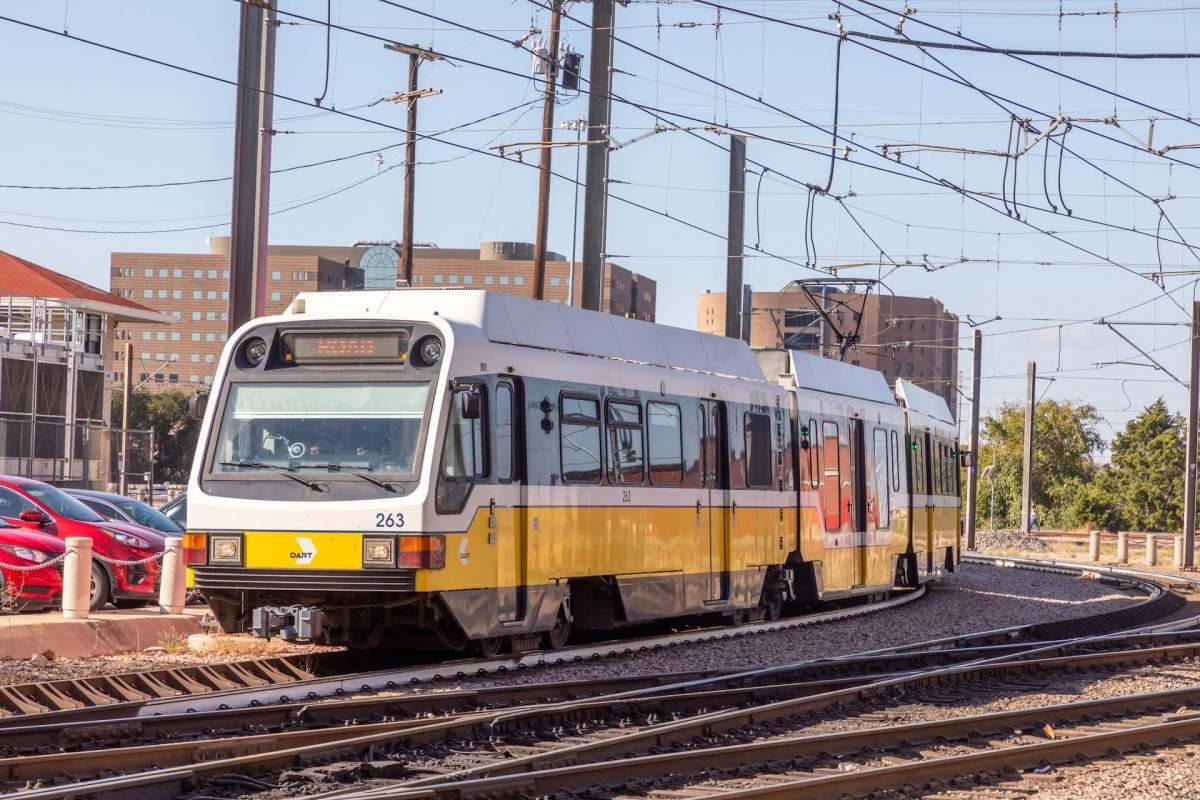
A "suburban mutiny" is percolating outside of Dallas, according to The Texas Tribune, with potentially life-altering implications for residents who rely on public transit.
What's happening?
When considering public transit in major American cities, New York City's subways, Chicago's "L," and Boston's "T" typically come to mind.
Dallas Area Rapid Transit, or DART, may not have the same name recognition as systems in other big cities, but it ferried an average of 220,000 passengers per day in 2024, with yearly ridership estimated at around 55 million.
Historically, car-centric suburbs have shown disinterest in or outright hostility toward public transit, and in the Dallas suburbs, residents asserted that they benefit little from DART.
"We're paying an extraordinary amount for the service that we're getting back," Plano Mayor John Muns told the Tribune. The outlet cited "years of tensions" that boiled over.
Dallas' DART is dynamic, with light rail, buses, microtransit options, and a short streetcar route, funded by a "1-cent sales tax" in 13 member cities — four of which are threatening to withdraw from the system, taking their tax revenue with them.
Those suburbs — Plano, Irving, Farmers Branch, and Highland Park — are considering a vote in May to formally withdraw from DART, effectively stranding residents who lack access to a car.
Why is this concerning?
On the surface, the prospect of a handful of jurisdictions exiting the DART service area doesn't seem as catastrophic as a total shutdown, but that's not the case for nondrivers like hairstylist Guqueena Baker.
Baker moved to Dallas from New York and doesn't drive, relying on DART to get to her salon. She said that a major service change would require her to find a new job.
"There are people who travel to do the job that you don't want to do. … You don't want to wake up and have to do your hair every day. I have to get to work," Baker explained to the Tribune.
TCD Picks » Quince Spotlight
💡These best-sellers from Quince deliver affordable, sustainable luxury for all




|
How would you describe the transportation infrastructure where you live? Click your choice to see results and speak your mind. |
 Great 🙌
 As the outlet noted, many residents either can't drive or can't afford to have a car, and Urban Institute transportation expert Yonah Freemark told the Tribune that shrinking DART effectively disenfranchised a share of the population.
"People will have no option other than to drive. When you put those things together, it means you're creating a region that is inaccessible to a large number of people," Freemark said.
The Tribune noted that the May elections were ill-timed, particularly with a flood of tourism expected in June for the FIFA World Cup in Dallas.
In addition to pulling the rug out from under nondrivers like Baker, a reduction in public transit in any region means more cars on the road and more planet-warming carbon pollution.
What's being done about it?
According to the Tribune, it remains possible that "the decision to leave DART never makes it to voters," as Plano and Irving are in negotiations with the agency.
North Texans who support and use public transit can contact lawmakers to express support for DART service.

Get TCD's free newsletters for easy tips to save more, waste less, and make smarter choices — and earn up to $5,000 toward clean upgrades in TCD's exclusive Rewards Club.
Cool Picks





