


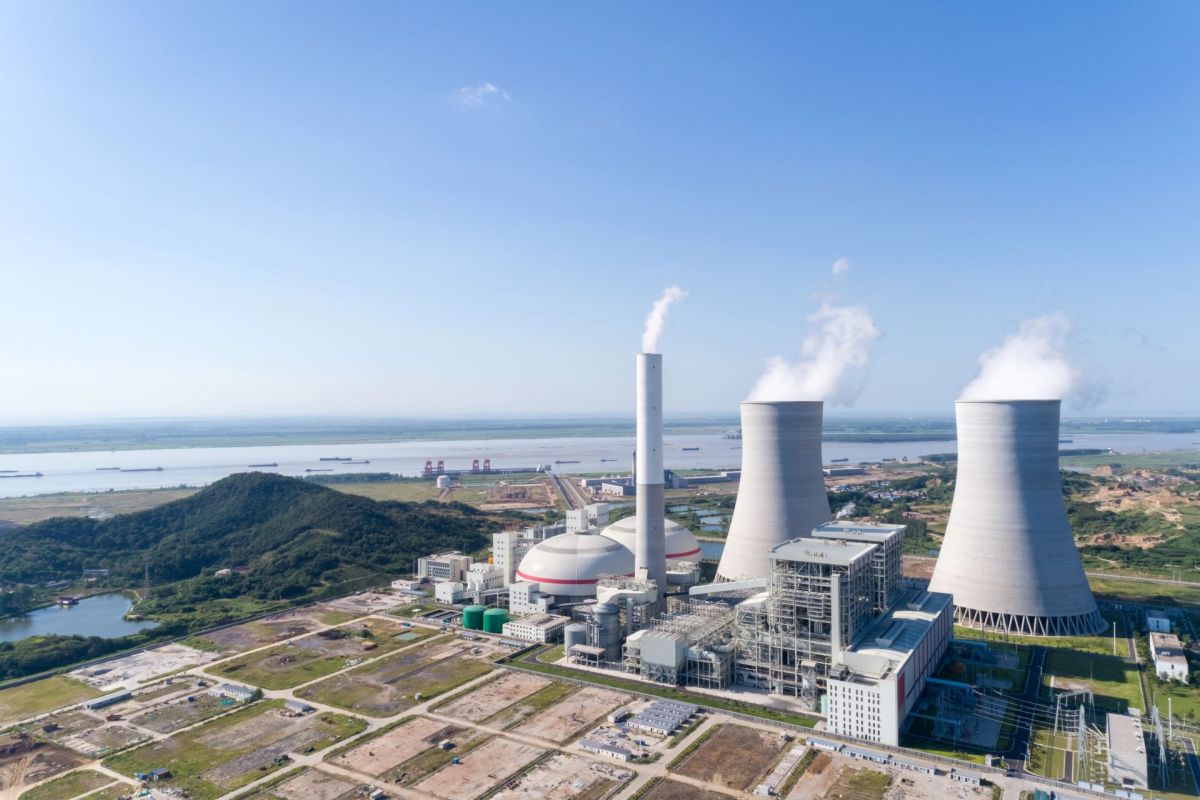
Two of the world's top three air polluters have cut back on coal.
The Guardian reported that China and India's coal power generation fell simultaneously last year for the first time since the 1970s. The countries sandwich the United States, with China as the leader, on Climate Watch's top air polluters list.
The progress is huge news, because burning coal generates air pollution that harms human health at every stage of life. Smog increases the risk for strokes, cancer, and heart attacks, as part of a long list of health concerns cited by the World Health Organization.
Meanwhile, NASA's experts have linked air pollution to increased risks of extreme weather, which has already led to rising insurance premiums and negatively impacted livelihoods around the world.
"The drop in coal power and record increase in clean energy in China and India marks a historic moment," analysts wrote in the Centre for Research on Energy and Clean Air report, which was the basis for The Guardian's story.
In the U.S., President Donald Trump's administration has reversed course on years of policies designed to phase out coal production. The changes are intended to help the country achieve "energy dominance," according to the Department of Energy.
But solar and wind are the cheapest, fastest, and among the cleanest power sources to develop, New York financial advisory firm Lazard reported in 2025.
Wider adoption can help to lower electricity bills, as well. In the U.S., rates are rising faster than inflation as electricity demand continues to spike.
"Utility-scale solar and onshore wind remain the most cost-effective forms of new-build energy generation" without tax subsidies, per Lazard's findings.
Solar is unique, because panels can be used at home — limiting or even eliminating utility bills — to provide true electricity independence.
TCD Picks » Quince Spotlight
💡These best-sellers from Quince deliver affordable, sustainable luxury for all




|
What's the most you'd pay per month to put solar panels on your roof if there was no down payment?
Click your choice to see results and speak your mind. |
 $200 or more 💰
 Overall, cleaner energy investment has picked up in all three countries, helping to fill voids left by coal, gas, and oil.
China invested $625 billion in 2024, roughly doubling in a decade, according to the International Energy Agency. India continues to diversify its generation mix with renewable and nuclear spending.
The World Resources Institute broke down the investment by type. The U.S. and India's renewable spending has increased significantly since 2015. For America, it jumped from $57 billion to an estimated $106 billion last year. In India, the growth went from $13 billion to $37 billion.
While progress in China and India is noteworthy, the two countries remain heavy polluters. Each one continues to invest tens to hundreds of billions of dollars in oil, coal, and gas, per WRI's chart.
In the U.S., the nonrenewable industry is supported by robust spending from thousands of lobbyists. That's why staying informed about government policies can help you make smarter decisions when you invest and vote, aiding efforts to secure cleaner, cheaper energy.
In the meantime, China and India's progress could have global benefits if it's sustained, according to analysts cited by The Guardian.
"Together, the countries drove more than 90% of the increase in global carbon emissions between 2015 and 2024, meaning a permanent reduction in coal use could bring a peak in the world's coal consumption and global emissions," per the report.

Get TCD's free newsletters for easy tips to save more, waste less, and make smarter choices — and earn up to $5,000 toward clean upgrades in TCD's exclusive Rewards Club.
Cool Picks




