


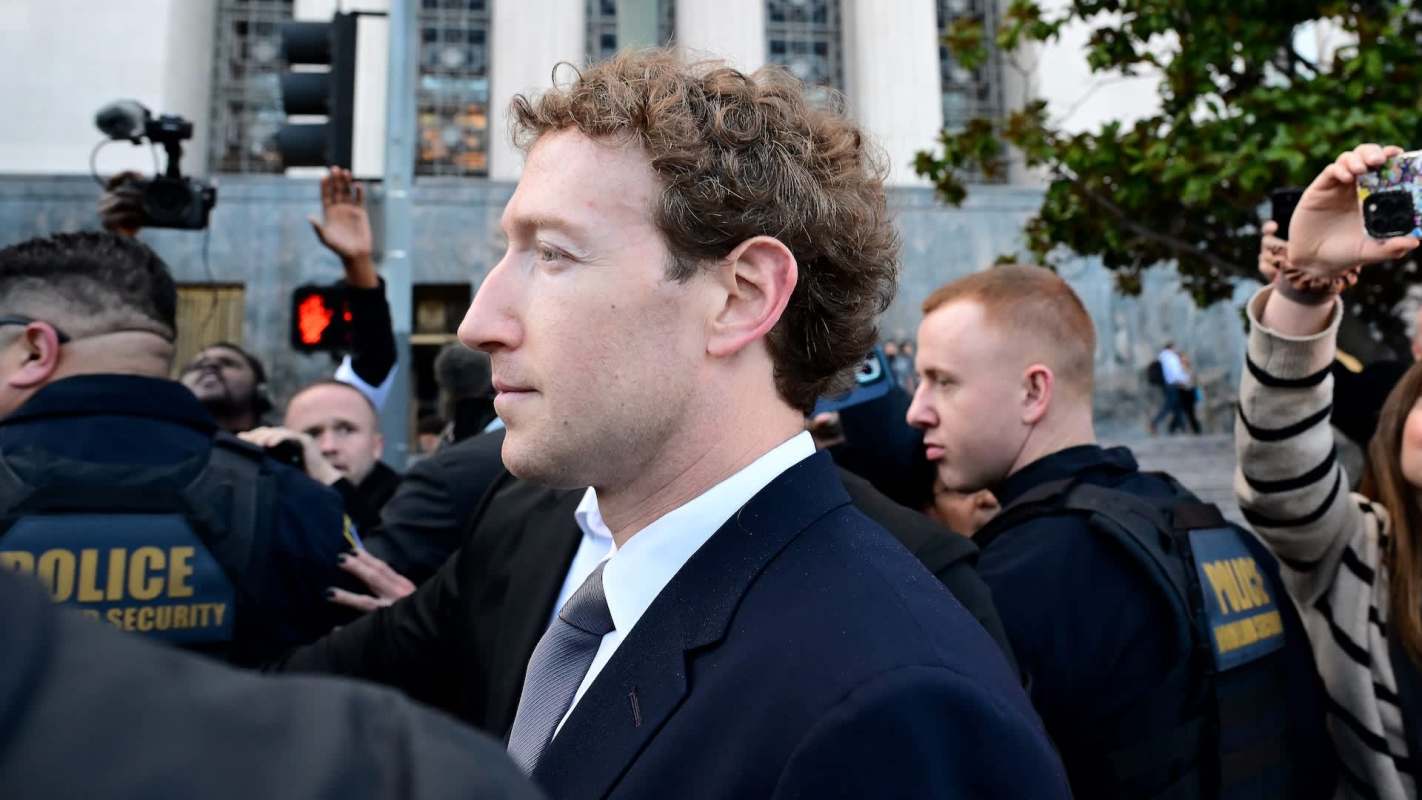
A reckoning could be in store for Big Tech after a California woman made disturbing claims in her lawsuit against Mark Zuckerberg's Meta, according to Carolina Rossini, director of Public Interest Technology programs at the University of Massachusetts, Amherst.
What's happening?
In an article for The Conversation republished by Fortune, Rossini examined how a lawsuit against Meta and Google could be one of the most significant bellwether trials in recent history.
The 20-year-old plaintiff in the lawsuit, identified as K.G.M., alleges that Meta, Google, Snapchat, and TikTok made design decisions that caused her addiction to social media, which she started using at age 6. As a result, she says her depression, anxiety, and body dysmorphia worsened.
In the past, attempts to hold tech companies accountable for social media harms have faltered early in court. According to Rossini, that's because they invoke Section 230 of the Communications Decency Act, which shields them from liability for user-generated content.
However, K.G.M.'s lawsuit takes a different tack. It asserts that the platforms' engineering and design decisions fuel addiction. In part, the litigation hinges on an infamous 2021 leak of internal documents known as the "Facebook Papers." In those internal communications, Meta employees likened the platform's effects to promoting drugs and gambling.
Reddit users discussing the trial in r/Technology sounded off.
"Zuckerberg found a way to truly exploit everything about these platforms from the users to heuristics to data and beyond," a Reddit user vented.
"And then weaponize it. Truly a menace," another added.
Why is this important?
In 2023, a Pew Research Center survey found that one-third of teenagers in the United States used at least one of YouTube, TikTok, Snapchat, Instagram, and Facebook (owned by Meta) almost constantly. K.G.M.'s lawsuit could set a precedent for whether social media platforms can be held responsible for mental health issues in children.
"The K.G.M. trial represents something more fundamental: the proposition that algorithmic design decisions are product decisions, carrying real obligations of safety and accountability. If this framework takes hold, every platform will need to reconsider not just what content appears, but why and how it is delivered," Rossini wrote in The Conversation.
TCD Picks » Quince Spotlight
💡These best-sellers from Quince deliver affordable, sustainable luxury for all




|
Which of these savings plans for rooftop solar panels would be most appealing for you?
Click your choice to see results and earn rewards to spend on home upgrades. |
 Save $1,000 this year 💸
 The landmark social media trial is getting underway even as Meta faces scrutiny for its role in the artificial intelligence arms race. Meta has tried to rebrand its energy-hungry data centers as a boon for local economies. Still, residents are increasingly unwilling to accept the trade-offs of allowing such projects to proceed, including air, water, and noise pollution as well as higher energy bills.
What happens next?
Meta and Google are the remaining defendants in K.G.M.'s lawsuit after TikTok and Snapchat settled with the California woman before trial. Ultimately, a jury will decide whether Meta's "internal awareness" of the addictive nature of its products "constitutes the kind of corporate knowledge that supports liability," according to Rossini.
In the meantime, dozens of U.S. states have passed laws regulating children's social media use. The movement is global as well. Australia has already banned users under 16 from making social media profiles. Denmark, France, Germany, Malaysia, and Indonesia are among the countries that have similar legislation in the works, per TechCrunch.

Get TCD's free newsletters for easy tips to save more, waste less, and make smarter choices — and earn up to $5,000 toward clean upgrades in TCD's exclusive Rewards Club.
Cool Picks





