


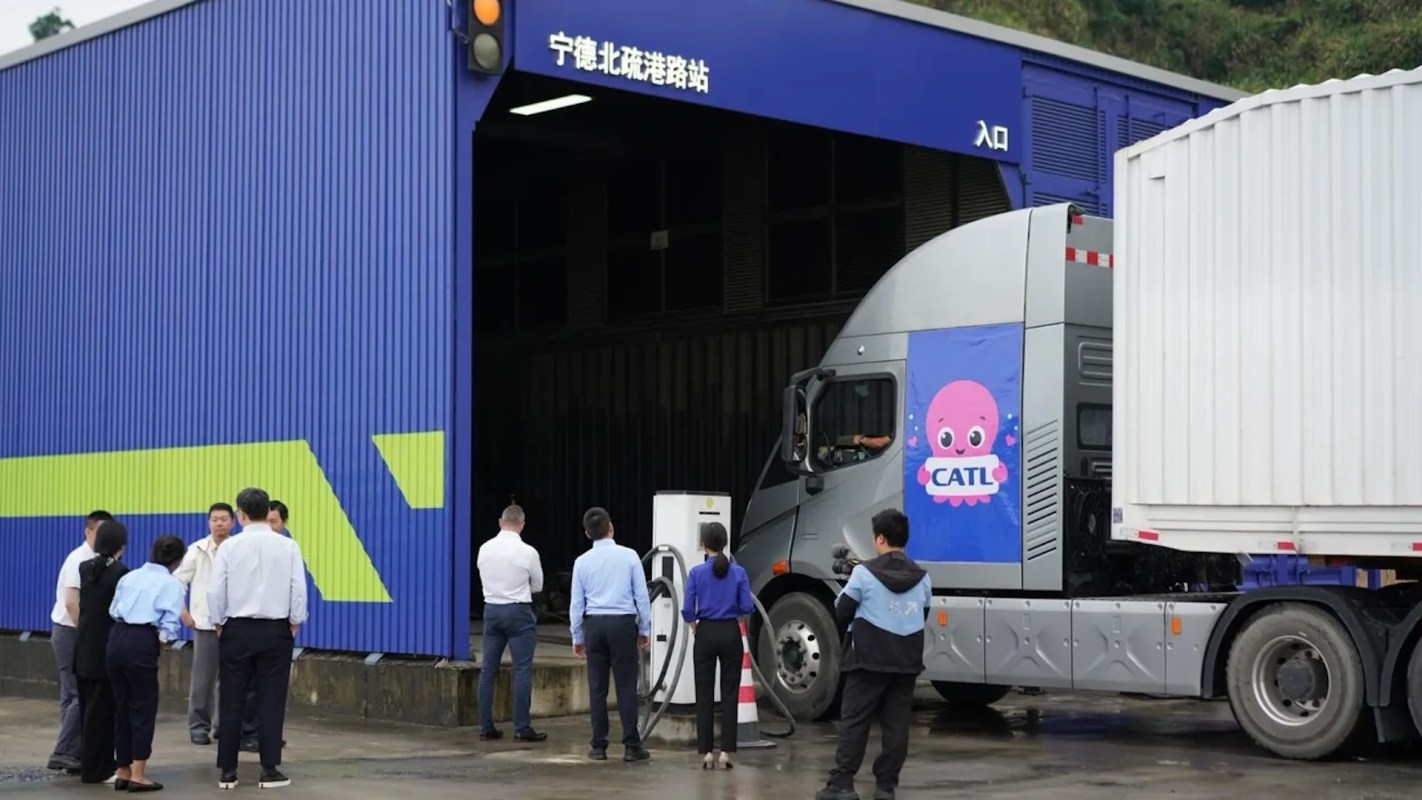
Reducing downtime could be key to moving more European freight onto electric trucks.
A proposal covering the United Kingdom and Europe would do that by enabling heavy-duty EVs to trade empty batteries for charged ones in a matter of minutes, a change that could help accelerate the shift to cleaner hauling.
What happened?
Octopus Energy, based in the U.K., and China's CATL said they are launching a joint venture called Swaptopus to develop a battery-swapping network for electric trucks in the U.K. and Europe, Electrek reported.
The companies said the first U.K. "mega hubs" should open in 2027, with over 30 envisioned by 2035. Each site would serve thousands of lorries per day by storing large numbers of batteries, charging them when electricity is cheapest, and quickly installing them into trucks that need to get back on the road.
"We'll have a massive stack of batteries at these stations that we can fill with the cheapest electricity at the cheapest times," Octopus Energy Group founder and CEO Greg Jackson said at the company's Energy Tech Summit in London, according to Electrek.
"You can give a truck 500 kilowatt-hours of electricity, but you took it from the grid when the grid was empty. You're using spare capacity making electricity cheaper for everybody, cutting the cost of trucking and cleaning it up."
TCD Picks » Quince Spotlight
💡These best-sellers from Quince deliver affordable, sustainable luxury for all




Why does it matter?
Battery swapping has struggled to catch on in passenger EVs despite their growing popularity because it relies on standardized battery formats and costly infrastructure. Trucks, however, may be better suited to the model, as fleet vehicles often travel fixed routes and every hour spent charging can translate to lost revenue.
China has already shown that the model can work at scale, and if Europe can do the same, it could help shift freight away from diesel while supporting cleaner transport and reducing reliance on imported oil.
Octopus and CATL also said the batteries stored at these hubs could support vehicle-to-grid opportunities, giving the broader energy system greater flexibility, according to Electrek.
What are people saying?
"Battery swapping will be a significant part of the future of commercial transport," CATL chairman and CEO Dr. Robin Zeng said in a statement, according to Electrek. "We have field-proven this technology in China, and we are delighted to bring it to the U.K. and Europe as part of our joint venture with Octopus."
Jackson also presented the hubs as a way to benefit both truckers and the grid, saying the setup could make "electricity cheaper for everybody" while also "cutting the cost of trucking and cleaning it up."
The companies added that the completed network could eventually support upwards of 300,000 electric trucks and help unlock more than £30 billion (over $39 billion) in private investment.

Get TCD's free newsletters for easy tips, smart advice, and a chance to earn $5,000 toward home upgrades. To see more stories like this one, change your Google preferences here.






