


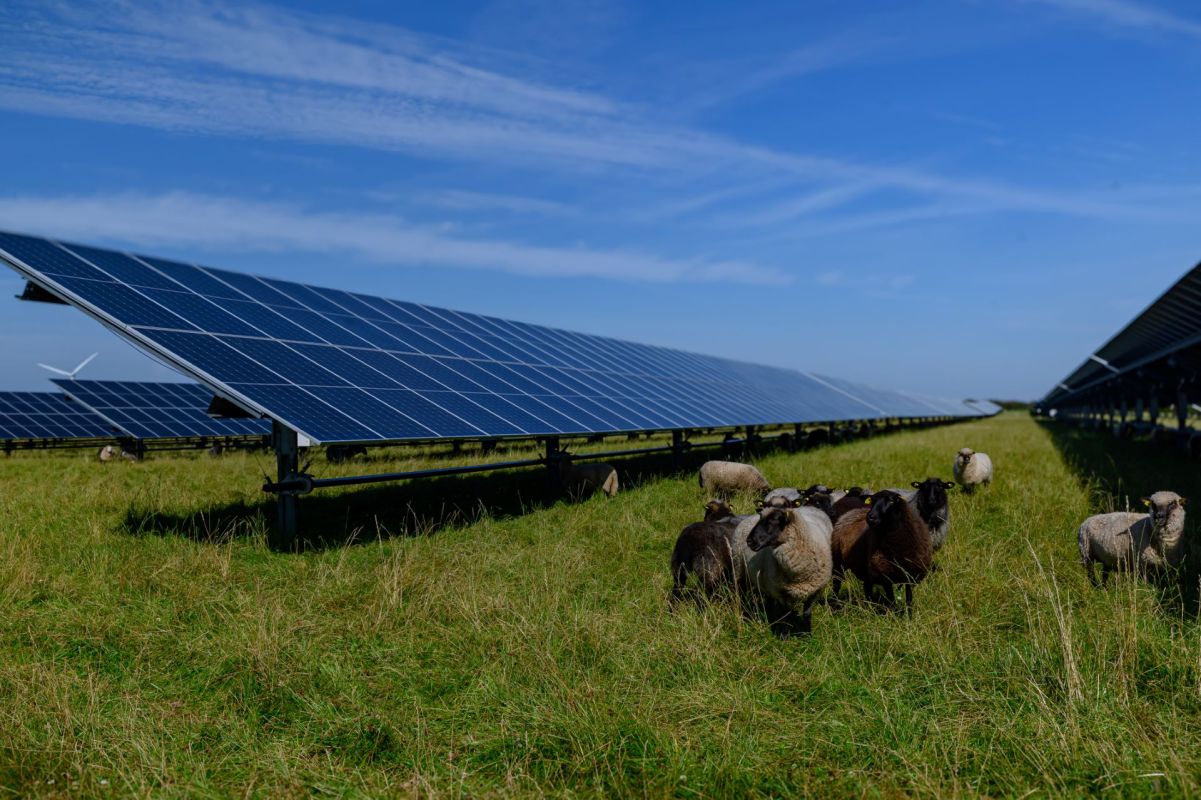
American farmers could certainly use a break right around now, and an innovative new method of dual land use could provide that very lifeline.
ColoradoBiz reported that the emerging field of agrivoltaics presents the ultimate win-win scenario for farmers and clean energy advocates. The concept is remarkably simple: Add solar arrays to existing farmland.
This benefits the farmers in multiple ways. It provides a much-needed additional revenue stream while also boosting crops and livestock. The panels provide shade and trap heat in summer as well as provide warmth in winter.
"If it's done well, it can actually help struggling farmers, help keep land in the family, and is a big opportunity," explained Austin Kinzer, agrivoltaics senior technical specialist at the American Farmland Trust.
Agrivoltaics overcomes one major barrier for more widespread solar adoption: available land. The Department of Energy estimates nearly 6 million acres of land would be needed to add a terrawatt of capacity to the grid by 2035. That's less than 1% of the total acreage of American farms, about 880 million acres, which has declined by just over 6% in the last 20 years, according to a 2022 census of U.S. farmland.
With an arid climate, the water-retaining qualities of agrivoltaics make it an especially good fit for Colorado, as one local farmer, Byron Kominek, pointed out.
"Shade on the ground helps to keep moisture in the ground longer, which means you don't have to irrigate as much or as frequently, and there's a deeper bank of moisture in the soil for different types of vegetation to access over time," he said.
Agrivoltaics account for around 10% of ground-mounted solar arrays in the United States. The full long-term benefits of the practice are still being studied, but the signs from early adopters are promising.
In Arizona, a famously parched state, a study found that solar panels aided crops by reducing the effects of midday depression in photosynthesis. A project in New Jersey showed that several crops could benefit from solar panels overhead. The shade is also appreciated by livestock seeking relief from summer heat.
The initial successes point to a promising future in which making agriculture more sustainable does not have to come at the expense of improving revenue and crop yields. Quite the reverse, actually. Other ways to help reduce the pollution footprint of large-scale agriculture occur at the individual level. Adopting more of a plant-based diet and growing your own food are two straightforward changes to make.
TCD Picks » Quince Spotlight
💡These best-sellers from Quince deliver affordable, sustainable luxury for all




As Kominek noted, agrivoltaics present positives for every party involved.
"The idea of agrivoltaics is trying to maximize the benefit of the land for both clean energy production for society and being able to grow food and keep livestock for everybody," he told ColoradoBiz.
|
Should states be allowed to ban plastic items from businesses? Click your choice to see results and speak your mind. |
 Definitely 👍
Join our free newsletter for good news and useful tips, and don't miss this cool list of easy ways to help yourself while helping the planet.
Cool Picks



