


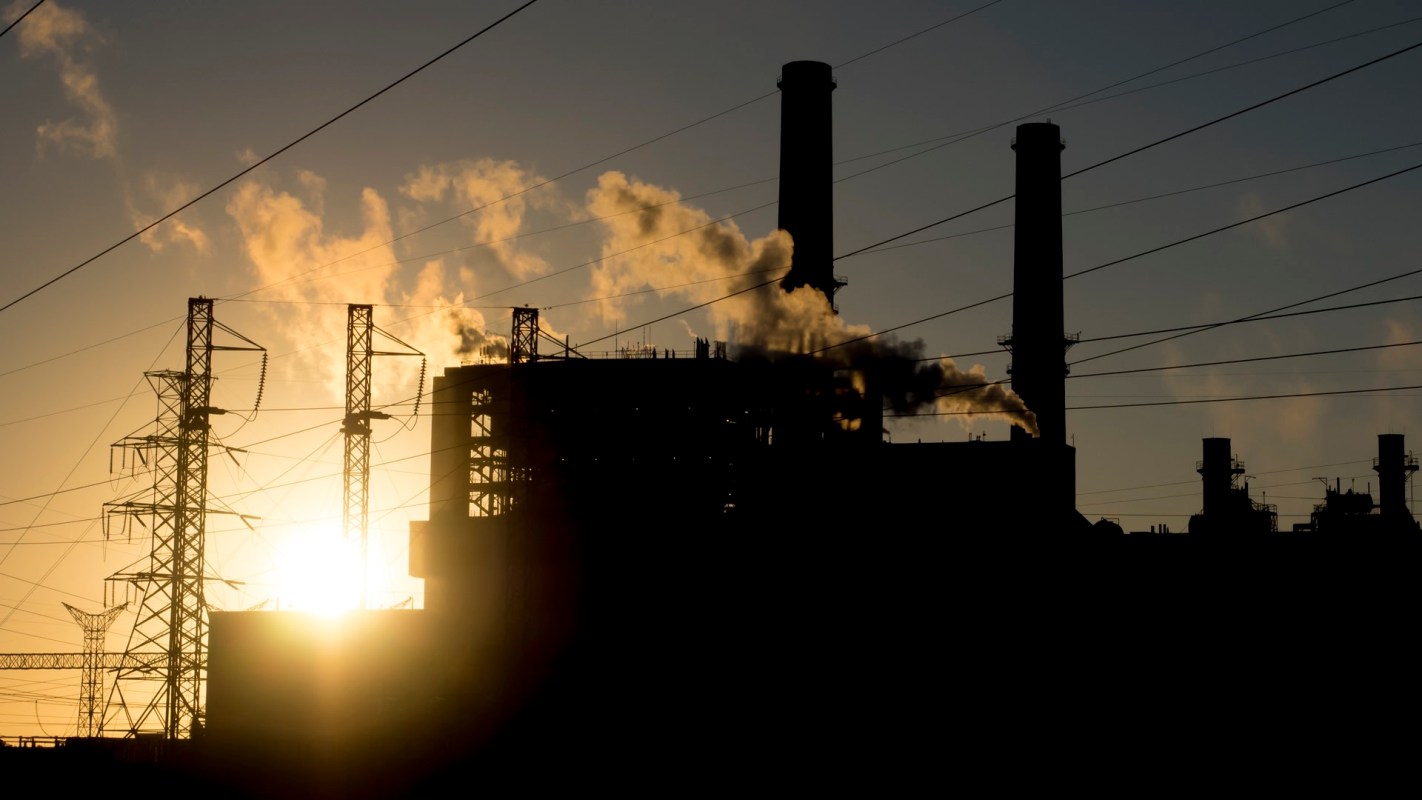
A recent study led to the development of a comprehensive framework that policymakers can use to retire America's coal plants forever.
The study, published in Nature Energy, was conducted by a team of researchers at the University of California, Santa Barbara. A Tech Xplore article said that the goal was to develop a strategy to speed up the country's transition away from coal power.
Although many coal plants have already shut down, over 100 remain active with no retirement plans, per the outlet. The plants' continued operation could make it more difficult to meet carbon pollution goals meant to protect air quality and health.
But shutting down coal plant operations can be more complicated than one might realize.
"Our goal was to build tools that reflect that complexity, so different actors can take on different facets of the problem," said study lead Sidney Gathrid, for whom the project started as a senior thesis. "There's no one straightforward path, and we wanted to do research that represented that reality."
The researchers' framework has two major points that policymakers could use to inform their decisions.
One is the "contextual retirement vulnerability" score, which measures a coal plant's likelihood of shutting down. The other is "retirement archetypes" — patterns that explain why plants may close, such as economic, health-based, and political factors.
Burning coal can have a variety of negative impacts on human health. For example, the pollutants from burning coal can lead to respiratory concerns, lung disease, and brain damage, per the U.S. Energy Information Administration.
Coal power plants can also affect the environment. The Union of Concerned Scientists stated that ash may contaminate waterways, impacting recreation and drinking supplies.
That makes this new framework an exciting opportunity to close the coal plants that have had lasting impacts on people and the planet.
TCD Picks » Quince Spotlight
💡These best-sellers from Quince deliver affordable, sustainable luxury for all




|
Would you live in a new home made by 3D printers?
Click your choice to see results and speak your mind. |
 Sign me up 👍
 Some research suggests that coal use in the U.S. has reached its lowest since the 1960s. Another study discovered that most coal plants cost more to maintain than it would to replace them with wind or solar.
"What's exciting is that this framework doesn't just describe which plants might retire," said senior author and professor Grace Wu. "It shows how to accelerate those retirements using drivers that worked with other retired or soon-to-be retired coal plants."
The scientists involved in the study believe the framework could even be adapted for other energy policy efforts. Wu said: "It's flexible, transparent and reproducible — exactly what we need to make smarter, more strategic decisions about the energy transition."

💰Get TCD's free newsletters for easy tips to save more, waste less, and make smarter choices — and earn up to $5,000 toward clean upgrades in TCD's exclusive Rewards Club.
Cool Picks




