


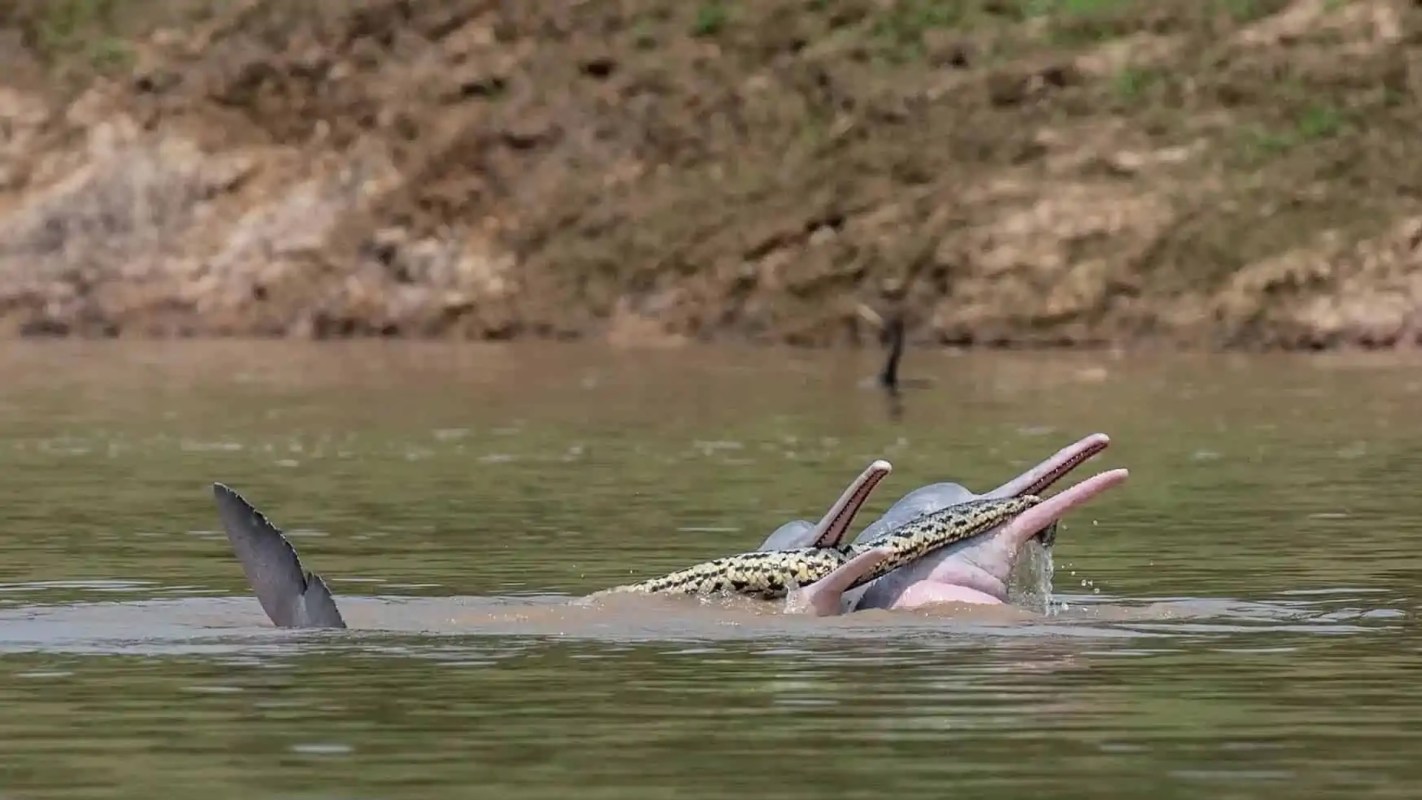
A rare glimpse of endangered Bolivian river dolphins with an anaconda in their beaks has resurfaced as scientists grapple with the potential reasons for the behavior, ZME Science reported.
Here's what to know
Bolivian river dolphins, or Inia boliviensis — a freshwater species found in South American river systems — are especially challenging to study because researchers often see little more than a fin or tail.
According to ZME Science, the interaction with the elusive dolphins lasted at least seven minutes.
A 2022 paper in Ecology formally described the event after researchers at the Noel Kempff Mercado Natural History Museum photographed the dolphins with their heads above water with the snake. The snake appeared motionless and spent long stretches underwater. Researchers suspected it may have died during the encounter, but that was never confirmed.
Researcher Omar Entiauspe-Neto and his co-authors said play seems to be the most likely explanation. They also noted that juvenile dolphins were nearby, which could suggest the older dolphins were trying to teach something. Because photos showed the dolphins with erect penises, the researchers also left open the possibility that handling the snake had a sexual component.
More background
River dolphins are quite uncommon. Only a small number of species live in rivers, mostly in South America and Asia, and they have been studied far less than dolphins that live in the ocean. River dolphins can reflect the health of an entire basin, offering important clues about waterways that support nearby communities and regional ecosystems.
TCD Picks » Quince Spotlight
💡These best-sellers from Quince deliver affordable, sustainable luxury for all




One diet study published in November 2025 analyzed stable-isotope data from five Bolivian river dolphins in the Mamoré basin. The sample was small, and the study considered only fish groupings rather than snakes as possible prey. While it didn't find evidence that the dolphins eat anacondas, it also didn't rule out unusual feeding behavior.
Separate research published in 2023 found that dolphin ranges in the Peruvian Amazon overlapped with areas affected by intense fishing and planned dams. During the 2023 drought, extreme heat and low water were linked to the deaths of more than 200 river dolphins in Lake Tefé.
A Science paper from November 2025 reported that five of ten monitored Amazon lakes exceeded 98.6 F during that heat wave.
When rivers degrade, the consequences can ripple across communities by threatening food systems and water quality. Protecting river systems can preserve biodiversity while also supporting healthier waterways for the people and wildlife who depend on them every day.
What's being done?
Researchers and conservation groups are working to narrow those knowledge gaps.
According to ZME Science, Fundación Omacha and its partners carried out another river dolphin health assessment in Colombia in February 2025 in the Colombian Amazon along Peru's border. The program has reported high mercury levels and some antibiotic-resistant bacteria in some dolphins. Long-term analyses are still ongoing.
In May 2026, Bolivian river dolphin researcher Enzo Aliaga-Rossel and cetacean specialist Randall Reeves said that dozens of dolphins had been rescued and relocated after becoming stranded in isolated canals and tributaries in eastern Bolivia.
Aliaga-Rossel and Reeves described those interventions as "palliative," as ZME Science relayed. They said that lasting conservation depends on habitat protection and climate resilience.
Where can I learn more?
Dolphins have also helped people in other places learn about how healthy or unhealthy an ecosystem is.
• In Brazil's Lake Tefé, waters that reached over 100 degrees coincided with a mass dolphin die-off.
• In Florida's Indian River Lagoon, changes in dolphins' brains mirrored disease patterns seen in people.
• Troubling declines in dolphin populations have tracked rising ocean temperatures and environmental stress.
• During nearly two decades of strandings research, whales and dolphins carried plastics linked to wider contamination.
Watching how dolphins and the waters around them change can help researchers catch signs of trouble before nearby communities pay the full price.

Get TCD's free newsletters for easy tips, smart advice, and a chance to earn $5,000 toward home upgrades. To see more stories like this one, change your Google preferences here.






