


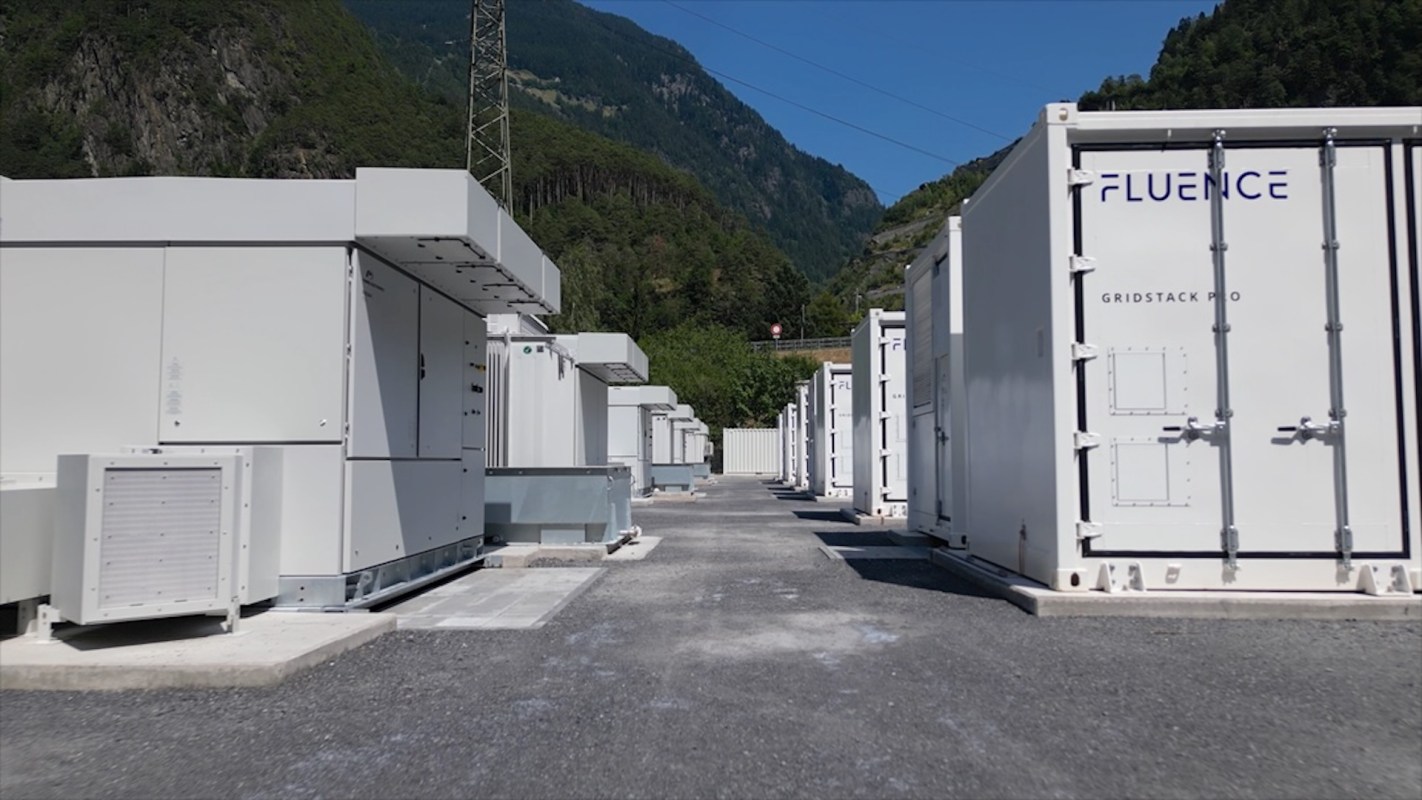
A 58.4-megawatt battery project in Uri is now in operation, with Axpo and Energie Uri announcing its launch. The installation is Switzerland's biggest battery storage facility to date and is meant to take in surplus electricity and return it to the grid when needed.
Here's what to know
Rather than a single unit, the Plattischachen site in the municipality of Gurtnellen brings together two battery energy storage systems located close to one another, pv magazine reported.
Of the 58.4 MW total, 50 MW comes from Axpo's system and 8.4 MW from Energie Uri's.
At the start of construction, Axpo said its part of the project would deliver two hours of storage. Fluence supplied the battery systems.
The Axpo installation is expected to mainly serve the national market, while Energie Uri's system will be run with the canton's needs in mind.
Hermann Epp, a member of the cantonal government and Uri's construction director, said the two large-scale batteries have made the industrial area an "energy hub of national importance" and provide a real-world example of how the energy transition can work.
TCD Picks » Quince Spotlight
💡These best-sellers from Quince deliver affordable, sustainable luxury for all




More background
Large batteries like these are becoming more important as solar panels and wind turbines provide a growing share of electricity.
Because those sources do not generate power evenly throughout the day, storage can hold surplus electricity and release it when demand is highest.
Storage can also reduce the need for expensive backup measures when electricity supplies are tight.
It can support a steadier flow of power for transit, public services, schools, and hospitals while helping clean energy play a larger role in the grid.
What's being done?
According to pv magazine, Axpo is expanding its battery storage footprint in Europe. The company already operates facilities in Switzerland and Sweden, and it has more than 300 MW of battery storage projects under construction in France, Germany, Italy, Poland, and Romania.
The Swiss energy company is also speeding up battery storage development alongside solar and wind generation. That kind of setup can save time and money across the grid by balancing supply and demand more efficiently.
Epp also said: "Such projects also bring technological know-how to the canton, generate contracts for local companies in Uri, and secure jobs in the region. Uri benefits from this in ways that go beyond just energy supply."
Where can I learn more?
Uri's new battery hub fits into a much broader storage build-out worldwide. Utilities and manufacturers are scaling up projects and trying new chemistries to absorb extra renewable power, strengthen the grid, and phase out older fossil-fuel infrastructure.
• India's solar surge is creating demand for a giant battery that lasts decades without fire risk.
• In Michigan, a new $2 billion battery plant will supply the grid and Toyota's EV pipeline.
• CATL says battery storage will surge from 2% to half of its sales in about a decade.

Get TCD's free newsletters for easy tips, smart advice, and a chance to earn $5,000 toward home upgrades. To see more stories like this one, change your Google preferences here.






