


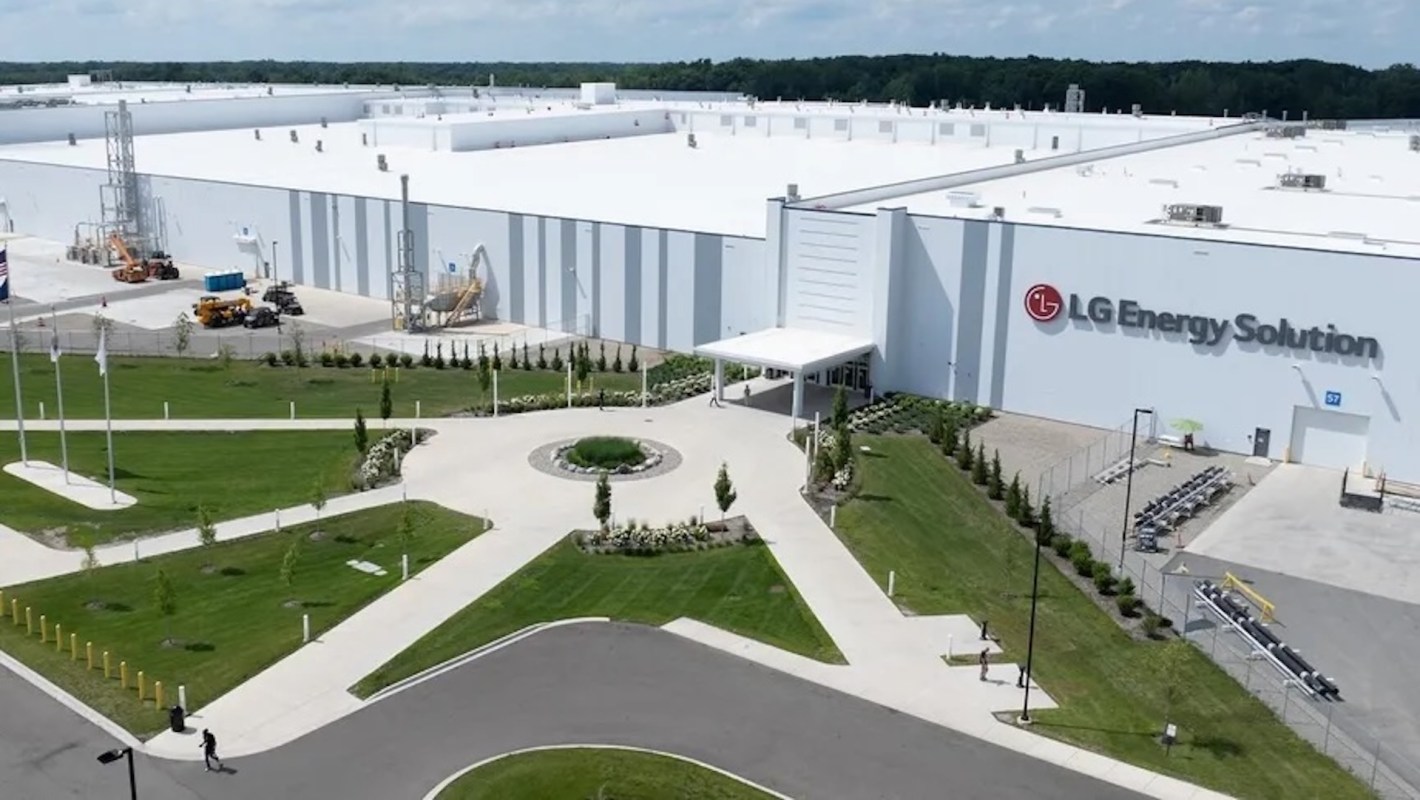
LG Energy Solution's new battery manufacturing campus in Lansing, Michigan, is up and running, and its output could affect daily life in more ways than one, from strengthening electric vehicle supply chains to supporting more reliable large-scale energy storage.
The site gives LG Energy Solution a stronger foothold in two rapidly growing markets at once: batteries for the grid and batteries for the road.
Here's what to know
According to Solar Power World, LG Energy Solution launched production at its new campus and plans to scale the site to over 35 gigawatt-hours of annual lithium battery capacity. The plant will manufacture large-format cells for both energy storage projects and electric vehicles.
For stationary storage, the campus is producing lithium-iron phosphate, or LFP, battery cells. LG Energy Solution Vertech, the company's U.S. energy storage division, will use those cells in complete systems for utility, grid-scale, commercial, and industrial applications.
Toyota will also source battery cells from the Lansing site, which is set to make nickel-manganese-cobalt, or NMC, chemistry for the automaker. Those higher-energy batteries are intended for battery-electric vehicles assembled at a plant in Georgetown, Kentucky.
Together, those efforts support cleaner transportation options for drivers and expanded battery capacity that can help utilities and businesses store electricity for use when demand rises or the grid is under strain.
TCD Picks » Quince Spotlight
💡These best-sellers from Quince deliver affordable, sustainable luxury for all




More background
LG Energy Solution says it has invested more than $2 billion in the Lansing campus since 2022, per Solar Power World. About 900 people work there, and employment is projected to grow to 1,700 once the site reaches full capacity.
The facility began as a joint venture with General Motors for EV battery production, but GM sold its stake in early 2025, leaving the nearly completed factory under LG's sole ownership.
With Lansing online, LG Energy Solution has two Michigan manufacturing sites, including its Holland plant. The company says its North American LFP cell-making capacity across wholly owned and joint-venture locations is expected to exceed 50 gigawatt-hours by the end of 2026, Solar Power World noted.
Large battery projects can have effects beyond manufacturing jobs. More storage capacity can help cities, utilities, and companies better manage electricity, improving reliability during extreme weather, easing strain during periods of heavy demand, and supporting a grid increasingly powered by renewable energy.
What's being done?
LG Energy Solution is making more and different types of batteries in North America. By manufacturing LFP cells for storage and NMC cells for EVs at the same campus, the company is building a localized supply chain for technologies that can help reduce pollution and strengthen energy systems.
On the storage side, LFP batteries are being directed into systems for utilities and businesses. These installations can store electricity when it is available and release it when it is needed most — a capability that can save money, reduce waste, and provide a layer of protection during outages or disruptions.
On the transportation side, the Toyota-linked production line increases battery availability for EV assembly in the United States. That can support a pipeline for electric models, which can help drivers reduce fuel costs over time.
North America is also becoming a bigger part of the company's storage footprint. LG Energy Solution says the region is on track to account for 80% of its global energy storage system capacity by the end of 2026, per Solar Power World.
"Today marks a defining milestone for LG Energy Solution," CEO David Kim said. "Lansing will produce advanced batteries that support not only the future of mobility but also America's growing energy infrastructure and digital economy."
Where can I learn more?
This ties into a few bigger shifts in batteries, including cell chemistry, factory expansion, and the rapid buildout of grid storage.
• At LG Chem, single-crystal high-nickel cathodes could extend EV battery lifespans by 30%.
• In the U.S., ENTEK is building a lithium-ion separator factory with major federal backing.
• Chemours opened a battery innovation center to speed work on next-generation EV materials.
A plant runs on more than assembly capacity. Progress in storage design, materials, components, and manufacturing oversight helps determine how quickly batteries make it to drivers and onto the grid.

Get TCD's free newsletters for easy tips, smart advice, and a chance to earn $5,000 toward home upgrades. To see more stories like this one, change your Google preferences here.






