


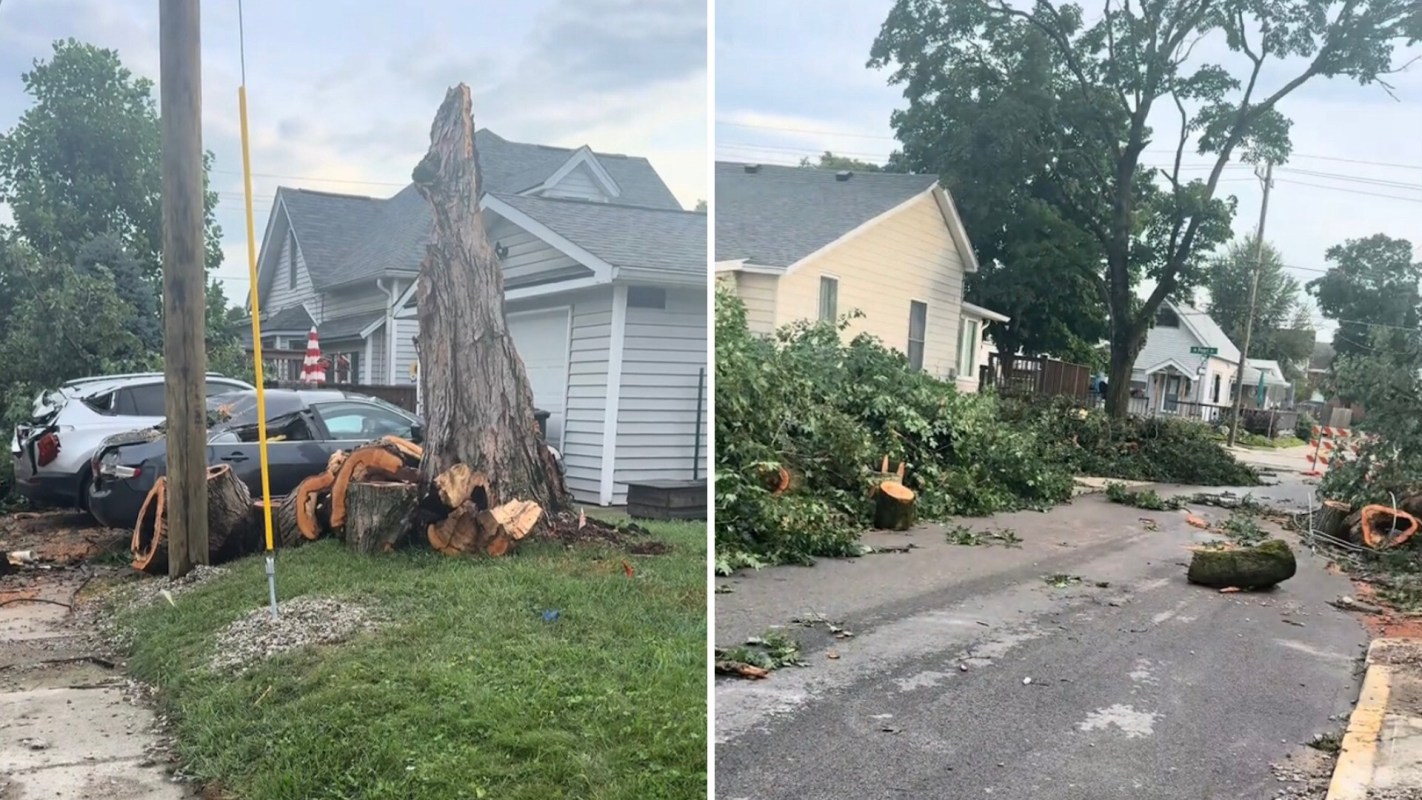
An Indiana resident's footage of massive storm damage is giving viewers a direct look at the recent devastation felt across parts of the state.
Here's what to know
Rachel Phillips (@rachel.fields68) shared a firsthand account of the storm's aftermath, posting the footage to TikTok.
In the clip's caption, Phillips wrote, "Indiana has been getting HIT lately… Trees down, cars damaged, streets destroyed. Mother Nature is NOT playing with us."
@rachel.fields68 Indiana has been getting HIT lately… 😳💔 Trees down, cars damaged, streets destroyed. Mother Nature is NOT playing with us. 🙏🏼💨" Recent storms have caused widespread tree, power-line, flooding and property damage across Indiana. #I#IndianaStormsI#IndianaWeatherI#IndianaH#HoosiersS#StormDamage#Weather ♬ original sound - Shan Da baddest
The video then showed some of the horrifying aftermath of the state's recent storms. Several trees were down on just one block.
While it's unclear where this footage is from in Indiana, the city of Gary is also facing extended power outages due to storm damage. Residents are saying that energy companies are not prioritizing them as the companies focus on building data centers.
More background
Coverage from broadcasters often condenses storms into warning updates, closure notices, and damage totals. Videos recorded by residents can make the aftermath feel more tangible by showing blocked streets and damaged property up close.
TCD Picks » Quince Spotlight
💡These best-sellers from Quince deliver affordable, sustainable luxury for all




Storm damage also tends to create ripple effects that last longer than the storm itself. Cleanup can stretch on for days or weeks, and insurance claims can be costly and time-consuming.
Unfortunately, worsening extreme weather disasters threaten people's lives and their livelihoods. Downed trees and power lines can injure people and cut off electricity. And flooded roads and debris-strewn streets can make it harder for emergency vehicles to get through.
For families, the fallout can mean repair bills, lost wages, spoiled food or medications, and unsafe living conditions.
Preparation can help reduce some of the risk. That can include monitoring trusted weather alerts, charging phones and backup batteries ahead of severe weather, and keeping an emergency kit stocked with water, medications, flashlights, and important documents.
Property owners can also reduce certain hazards by trimming weak tree limbs and securing loose outdoor items. After a storm, it is important to avoid downed power lines and stay out of floodwater. Documenting any damage for insurance purposes before cleanup begins is also crucial.
Where can I learn more?
The damage shown in this Indiana clip reflects the strain that extreme weather can put on many public systems.
• Across the US, public infrastructure is crumbling as extreme weather batters roads, bridges, and utilities.
• After major US disasters, death rates can rise for weeks as healthcare disruptions set in.
• In hurricane-hit communities, recovery workers face deadly heat while rebuilding homes and clearing wreckage.
Paying attention to what's happening on the ground during an extreme weather event can help people better understand its consequences and how to stay safer during and after it happens.

Get TCD's free newsletters for easy tips, smart advice, and a chance to earn $5,000 toward home upgrades. To see more stories like this one, change your Google preferences here.







