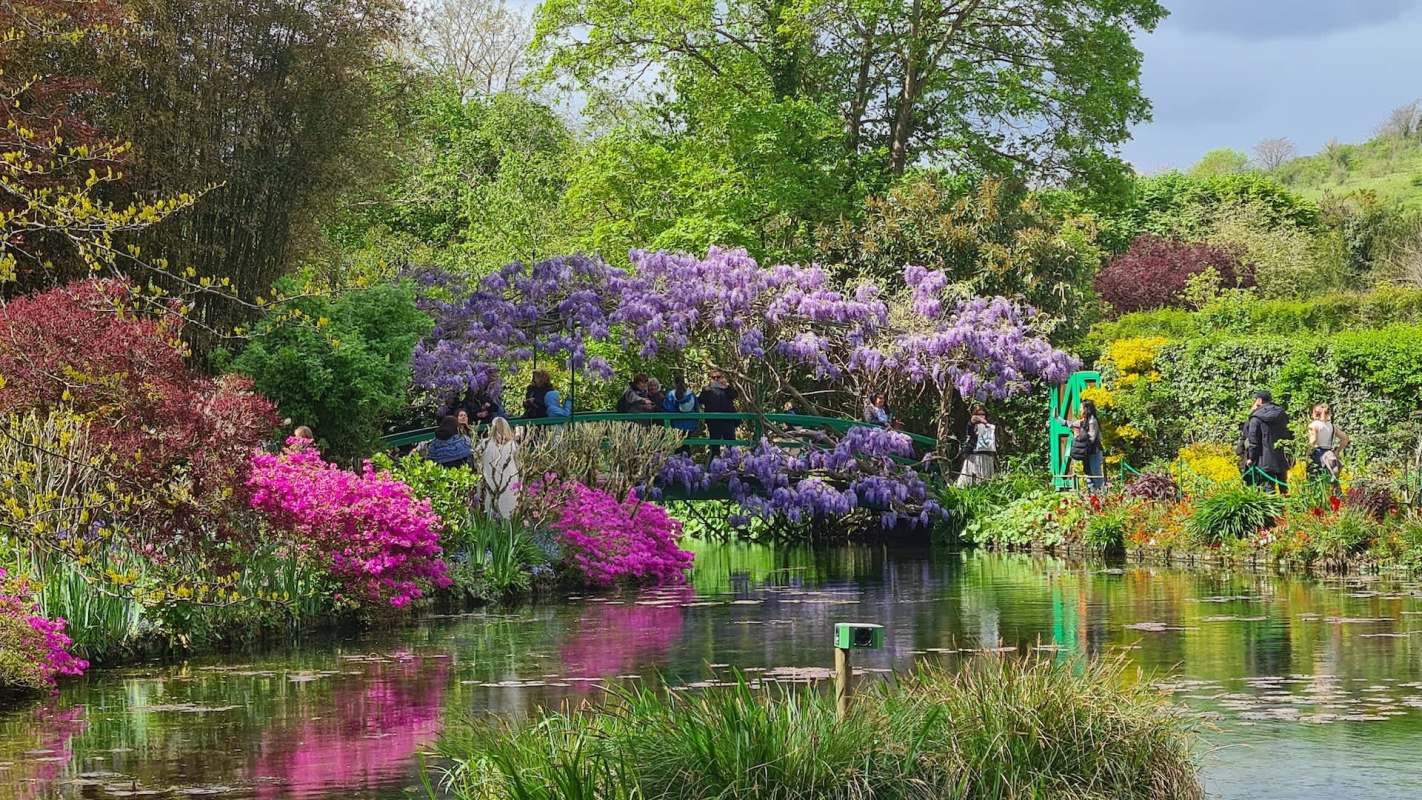
The extreme heat in France is now taking a toll on one of art history's most beloved landscapes: the gardens at Giverny — the blooms that inspired Impressionist painter Claude Monet.
Here's what to know
According to Smithsonian Magazine, France experienced an unprecedented 52 days of heatwaves, along with widespread wildfires and more than 7,300 excess deaths.
Gardens around the country have been damaged. In Giverny, about 50 miles from Paris, the flower beds that inspired Claude Monet are being scorched by extreme temperatures, turning a living monument of color and light into a stark warning of climate stress.
Monet's house and gardens in Giverny are seeing some of their signature summer displays falter under the season's extreme heat. Among the worst affected are the nasturtiums, whose red, orange, and yellow blossoms normally spread quickly during the summer.
Deputy head gardener Rémi Lecoutre is part of an 11-person gardening staff that maintains the estate, which is visited by hundreds of thousands of people each year. He said the scale of the damage is unlike anything he has seen since first arriving at the foundation as a seasonal worker in 1988. "It's incredibly sad. This is the first time it has happened to this extent. It's awful," he told France 24.
More background
Monet spent more than 40 years in Giverny, living there from 1883 until 1926, and the grounds became a source of inspiration for many of his best-known paintings.
TCD Picks » Quince Spotlight
💡These best-sellers from Quince deliver affordable, sustainable luxury for all




The 100th anniversary of Monet's death falls in 2026. While his water lilies — the subject of roughly 250 paintings — have remained largely unaffected, other parts of the garden are under pressure.
Prolonged heat can drive dehydration, heat exhaustion, and deadly medical emergencies, while wildfire conditions threaten homes, public safety, and local economies. When heat damages farms, gardens, and tourism destinations, communities can lose income even as families face rising costs and dangerous outdoor conditions.
Hotter weather can also bring higher utility bills, more smoke or poor air quality, stressed food systems, and shrinking green spaces in neighborhoods.
What's being done?
The garden team in Giverny is trying to adapt by clustering plants and relying on both mini-sprinklers and underground irrigation to retain moisture and limit heat stress. But even those efforts have not fully prevented damage. Lecoutre told France 3, in comments translated by ARTnews, that "some foliage still burned."
He added, "There are physiological phenomena happening at the plant level. They close their stomata, and they stop flowering. So we had a lot of wilted flowers."
Over time, the estate may bring in sturdier plant varieties that can better tolerate extreme heat. Any such shift, however, has to respect the site's historic character and preserve a garden that still resembles the one Monet knew and loved.
"As it's a historic garden, it's best that these plants answer to the aesthetic criteria, and that they are as close as possible to the plants that Monet would have known," Lecoutre told France 24.

Get TCD's free newsletters for easy tips, smart advice, and a chance to earn $5,000 toward home upgrades. To see more stories like this one, change your Google preferences here.