


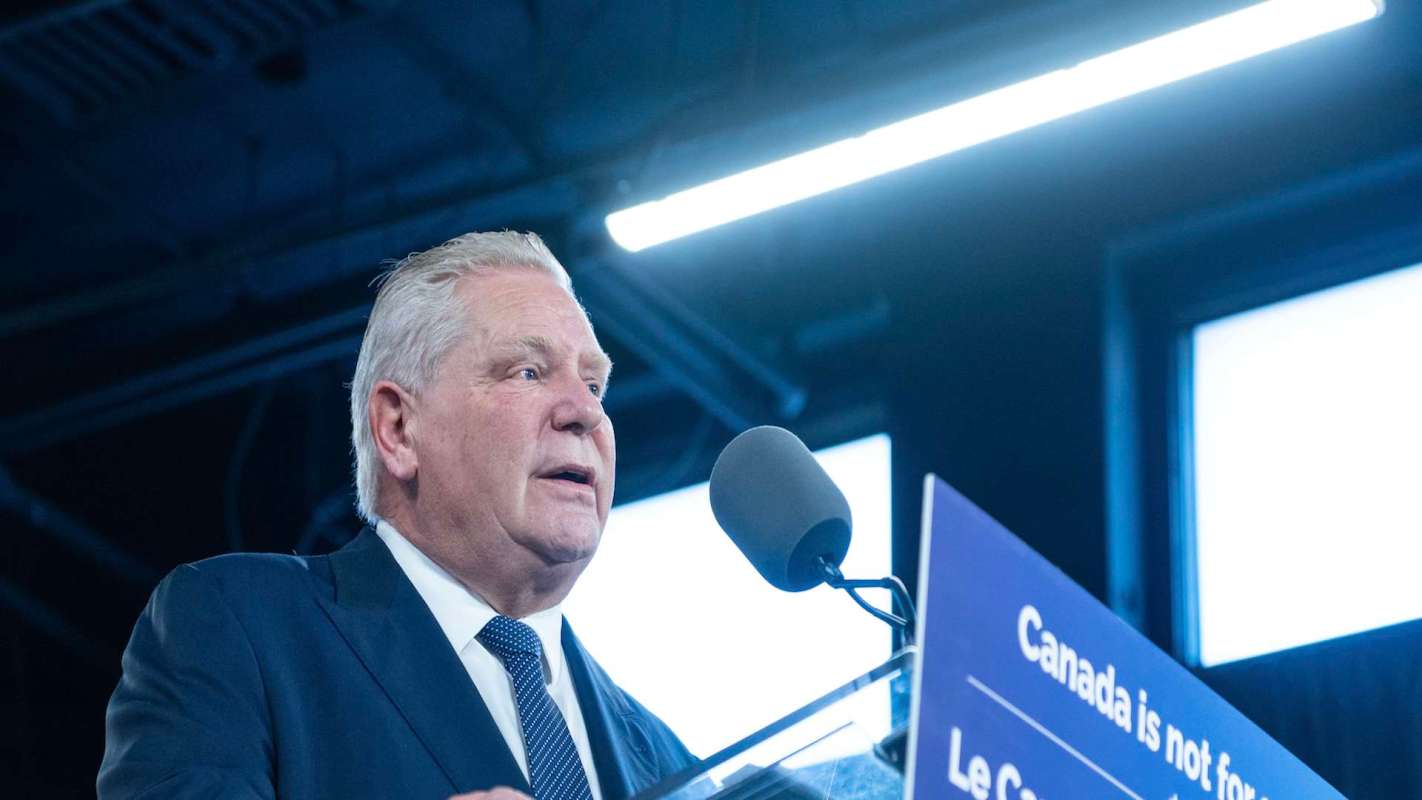
Ontario is facing growing municipal backlash as it tries to attract more artificial intelligence-driven data centers to the province, with residents saying the enormous facilities could strain water supplies, raise electricity bills and create ongoing noise for nearby neighborhoods.
Ontario Premier Doug Ford, however, has signaled he is not backing down.
Here's what to know
Proposed data center projects have drawn large crowds to public meetings in Hamilton, Oakville, Mississauga, Burlington and Toronto, where residents have challenged the developments. According to The Narwhal, Oakville approved a one-year pause on new data center construction on Aug. 11, Mississauga moved toward a similar freeze, and Hamilton narrowly avoided taking the same step.
Speaking in Guelph on Aug. 13, Ford used the rollout of Ontario's draft "data centre playbook" to address the dispute.
"This is the way of the future," he said. "Either we do it or Donald Trump's going to do it, and I'm not giving Donald Trump nothing, absolutely nothing."
Those proposed rules build on Bill 40, Ontario's law on securing affordable energy for future generations. Under the framework, developers would need to prove they can pay the full cost of connecting to and using the grid. They would also have to show that their projects would benefit Ontario through jobs, investment, tax revenue, or other local gains.
TCD Picks » Quince Spotlight
💡These best-sellers from Quince deliver affordable, sustainable luxury for all




The province is accepting public feedback on the draft playbook until Sept. 12, and lawmakers are not expected back to debate it until Oct. 27.
More background
At their core, data centers are large buildings packed with servers that keep cloud storage, banking, health care, government services and AI tools running. Ontario has long had such facilities, but AI has sharply increased both the scale of proposed projects and the resources they require, with some sites seeking hundreds of megawatts of electricity.
That expansion would come as Ontario's electricity system is already expected to face rising demand. A 2024 forecast found overall electricity use could increase by 75% by 2050, with data centers making up about 13% of added demand by 2035. Another forecast suggested they could account for nearly 9% of Ontario's total electricity consumption by 2050.
AI presents a mixed picture for the grid. It can help forecast demand, improve clean energy systems and make operations more efficient, but the infrastructure behind it can also consume vast amounts of electricity and water.
That has led to concerns about higher utility costs, increased reliance on natural gas during periods of peak demand, and wider worries related to security, misuse and other unintended social effects.
Cooling needs are another major concern. One estimate cited by The Narwhal found that a 1-megawatt facility may use as much as 6.7 million gallons (25.5 million liters) of water annually. Some proposed Ontario sites are much larger, including Microsoft projects with a combined estimated demand of roughly 200 megawatts.
What's being done?
The province said it wants more rigorous oversight, though critics contend the draft rules still leave important gaps. Energy Minister Stephen Lecce said Ontario will judge whether projects justify their costs and keep the authority to reject them.
"The bottom line is, if a data centre wants to come to Ontario, it is not your right," Lecce said. "We now have the right to say no."
The draft playbook also said the province will prioritize quieter equipment, cooling systems that avoid water or use closed loops, and projects that can put waste heat to use, such as warming nearby buildings. It is also encouraging companies to bring their own power supply, which could speed up construction but may also create an opening for on-site natural gas generation.
Municipal governments, meanwhile, are trying to deal with regulatory gaps themselves. Oakville approved a one-year pause on new data center construction on Aug. 11, Mississauga appears ready to follow, and Burlington, Toronto, Waterloo Region, Centre Wellington, and Sault Ste. Marie have all been studying possible effects or asking for clearer direction from the province.
Ford has continued to argue that resistance to these projects clashes with the public's dependence on digital technology.
He said, "It just doesn't add up," maintaining that people cannot rely on AI and cloud services while rejecting the infrastructure needed to support them.
Whether municipalities accept that argument is fast becoming one of Ontario's biggest energy battles.

Get TCD's free newsletters for easy tips, smart advice, and a chance to earn $5,000 toward home upgrades. To see more stories like this one, change your Google preferences here.






