


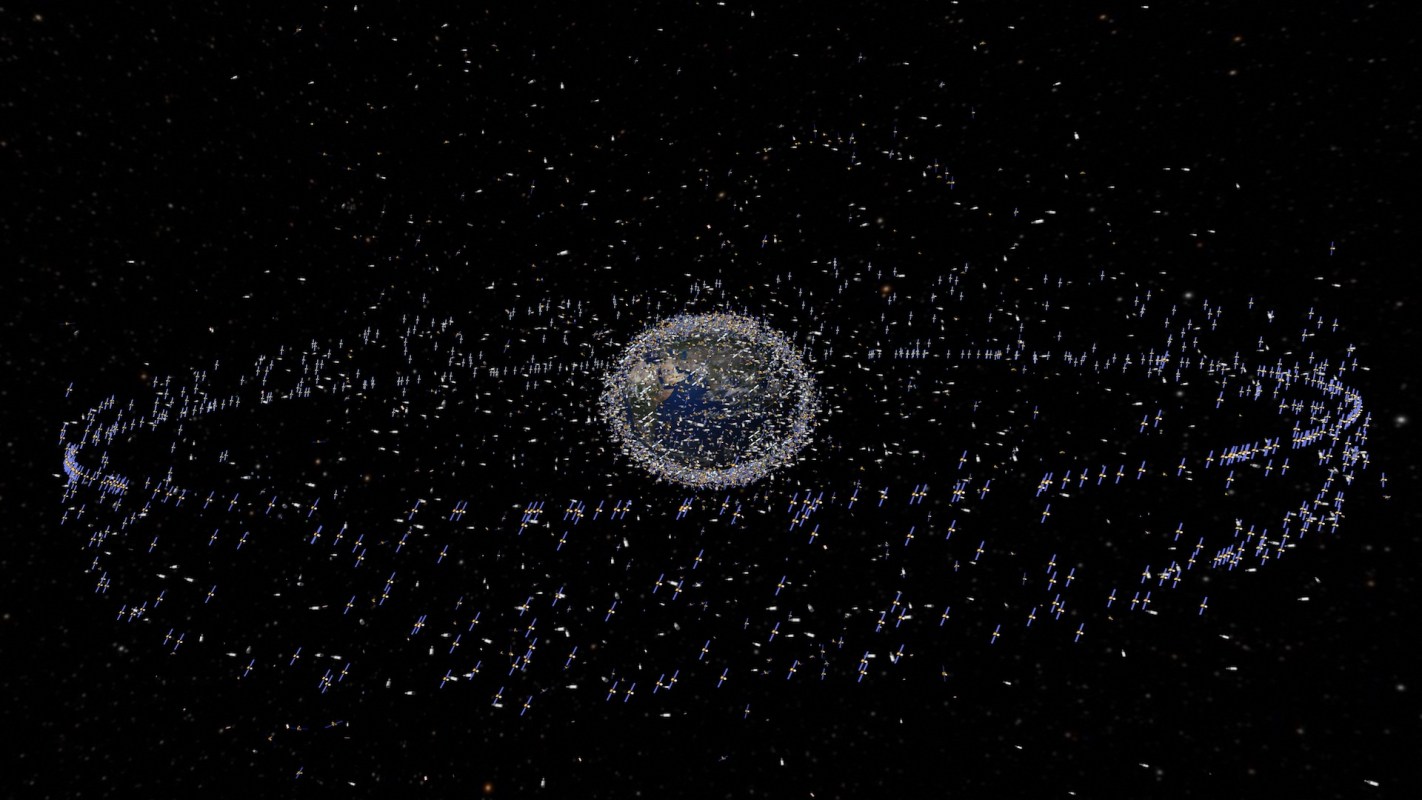
SpaceX CEO Elon Musk is floating the idea for an enormous orbital network for artificial intelligence computing, and the idea introduces an environmental question that space projects rarely face: what becomes of expensive electronics once they are placed in orbit and effectively leave any normal recycling path behind?
In that scenario, AI chips and related hardware would represent a form of e-waste defined by inaccessibility, with the equipment ending up beyond Earth rather than in a dump or scrapyard.
Here's what to know
Under the proposed SpaceX "AI1" plan, up to 1 million satellites functioning as AI data centers could be placed in orbit, yielding a hardware presence larger than anything now surrounding Earth.
The turnover would also be relentless. Citing a May 29 filing with the Federal Communications Commission, Ars Technica reported that if the GPUs last about five years, about 200,000 satellites would have to be retired annually.
Of that yearly total, Ars Technica estimated that around 40,000 would fall back through the atmosphere and burn up, while some or all of the remaining 160,000 could be shifted to a more distant disposal orbit. In either case, the metals and other parts inside them would no longer participate in Earth's material cycle.
Traditional e-waste poses its own problems, but it at least stays on a planet where recovery could, in theory, occur. With orbital AI systems, those valuable materials would instead be spread through the atmosphere or left in space.
TCD Picks » Quince Spotlight
💡These best-sellers from Quince deliver affordable, sustainable luxury for all




More background
The scale matters here. Ars Technica said Starlink alone has already doubled the mass of objects in low Earth orbit, and a satellite system built for AI would be far larger. Even without full technical details, Ars argued that the GPUs themselves — excluding solar panels, cooling systems, servers, and networking equipment — already suggest a vast materials burden.
Reentry raises a second environmental issue: burning satellites do not simply vanish. That process could release aluminum with ozone effects that may take decades to understand, and other material would be distributed in a thin layer around the world.
The issue also connects to a broader AI concern here on Earth: Data centers are deeply tied to the energy grid. Training and running large AI models consumes huge amounts of electricity and water for cooling, potentially raising utility costs, increasing pollution when grids rely on dirty energy, and creating security or misuse concerns if deployment outpaces oversight.
Seen more broadly, the growth of AI has material, energy, and environmental costs, and this concept would relocate part of that burden into orbit.
What can be done?
Scrutiny before anything scales up would need to cover not just launch safety and bandwidth needs, but also full life-cycle impacts: what goes up, how long it lasts, what burns up, and what is permanently abandoned in orbit.
Longer-lasting hardware, repairability, modular systems, and more transparent accounting of materials could reduce the churn that turns advanced electronics into unreachable waste.
As AI products become more common, questions about where computing occurs, how much energy and water they use, and what happens to the hardware at the end of its life are already relevant.
If orbital computing moves forward, those questions will no longer stop at the walls of a data center. They will extend all the way into low-Earth orbit — and beyond.
It is not only a computing or business story, but also a test of whether humanity is prepared to treat off-world infrastructure as part of the same environmental equation it still struggles to manage on Earth.

Get TCD's free newsletters for easy tips, smart advice, and a chance to earn $5,000 toward home upgrades. To see more stories like this one, change your Google preferences here.






