


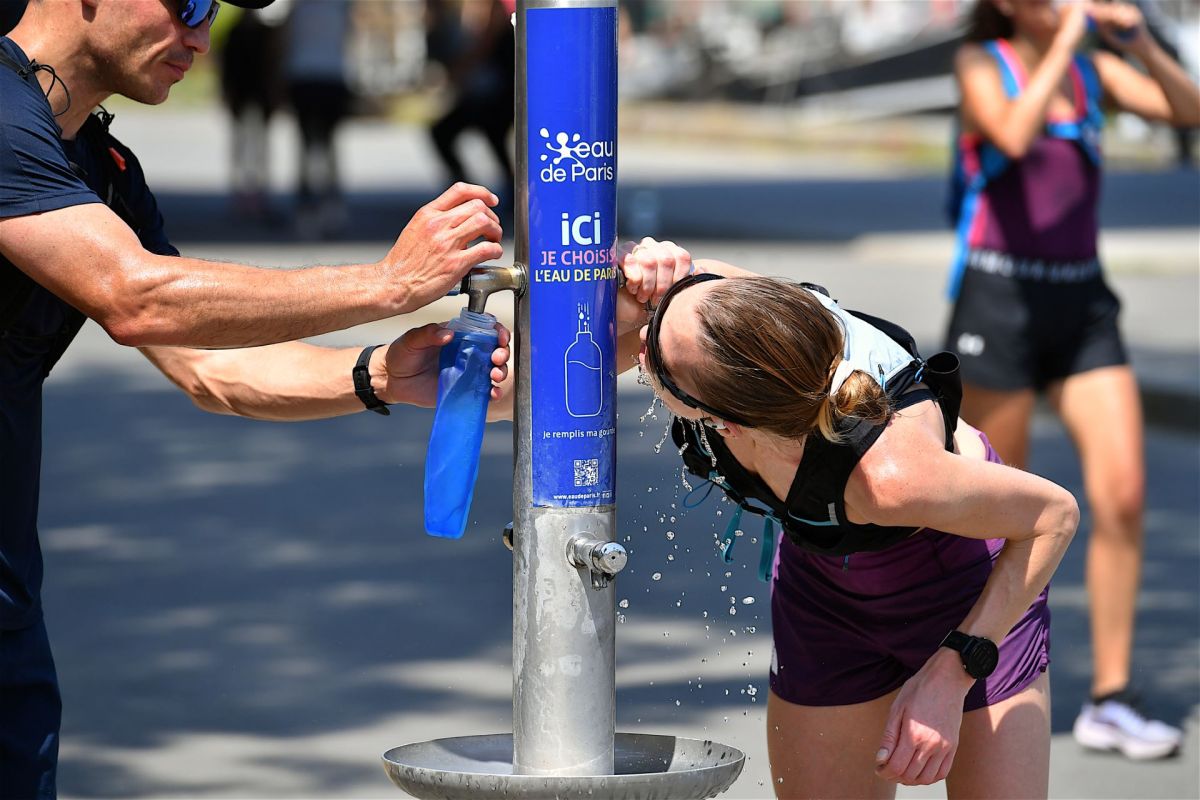
Extreme heat in Paris turned a tennis match into a physical breakdown at the French Open.
Here's what to know
The 2026 tennis tournament in May was defined by heat, including during a dramatic loss by Jannik Sinner, the world's top-ranked men's tennis player.
According to The New Yorker, the No. 1 seed looked set for a comfortable second-round win at Roland Garros before he began cramping. He called for a medic and eventually lost after nearly collapsing in the heat.
Heat troubles continued when 24-time Grand Slam champion Novak Djokovic vomited on court and also lost. Czech semifinalist Jakub Menšík had an even more severe reaction, saying, "It's insane to play in this weather," after he was taken away in a wheelchair.
What happened in Paris fits into a much larger pattern of extreme weather across the world. Europe is warming at more than twice the global average, and the effects are becoming harder to ignore.
The human toll is already substantial, with an estimated 70,000 heat-related deaths recorded across Europe in 2022, followed by 48,000 in 2023, and 63,000 in 2024. Then, in June 2026 — Western Europe's hottest June on record — Paris rose above 105 degrees Fahrenheit and at least 10,000 excess deaths were counted.
TCD Picks » Quince Spotlight
💡These best-sellers from Quince deliver affordable, sustainable luxury for all




Even major institutions felt the strain. The Louvre closed early that day, saying its building was "not sufficiently adapted to climate change."
Why is this significant?
Because so much of Europe's summer life and business happens outside, rising temperatures carry major economic and social consequences. Tourism alone is worth nearly $3 trillion across the continent, but extreme heat is starting to divert travelers from traditional city breaks toward cooler destinations farther north.
That shift threatens the outdoor, walkable appeal of those countries. As Daniel Scott, a tourism scholar at the University of Waterloo in Ontario, put it, "Travelling to European cities is about cultural experience."
In cities like Paris, Barcelona, and Rome, that experience is now threatened by dangerous heat as people walk, shop, sightsee, and wait in exposed public spaces.
Older adults, children, low-income households, and people in neighborhoods with less shade and less access to cooling face the highest rates of heat-related illness and death. Air-conditioning remains culturally unpopular in France, with only about a quarter of homes having it, creating additional challenges for residents and tourism alike.
What's being done?
In many places, municipal leaders are responding more quickly than national governments. In Milan, architect and urban planner Stefano Boeri has championed tree-focused designs, such as Bosco Verticale, as well as the Forestami effort to expand canopy cover across the metropolitan area.
Boeri told The New Yorker, "Shade is one of our most precious resources."
Barcelona has expanded its Refugios Climáticos, or Climate Shelters, into a network of more than 500 sites in public and private buildings where people can find cooling, water, and rest. The city is also adding shade structures, adapting schools, and transforming neglected paved areas into cooler green spaces.
Paris is making similar changes by replacing heat-radiating pavement with urban forests, opening new swimming areas, and redesigning schools with shutters, fans, and better ventilation. Officials are also removing asphalt from schoolyards and planting more trees to cool streets and classrooms before even hotter summers arrive.
Ultimately, Europe's hottest months are no longer merely a seasonal nuisance. They are increasingly serving as a stress test for public health, infrastructure, and the economy.
Alexandre Florentin, a climate-policy engineer, told the New Yorker, "We need to understand that the future is now."

Get TCD's free newsletters for easy tips, smart advice, and a chance to earn $5,000 toward home upgrades. To see more stories like this one, change your Google preferences here.







