


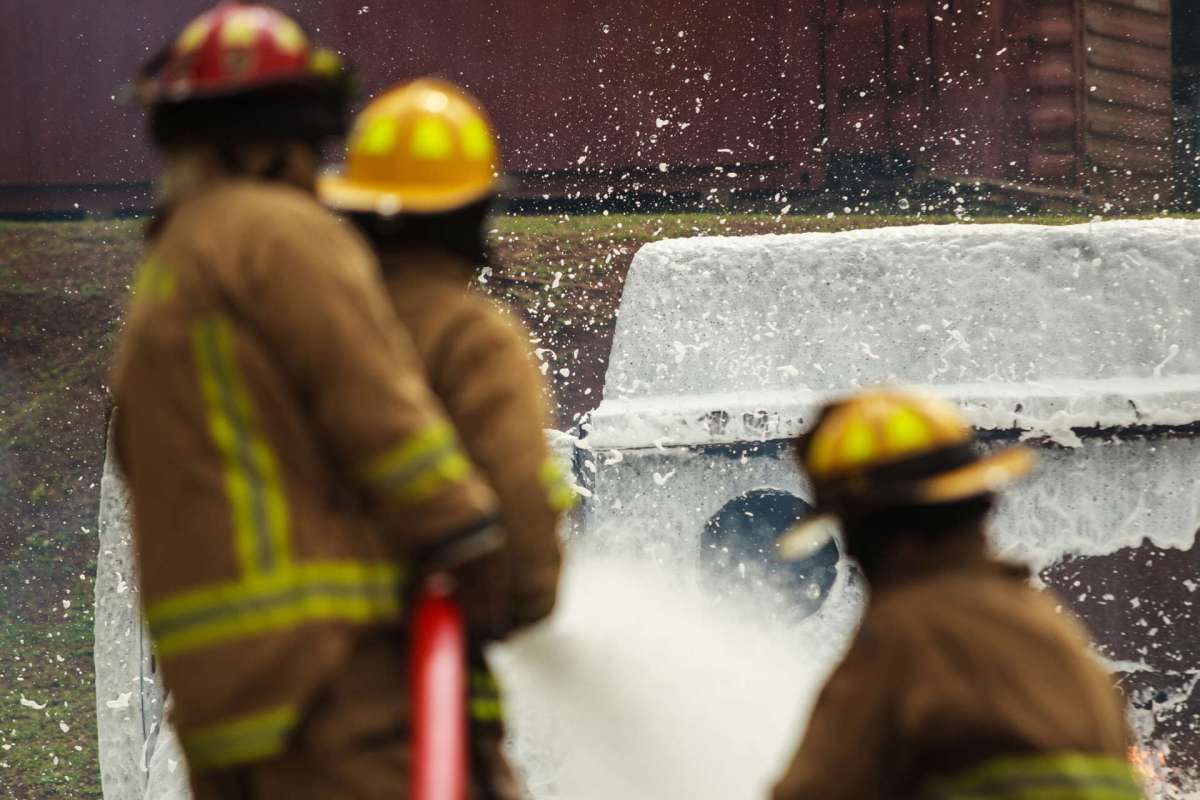
Ohio is using money from a settlement with Monsanto to tackle toxic firefighting foam stored in local departments across the state.
So far, the state has covered nearly the full cost of a program that eliminated more than 13,500 gallons of PFAS-containing foam.
Here's what to know
Gov. Mike DeWine's administration launched a takeback program in 2024 aimed at destroying hazardous per- and polyfluoroalkyl substances (PFAS) in firefighting foam.
Of the $3 million Ohio approved for the statewide takeback effort, 95.1%, or $2,851,637.70, had been paid to Battelle Memorial Institute, Cleveland.com reported. Battelle is a Columbus nonprofit research organization that collects and destroys the PFAS-containing firefighting foam.
Participating departments, local governments, and government-owned airports were not charged to hand over the foam. During the completed first phase, the program collected more than 13,500 gallons from 118 departments and two municipal airports.
Ohio financed the effort with environmental settlement proceeds connected to a Monsanto-related PCB contamination case rather than money from the state's General Revenue Fund.
TCD Picks » Quince Spotlight
💡These best-sellers from Quince deliver affordable, sustainable luxury for all




More background
PFAS stands for per- and polyfluoroalkyl substances, a broad class of synthetic chemicals used in many products, including some firefighting foams. The U.S. Environmental Protection Agency says some PFAS can remain in soil and water and may be associated with harmful health effects.
When PFAS-containing foam stays in storage, it can become an environmental and financial liability if it leaks, spills, or is disposed of improperly.
The foam in question is commonly known as AFFF, or Aqueous Film Forming Foam, and it has long been used for certain high-risk fire scenarios. But as concern over PFAS contamination has grown, states and local agencies have faced increasing pressure to safely remove older stockpiles.
What's being done?
The agreement with Battelle covered more than disposal alone, including collection, destruction, program management, and technical and laboratory services.
Many local departments would likely struggle to coordinate compliant destruction on their own. A statewide program can reduce the burden on smaller agencies while helping ensure the foam is handled through a controlled process.
According to cleveland.com, the first phase has already been completed, and $148,362.30 of the original $3 million authorization remained unpaid through Aug. 12. The spending records reviewed by cleveland.com showed payments running from April 2024 to Aug. 12, 2026.

Get TCD's free newsletters for easy tips, smart advice, and a chance to earn $5,000 toward home upgrades. To see more stories like this one, change your Google preferences here.







