


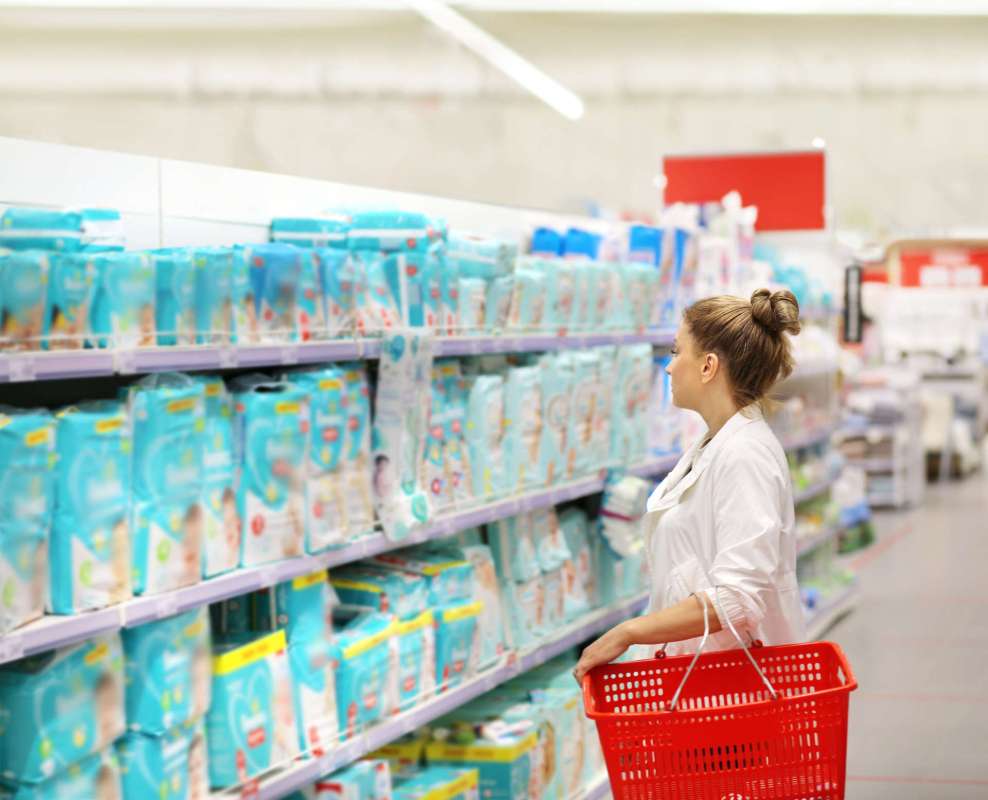
A California bill targeting disposable diapers is advancing after clearing the state Assembly. If it becomes law, diaper manufacturers would have to disclose the intentionally added chemicals in their products, giving parents long-sought transparency about what touches babies' skin for hours at a time.
Here's what to know
According to the Guardian, the proposed bill cleared the Assembly with a 68-1 vote and will now go to the California Senate.
Manufacturers would be required to list intentionally added diaper ingredients and the purpose of each one on a public webpage by 2028, with the same information then required on packaging by January 2029.
Backers say the bill could shed light on what they call a "mystery cocktail" of chemicals, including fragrance mixtures, volatile organic compounds, arsenic, lead, quats, PFAS, and phthalates.
California Assembly member Marc Berman, who authored the bill, said, "Parents deserve better than a guessing game, especially when it comes to a product that will be touching their babies' skin for every minute of every day for the first two or three years of their lives."
The concern is valid on several levels, considering infant skin is thinner and more absorbent than adult skin, and the measure is backed by more than 150 public health organizations.
TCD Picks » Quince Spotlight
💡These best-sellers from Quince deliver affordable, sustainable luxury for all




Why is this significant?
Evidence of those chemicals in diapers has surfaced in several investigations and studies. Testing commissioned by Mamavation detected PFAS in a range of popular diaper brands, while French regulators found chemicals such as formaldehyde, pesticides, and dioxins. Other peer-reviewed research identified numerous VOCs in diapers and similar hygiene products.
Disposable diapers contain these chemicals for a variety of purposes. PFAS can act as a moisture barrier, phthalates can make plastics more flexible, formaldehyde may be used as a preservative, and heavy metals can appear in inks and dyes. The argument remains that researchers still do not fully understand what constant low-level exposure could mean for babies over time, but the overall consensus by supporters of the bill is that it can't be good.
Susan Little of the Environmental Working Group said, "California parents shouldn't need a chemistry degree to buy a diaper." The article warns that parents should be skeptical of terms like "natural", "plant-based," and "eco-friendly," which have no legal definition and do not qualify diapers as nontoxic.
A small 2025 study in China found correlations between some phthalates found in diapers and levels measured in the urine of 66 babies, along with markers of DNA damage. However, the study did not fully prove that diaper use causes disease.
What's being done?
Rather than banning chemicals outright, the California proposal focuses on transparency.
Advocates say that approach may have a better chance of withstanding industry opposition while still putting pressure on companies to reformulate their products if consumers begin comparing ingredient lists more closely.
Industry groups, however, have defended existing products. The Center for Baby and Adult Hygiene Products, a trade group representing many top manufacturers, said, "Diapers are designed and manufactured to meet strict safety standards, and decades of real-world use support their safety for infants and children."
Supporters of the bill argue that disclosure alone could still have major consequences in a state as large as California. Other states often follow California's lead on consumer protection policy, so the impact could extend far beyond the state's borders.
"Transparency laws can move the marketplace," said Oriene Shin, safety advocacy manager with the Consumer Reports nonprofit. "When a customer can compare ingredients, manufacturers have an incentive to follow what the consumer wants, instead of deciding what to do based on internal analyses."
For parents, the Environmental Working Group's safe diaper guide evaluates diaper ingredients and provides recommendations for products that meet its standards. It was noted that companies pay for the EWG-certified label. Mamavation also provides a list of diapers it tested, indicating which ones do or do not contain PFAS.

Get TCD's free newsletters for easy tips, smart advice, and a chance to earn $5,000 toward home upgrades. To see more stories like this one, change your Google preferences here.






