


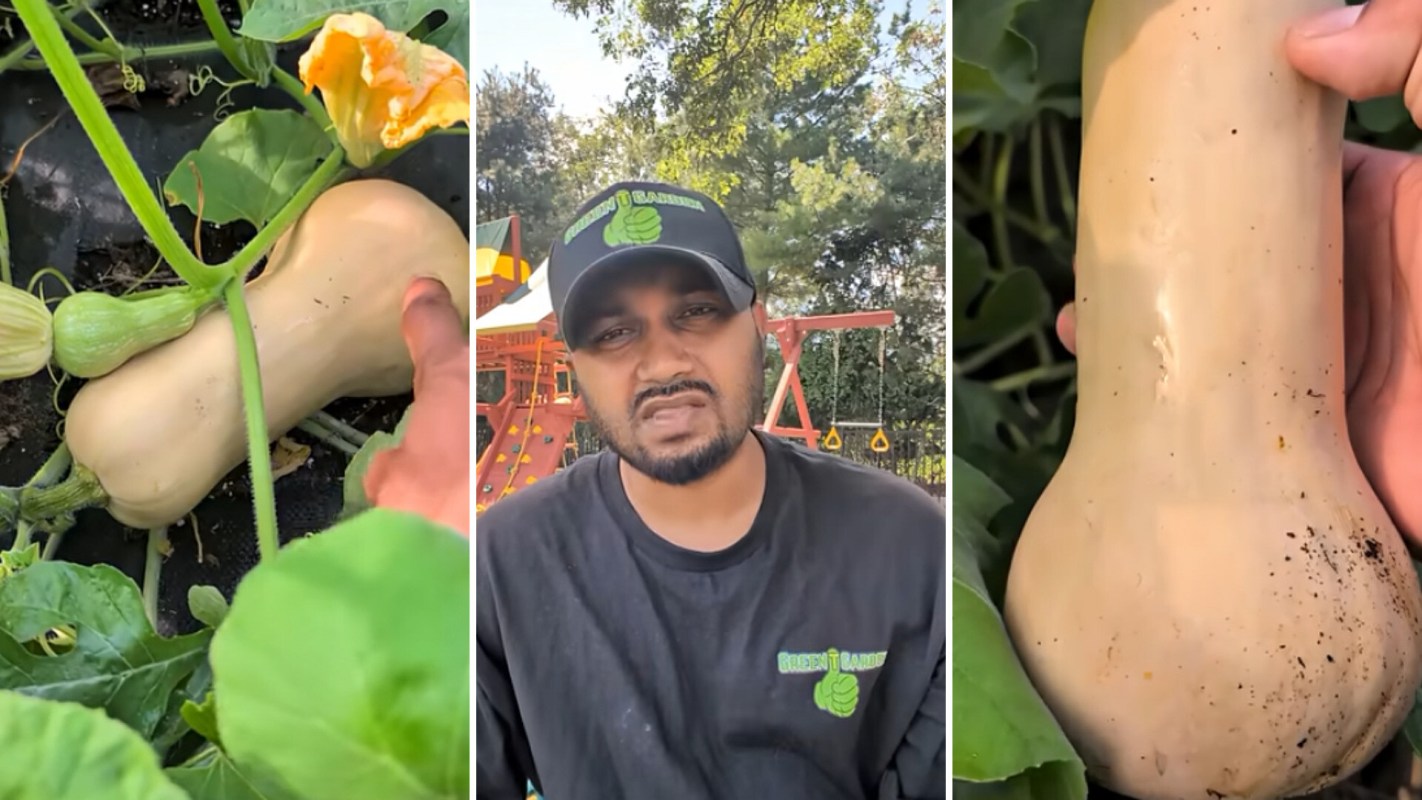
Knowing when to pick butternut squash can determine whether it keeps well into winter or spoils on the counter.
For home gardeners, that means judging maturity by more than size and watching for changes in color, texture, and more.
Here's what to know
Butternut squash can be one of the most rewarding crops to grow at home, but it is also easy to harvest too early. Because it is a storage squash, picking it before it is fully mature can shorten both its flavor and its shelf life.
Luckily, in a YouTube video, gardening pro GreenTGarden (@Greentgarden) shared tips that can help you pick butternut squash at the perfect time.
The creator shared that gardeners should look for a "fully dull tan color with no green." If you try to pierce it with your fingernail, it shouldn't go in because the squash should be really hard.
Another sign, the creator noted, is when the stem turns brown — "that's one indication it's ready to harvest," he wrote.
TCD Picks » Quince Spotlight
💡These best-sellers from Quince deliver affordable, sustainable luxury for all




Once the squash is picked, the next step is curing. "The curing process for a butternut squash is when you harvest the butternut squash, leave it by your window corner or outdoors in the sunny area between seven to 14 days," he wrote. "That will increase the flavor, harden up the squash so it could last for a longer time."
More background
This advice can pay off in a big way for home gardeners because winter squash is one of the crops that can continue feeding a household long after the growing season ends. Getting harvest timing right can help people save money on produce by reducing the need to buy vegetables at the store later in the season.
Homegrown produce is often fresher and more flavorful than food that has spent days in transit, and curing can help butternut squash develop the rich, sweet qualities many people expect when they roast or puree it.
Gardening can offer benefits from beyond the kitchen as well. Planting, watering, pruning, and harvesting provide light physical activity, while spending time outdoors and watching food grow can support mental well-being and reduce stress.
What can be done?
The first step is patience. Size is not the best guide; it is better to wait until the rind is hard enough that a fingernail cannot puncture it, the skin is fully tan, and the stem has turned brown.
After picking, a seven- to 14-day curing period can make a noticeable difference. Keeping the squash in a sunny spot indoors or outdoors can build flavor and improve storage life, which can mean less waste and more meals from a single crop.
Even a modest garden can deliver meaningful returns: lower grocery bills, better-tasting produce, more exercise, and the satisfaction of eating something you grew yourself.
"I love that it lasts for months," one commenter said.

Get TCD's free newsletters for easy tips, smart advice, and a chance to earn $5,000 toward home upgrades. To see more stories like this one, change your Google preferences here.






