


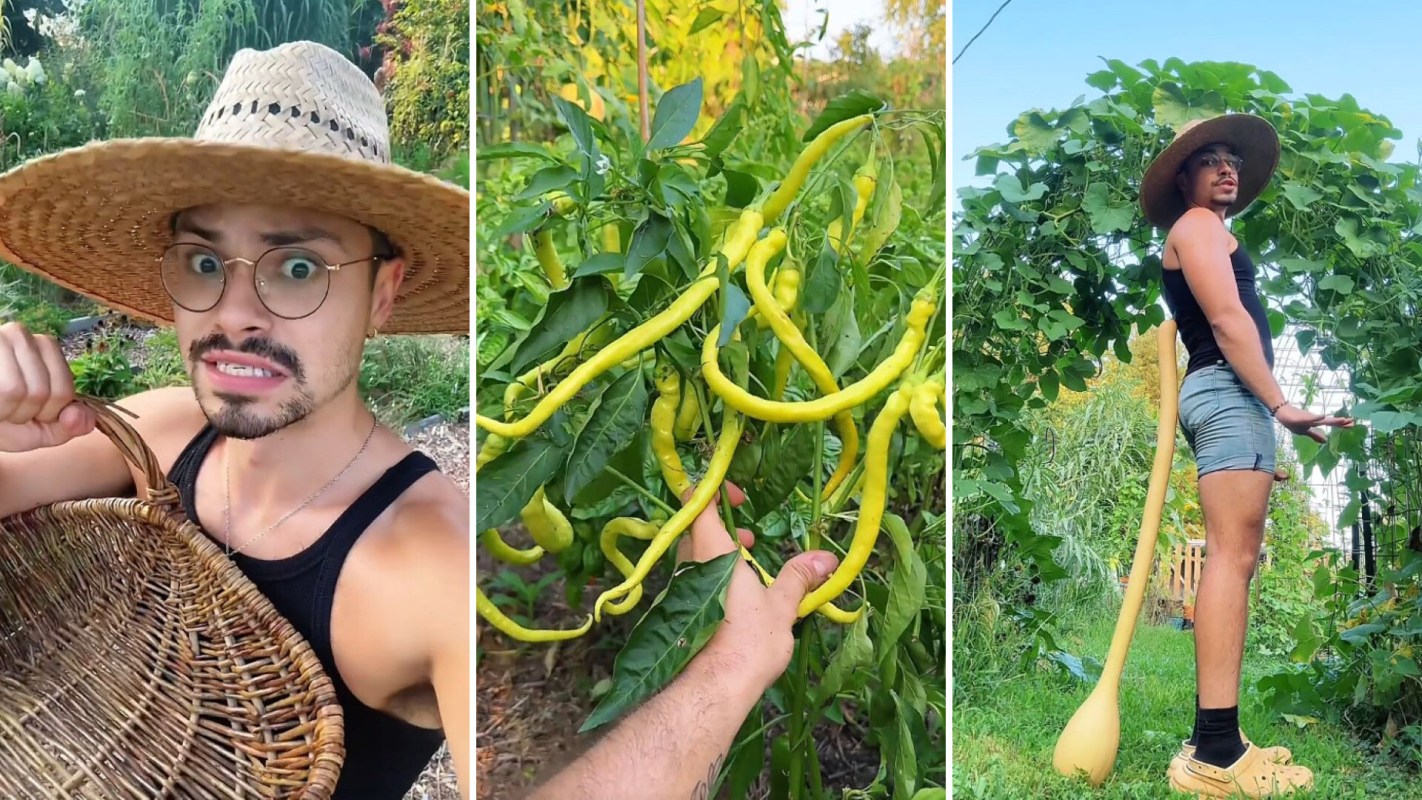
Brian Brigantti (@redleafranch) returned after 10 days away to find a vivid reminder that a thriving food garden does not always require constant fussing.
Brigantti's garden was overflowing with tomatoes, peppers, beans, squash, and sunflower seeds ready for harvest all at once.
Here's what to know
In a TikTok, Brigantti documented a post-trip harvest by loading up a basket with produce that matured during the break. "The garden likes a little neglect apparently," he wrote.
@redleafranch The garden likes a little neglect apparently. Let's harvest! 🌻🍅✨ #garden #harvest #farmlife #abundance ♬ original sound - redleafranch
The haul included squash, several kinds of tomatoes, corbaci peppers, Jimmy Nardellos, red noodle beans, Japanese winged beans, sunflower seeds, and a huge zucchini rampicante.
A few tomatoes were lost and birds got to some of the sunflower seeds first, but there was still plenty left to gather and Brigantti didn't stress over it. Instead, the creator was enthusiastic about the "ABUNDANCE" that he called out in a comment.
The post drew over 83,000 likes and hundreds of comments as users praised Brigantti's garden and shared their own garden updates with photos.
TCD Picks » Quince Spotlight
💡These best-sellers from Quince deliver affordable, sustainable luxury for all




"I love your harvesting video. Your garden shows a lot of love and hard work," one person wrote.
More background
Growing food at home can save households money on produce, especially when grocery prices are volatile and fresh foods are expensive. A successful tomato or pepper harvest can offset repeated store trips, and many gardeners say homegrown produce tastes better because it can ripen fully before being picked.
There are health benefits as well. Gardening adds regular physical activity to your routine through digging, carrying, pruning, and harvesting, while many people also find it calming and grounding. Time spent outdoors tending plants has long been associated with lower stress levels and improved mood.
"Low-maintenance" does not mean "no-effort," but it can eliminate the need for perfectionism. Some gardens thrive when growers focus on healthy soil, spacing, and watering habits, then give plants room to do their thing.
That seemed to be the case here. Despite losing a few tomatoes and sharing some sunflower seeds with birds, Brigantti still ended up with an impressive harvest.
What can be done?
Starting small is often the best move. A few productive crops, such as tomatoes, peppers, beans, herbs, and squash, can offer a big payoff without requiring a full backyard farm. Container gardening can work, too, especially for renters or anyone with limited space.
Choosing resilient varieties and building healthy soil can also make a major difference. Mulch helps hold moisture, and simple, natural methods can reduce the need for constant weeding or chemical-heavy intervention. If you're interested in growing your own food, starting with one or two easy crops can make the process feel more manageable.
It also helps to expect imperfection. A tomato may split, birds may peck a sunflower, and you may miss a harvest window. But that does not mean the garden has failed.

Get TCD's free newsletters for easy tips, smart advice, and a chance to earn $5,000 toward home upgrades. To see more stories like this one, change your Google preferences here.







