


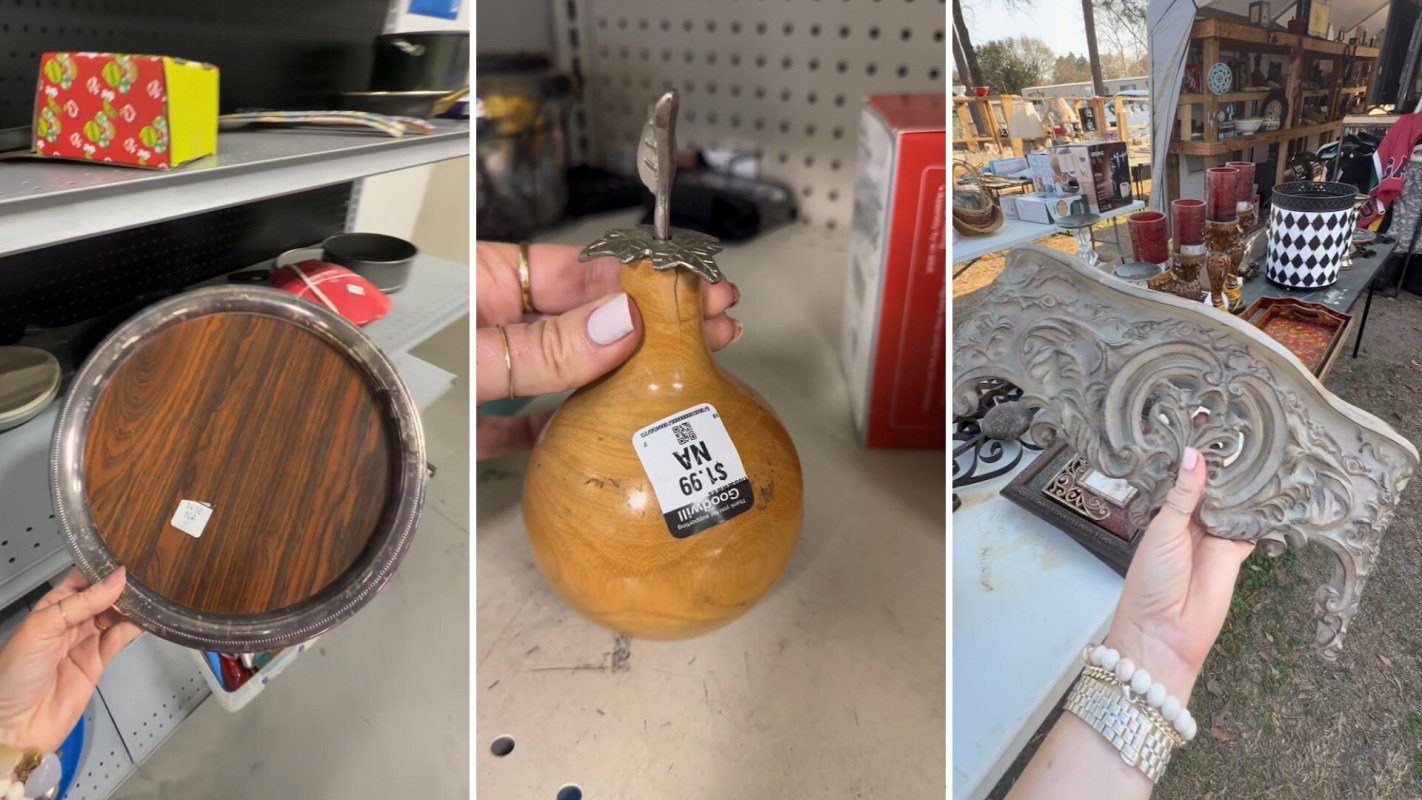
One of the most valuable thrift-shopping skills has little to do with arriving early or being first through the door. Instead, it is the ability to look past dust, tarnish, or plain styling and recognize an item's hidden potential.
In a YouTube video, Candy Thrifts (@CandyThrifts) illustrated exactly that point, showing how the most overlooked object on the shelf can end up transforming an entire room.
What's happening?
Candy Thrifts focused on how thrifted pieces that seem unremarkable at first can become striking home accents with a little imagination.
"Don't be fooled by how things look at the thrift store," she said.
To make that case, the video highlighted several different finds used in unexpected ways: a large glass canister enhanced with seashells, a small shelf repurposed by turning it upside down, a textured glass piece used as a centerpiece, and a heavily tarnished silver-plated item restored with polish.
Shoppers do not always need a perfect item. Often, what matters more is finding something sturdy with appealing shape or texture — what the creator described as "good bones."
TCD Picks » Quince Spotlight
💡These best-sellers from Quince deliver affordable, sustainable luxury for all




Why does it matter?
Thrifting can help people save significant money, especially when shopping for home goods, storage containers, kitchenware, frames, lighting, or furniture. Buying secondhand is often far less expensive than purchasing comparable products new, making it easier to decorate a space or replace essentials while staying within a budget.
It can also open the door to unusual or higher-quality finds that might otherwise be out of reach. Vintage glass, solid wood items, silver-plated decor, and older household goods can sometimes offer more character — and better craftsmanship — than newer mass-produced alternatives.
There is also an environmental benefit. Reusing existing products helps keep functional items out of landfills and reduces demand for newly manufactured goods, which can lower the energy use, materials, and pollution associated with producing and transporting new items.
The creator's examples show that surface-level flaws or awkward store presentation do not necessarily mean an object lacks value. In many cases, it simply means fewer shoppers are noticing what could become a great find.
What can I do?
One useful approach to thrifting is to focus on materials, shape, and versatility rather than only an item's original purpose. Pieces made of glass, metal, ceramic, and wood often have the greatest reuse potential, especially when they are sturdy and structurally sound.
Inspect items carefully. Look for cracks, major chips, missing pieces, or signs that an item may be unsafe to use. Cosmetic issues such as tarnish, dated styling, or an unusual display setup are often much easier — and less expensive — to address.
If you are new to secondhand shopping, start small. A vase, canister, tray, lamp base, or shelf that could work in multiple ways can be a good place to begin. It can also help to think beyond decor alone, since some thrifted finds can be both visually appealing and useful in daily life.

Get TCD's free newsletters for easy tips, smart advice, and a chance to earn $5,000 toward home upgrades. To see more stories like this one, change your Google preferences here.






