


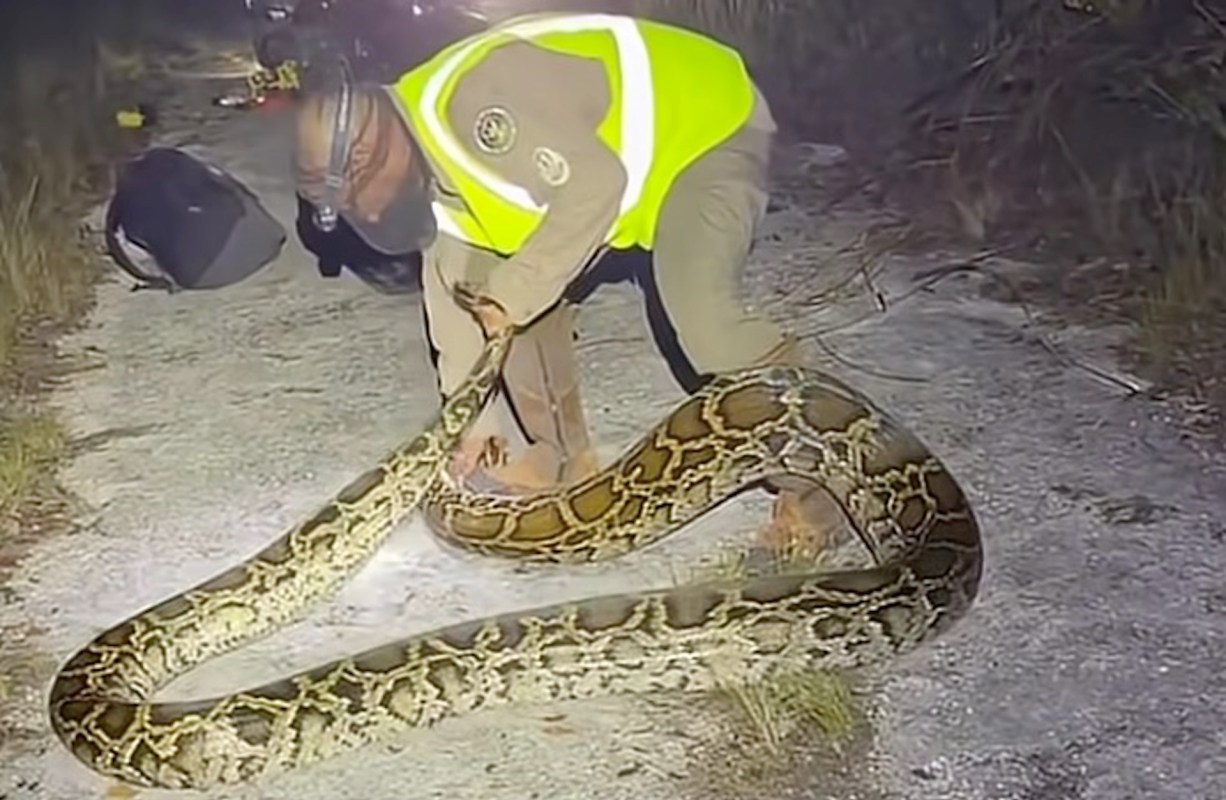
An overnight hunt during the Florida Python Challenge took a startling turn when two veteran snake hunters subdued a 16-foot Burmese python in the Everglades and then realized a nearby nest was full of young snakes.
The episode became a vivid example of what Florida's yearly push against invasive pythons can look like in the field.
What happened?
Licensed hunters Rahm Levinson and Tom Rahill were riding e-bikes along an overgrown trail in Everglades National Park on July 18 when something large in the brush caught their eyes.
As Outdoor Life reported, the animal proved even bigger than it appeared and was later confirmed as the longest snake recorded in this year's event.
"I was in the front on my bike, with lights on looking for snakes. Tom was behind me on his bike, and while going along I happened to glance over into the brush and saw a big snake," Levinson told the outlet.
The two men held back for a moment before making their move.
TCD Picks » Quince Spotlight
💡These best-sellers from Quince deliver affordable, sustainable luxury for all




"We watched it coiled in the grass for a while, figuring a strategy on how to catch it," Levinson said, per Outdoor Life.
After they got the python into a bag, it measured 16 feet, 5 inches and earned Levinson $1,000 for the longest catch.
That was not the end of the night.
Roughly 15 minutes later, Rahill found a nest close to where the female had been captured. He recovered 96 live hatchlings and said only two eggs failed to hatch. Outdoor Life also reported that Rahill took the challenge's top overall prize of $10,000 for recording the highest total of Burmese pythons during the eight-day event.
TCD Picks » Quince Spotlight
💡These best-sellers from Quince deliver affordable, sustainable luxury for all
Why does it matter?
According to Outdoor Life, Burmese pythons have heavily reduced populations of small mammals and ground-nesting birds across South Florida, putting additional strain on an already fragile ecosystem.
Taking out a female python — and a large one at that — matters because of how many offspring it can produce. In this case, there are now almost 100 fewer invasive predators in the Everglades.
Levinson and Rahill are part of SwampApes, a Broward County group founded by Rahill that brings military veterans with PTSD into wild areas to catch pythons as a form of outdoor therapy.
What's being done?
The Python Challenge has grown into one of Florida's most high-profile conservation programs.
Outdoor Life reported that the annual competition started in 2017 and that more than 1,600 pythons have been removed by participants since 2017. Most of the 300 pythons that were taken in July were removed during the challenge.
Competitors were given access to Everglades National Park, opening up important habitat where invasive pythons are known to do well. Other designated hunting grounds included Big Cypress Wildlife Management Area, Holey Land Wildlife Management Area, and several South Florida public lands.
Python removal continues outside the contest, with licensed hunters working both day and night. The snakes breed quickly and are famously hard to spot in dense wetlands.
"That big girl had a huge nest, and the eggs were hatching," Levinson told Outdoor Life.
He also offered a sobering reminder about the work still ahead: "There are plenty more big ones crawling around out there, too."

Get TCD's free newsletters for easy tips, smart advice, and a chance to earn $5,000 toward home upgrades. To see more stories like this one, change your Google preferences here.







