


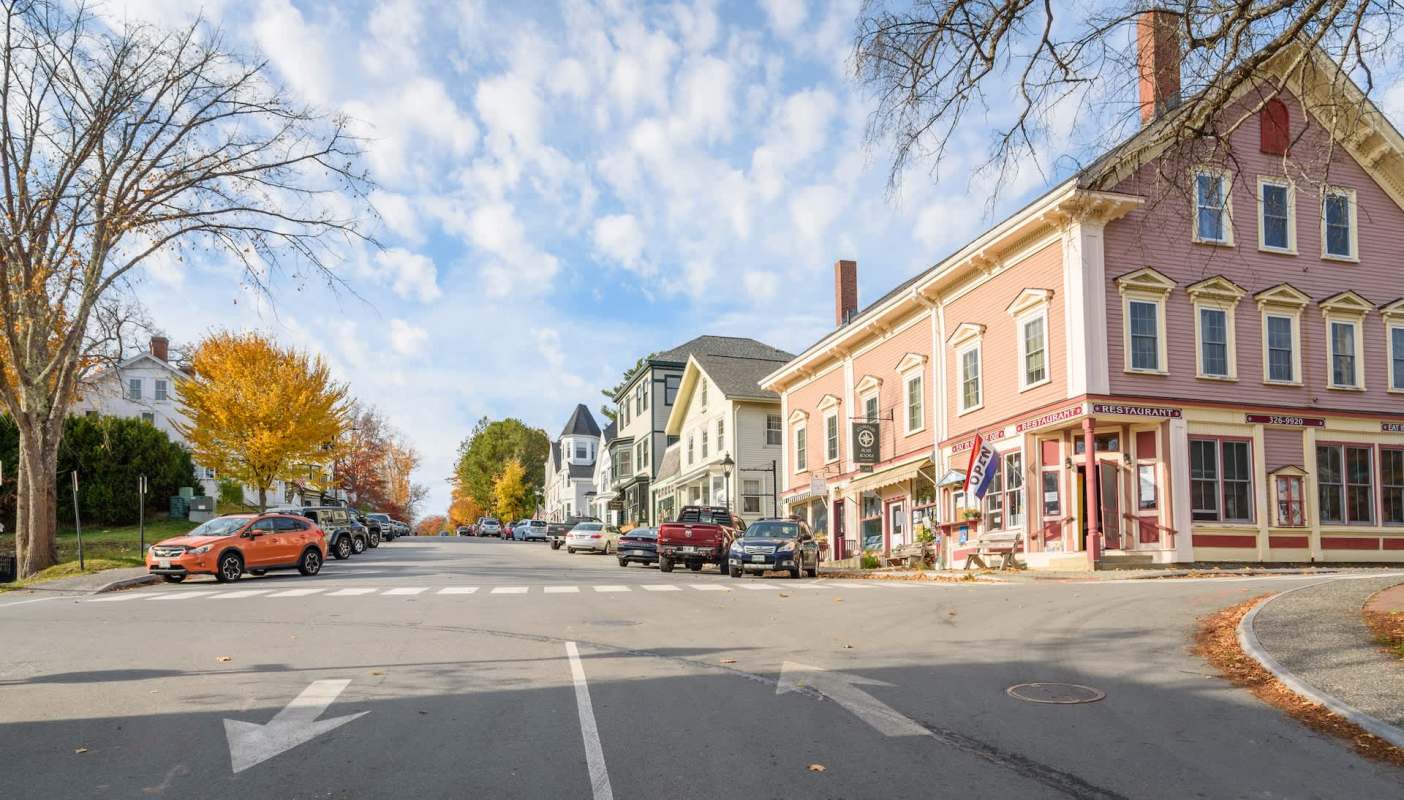
While communities across the U.S. are enacting moratoriums and launching protests against large-scale AI data centers, one small town in Maine is begging for one to be built there.
Town officials have presented the project as an opportunity for a community still dealing with the recent loss of its biggest employer.
What happened?
According to Futurism, Jay, Maine, a town with a population of roughly 4,600, is pushing efforts to welcome a major data center at a time when similar proposals elsewhere have drawn opposition over power consumption, water use, and other local effects.
The location under consideration is the former 1,000-acre home of the Androscoggin Mill. Before a 2020 explosion destroyed the complex, it had employed more than 1,500 people.
Now, without the mill, the town is without a large employer.
According to a report from The Atlantic, as summarized by Futurism, developer Tony McDonald quelled common concerns over a potential data center by comparing it to the old mill.
TCD Picks » Quince Spotlight
💡These best-sellers from Quince deliver affordable, sustainable luxury for all




The Atlantic summarized McDonald's arguments like this: "Would a data center be loud? Can't be as loud as the mill! Could it smell bad? The mill smelled like rotten eggs! Would it pollute the environment? The river was covered in toxic foam in the mill days!"
After hearing McDonald's pitch, Jay's five-member board backed the proposal as Maine considered a statewide moratorium.
Why does it matter?
The battle over data centers has grown far beyond one town. Facilities tied to AI and cloud computing can bring jobs and tax revenue, but they also put major demands on power grids and water supplies, sometimes raising fears of higher utility costs or environmental strain for nearby residents.
That tension is especially pronounced in places like Jay, where economic hardship can make a controversial project seem worth embracing. McDonald said, as reported by Futurism, the completed facility would create about 125 to 150 full-time high-paying jobs — significant in a small town, though still only around a tenth of the mill's former workforce.
AI's expansion is closely tied to the energy grid because training and running advanced systems requires enormous computing power, which in turn requires electricity and cooling. Supporters say AI can help optimize clean energy systems, forecast demand, and improve efficiency, but the tradeoffs remain significant: higher energy and water use, cybersecurity and misuse concerns, and the possibility that rapid data center growth could shift costs onto households.
In Jay, those competing realities are colliding with the town's efforts to revive itself after an industrial collapse.
What's being done?
Backers have argued that the project would demand far less water than the mill did, noting that the old facility once used tens of millions of gallons per day.
At the state level, the debate has centered on whether Maine should pause large new data center development while officials evaluate the broader impacts.
Data center proposals can hinge on promised jobs, projected energy use, water needs, tax benefits, and who could bear the risks if costs rise. Such projects can offer benefits, but the tradeoffs are often highly specific to the place.

Get TCD's free newsletters for easy tips, smart advice, and a chance to earn $5,000 toward home upgrades. To see more stories like this one, change your Google preferences here.






