


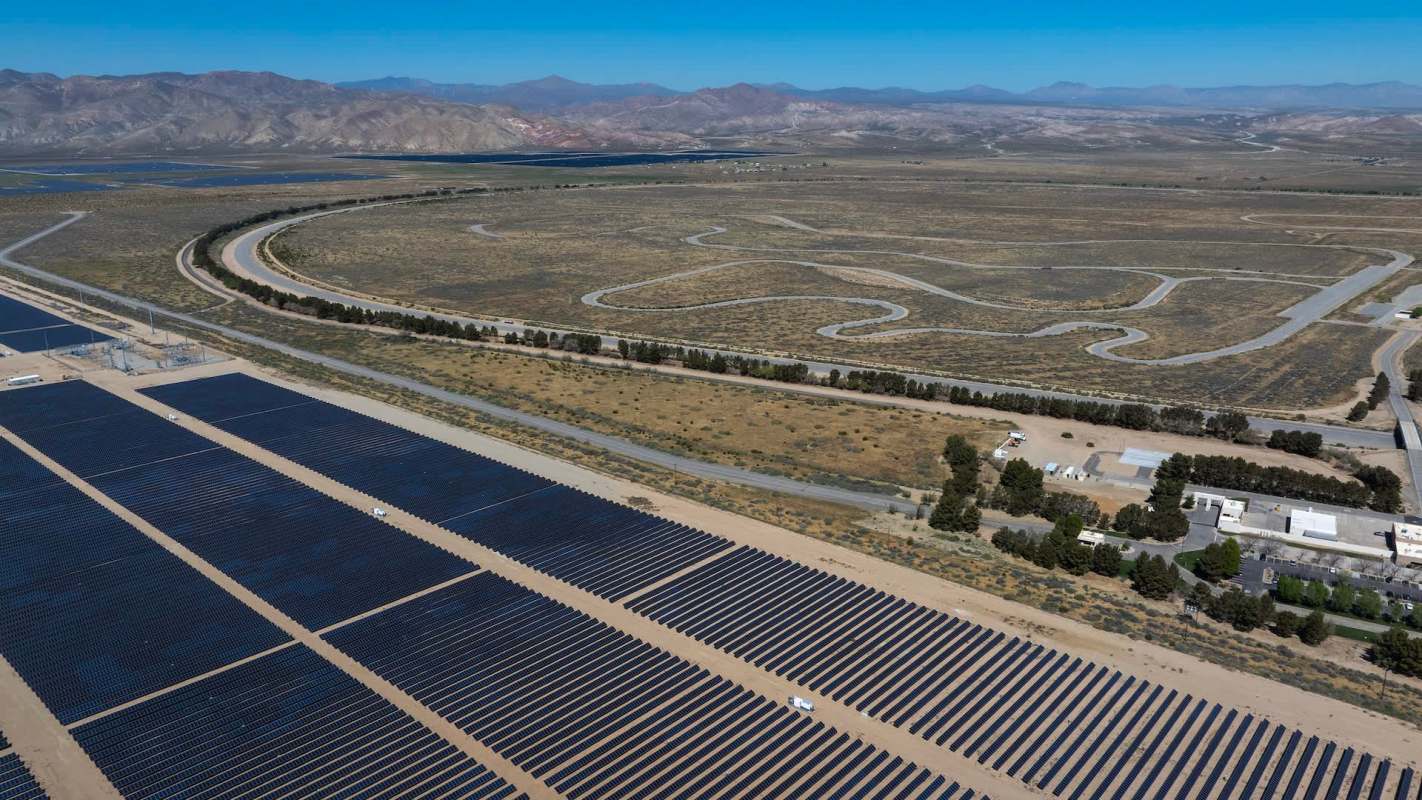
California hit a significant clean-energy benchmark in 2024 with nearly two-thirds of the electricity used statewide coming from carbon-free sources.
Rapid growth in solar generation and battery storage is driving that change for millions of residents, allowing the state's power grid to rely less on gas-powered plants.
What's happening?
Data from the California Energy Commission, cited by KQED, show that carbon-free sources such as solar, wind, hydroelectricity, geothermal, and nuclear made up 62% of California's electricity in 2024, up from 58% in 2023. Solar by itself accounted for 20% of the state's electricity mix in 2024, more than double its 2014 share.
In addition to renewable energy production, enhanced energy storage is another major reason the grid has become cleaner. California has about 21,000 megawatts of battery capacity, the most of any state in the country. Those batteries hold extra solar power produced during the day before sending it back onto the grid in the evening, when energy use spikes as residents get home, make dinner, plug in electric vehicles, and switch on air conditioners.
"The grid has been transformed not just by solar, but really coupled with the growth of battery projects," Andrew Campbell, executive director of the Energy Institute at UC Berkeley Haas, told KQED.
Going solar is one of the best ways to save money on home energy. Homeowners can explore EnergySage's free tools to get quick solar installation estimates and compare quotes.
Why does it matter?
Thanks to the state's growing solar capacity, electricity is increasingly available during the midday hours. This daytime abundance runs contrary to the expectations of many ratepayers who are accustomed to electricity prices being higher during the day.
"The middle of the day is the best time to use electricity," Campbell explained.
Save $10,000 on solar panels without even sharing your phone number Want to go solar but not sure who to trust? EnergySage has your back with free and transparent quotes from fully vetted providers that can help you save as much as $10k on installation. To get started, just answer a few questions about your home — no phone number required. Within a day or two, EnergySage will email you the best local options for your needs, and their expert advisers can help you compare quotes and pick a winner. |

With more daytime electricity coming from solar rather than gas, California can reduce the amount of harmful air pollution linked to burning fossil fuels. Even during evening peaks, batteries are helping California depend less on gas plants.
Despite this progress, the state still faces challenges in expanding renewable-energy production. Natural gas remains part of California's electricity-production mix during extended heat waves, cloudy periods, wildfire-related outages, and other emergencies. California also continues to deal with curtailment, meaning some solar and wind generation has to be dialed back when supply exceeds demand.
What can I do?
Charging an EV, running the dishwasher, or doing laundry around midday can line up with strong solar production and, in many cases, lower time-of-use rates.
For homeowners, adding battery storage to a solar setup is one of the best ways to protect your home during outages, save money on energy, and go off-grid. Pairing solar with a battery can also help you use more of your own electricity after sunset instead of buying power from the grid at pricier times. Homeowners can explore EnergySage's free tools for information about home battery storage options, including competitive installation estimates.
More From EnergySage
💡Go deep on the latest news and trends shaping the residential solar landscape

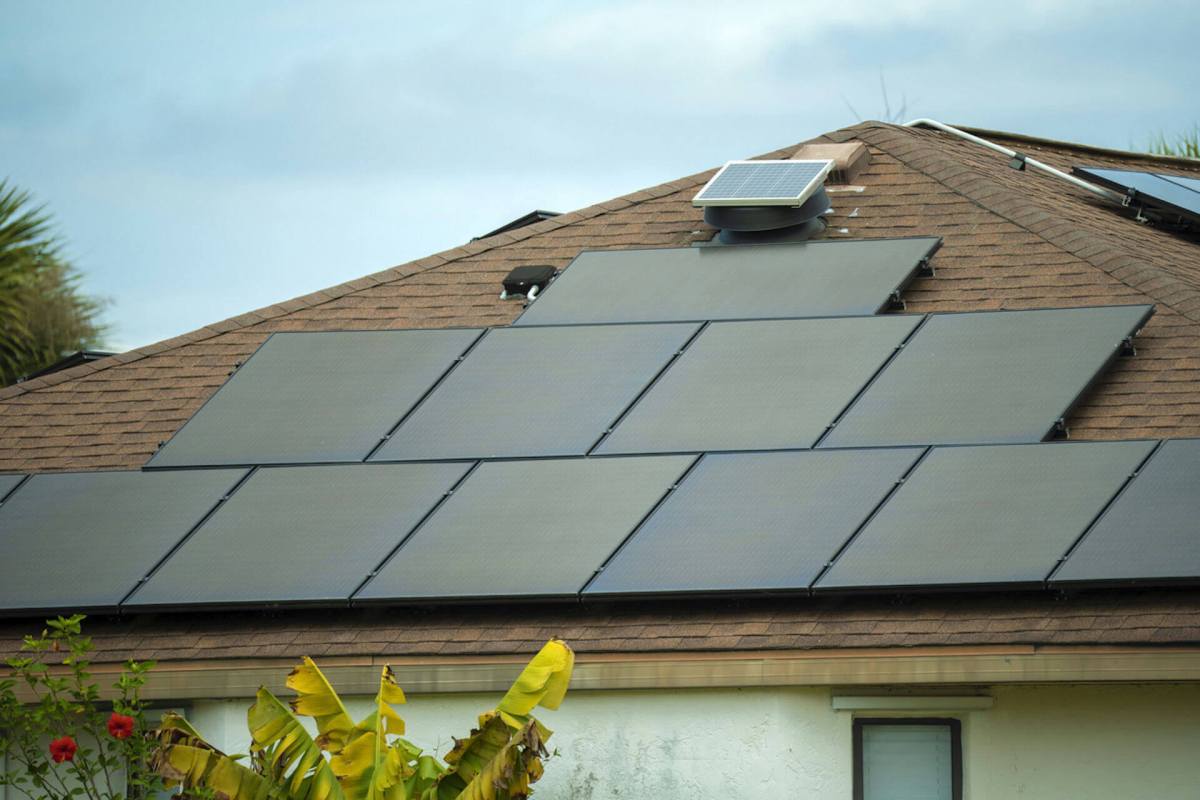

EnergySage's free services can also make shopping for solar a lot easier. With EnergySage's help, the average person can save up to $10,000 on solar purchases and installations. Meanwhile, EnergySage's solar map shows the average cost of a home solar panel system on a state-by-state level, as well as details on solar panel incentives for each state. Together, these resources can help readers get the best price for rooftop solar panels and access available incentives.
As Campbell put it, "It's very steadily and significantly becoming more green."

Get TCD's free newsletters for easy tips, smart advice, and a chance to earn $5,000 toward home upgrades. To see more stories like this one, change your Google preferences here.






