


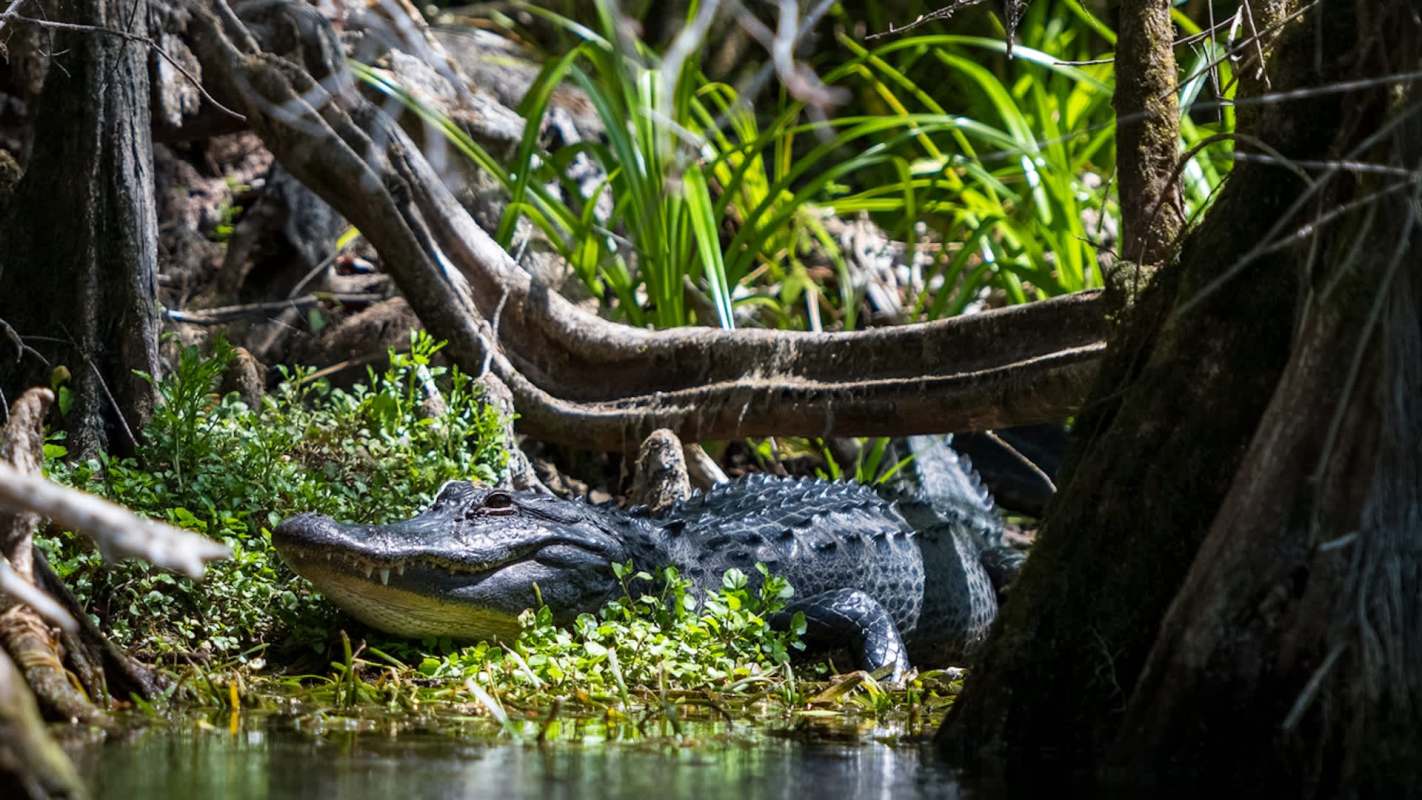
A woman is reportedly recovering after an alligator bit her arm while she was swimming in Florida's Silver River.
The incident adds to a string of alligator encounters in Central Florida since June, including one fatal attack, that have renewed safety concerns over the waterways that people and the large native reptiles often share.
What happened?
According to local outlet Fox 13 News, after the bite on August 8, Marion County temporarily closed Silver River while wildlife officers and a contracted alligator trapper searched the area. Officials removed a nine-foot-eight-inch alligator before reopening the river to the public on August 9.
Good Samaritans had helped to bring the woman back to shore following the bite, and first responders transported her to a hospital, according to the local news.
Why does it matter?
Many of the state's most popular natural areas are also home to powerful wild animals. Alligators are native to Florida and play an important role in wetland ecosystems there, but encounters can turn dangerous when people and wildlife come into close contact.
The more people swim, paddle, and recreate in rivers and lakes that also serve as animal habitats, the greater the potential for conflict. Wildlife attacks are often linked not only to animal behavior but also to the ways humans move into, use, and alter wilderness.
TCD Picks » Quince Spotlight
💡These best-sellers from Quince deliver affordable, sustainable luxury for all




As the expansion of people-built communities into natural areas increases and as people continue to seek relief from rising temperatures in waterways, the risks of human-wildlife conflict are set to escalate.
Such encounters can pose dangers for people and for animals. For humans, a serious bite can lead to life-altering injuries, emergency response costs, and temporary closures that disrupt local recreation. Animals can also be harmed in these situations and sometimes even culled by wildlife management.
What can I do?
If a waterway is temporarily closed or restricted, it is best to stay out until officials say it is safe to return. But even after an area reopens, Florida's rivers and lakes remain active wildlife habitat, and experts generally advise using caution.
Anyone in Florida concerned about an alligator in a place where it may pose hazards or be in harm's way can call the state's Nuisance Alligator Hotline. Wildlife officials say a responder will be sent to assess the situation and help resolve it.

Get TCD's free newsletters for easy tips, smart advice, and a chance to earn $5,000 toward home upgrades. To see more stories like this one, change your Google preferences here.







