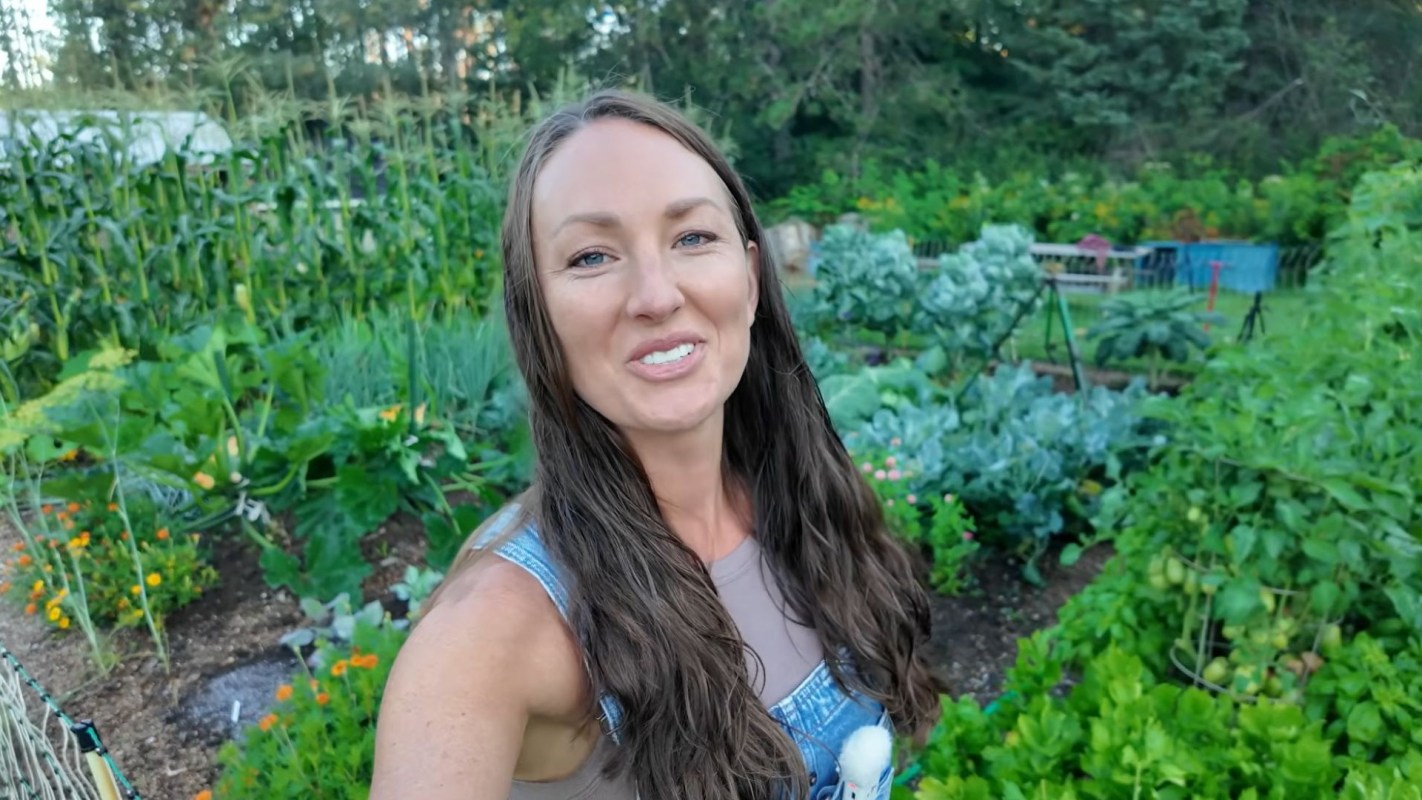
For gardeners near the Canadian border, August is not the season's quiet wind-down but a sprint. In a garden tour video, a Minnesota creator showed how a brief growing season can turn late summer into a race to harvest, freeze, and store enough food to last through winter.
What's happening?
In a YouTube explainer, Katie Krejci of The Homesteading RD (@thehomesteadingrd) captured the pressure of gardening in a northern climate in one line, writing: "August is go-time for us gardening in the north! We'll freeze in September, so there's no time to waste."
Katie, a registered dietitian, said she gardens in zone 3-4 conditions and tries to produce most of what her family eats within a short time frame.
Her tour featured an in-ground garden of roughly 1,300 square feet surrounded by electric poultry netting.
Katie linked what she called her "best corn ever" to an experiment that began with starting the plants indoors, then transplanting them outside two weeks later.
Preservation was a major part of the 54-minute video as well, with broccoli headed to the freezer, onions and shallots set aside for storage, and large cabbage heads intended for sauerkraut.
TCD Picks » Quince Spotlight
💡These best-sellers from Quince deliver affordable, sustainable luxury for all




She said the hot weather had stressed her brassicas and suspected her onions may have lost too much sun beside the unusually tall corn.
"I'm a MN gardener too," one commenter said. "I think the heat definitely damaged my broccoli this year. I had decent first heads but no second shoots."
Why does it matter?
The video captured the trade-offs of a cold-climate garden, as a hot summer can boost one crop and set back another.
In Katie's account, the heat was good for her corn but caused problems in other parts of the garden.
For households hoping to lower grocery bills, preservation may matter more than abundance.
For her gluten-free family, Katie said winter squash, corn, and potatoes were important starches, while frozen broccoli and zucchini-based meals keep garden food in use well past summer. That kind of planning can make a garden more financially practical, even if the setup is modest.
Katie noted homesteading was not effortless, pointing to disease concerns; garden layout mistakes; and trial-and-error decisions involving mulch, crop spacing, and succession planting.
What can I do?
A 13-row garden is not necessary to borrow useful ideas from Katie's setup.
A more accessible approach is to grow a few crops your household already eats regularly, choose varieties suited to your climate, and preserve what you know you will consume.
Some of Katie's methods also translate to a smaller garden. She trains zucchini vertically to save space; switches from straw to compost where the soil stays too wet; and makes room for second-round plantings of lettuce, radishes, and herbs.
If cold weather shortens your season, it can help to plan backward from your area's likely first frost and decide early how you will store food, whether through freezing, canning, dehydrating, or fermenting.
Commenters also shared crop-specific advice. "You want all the energy to go in the roots to form tubers," one wrote of sweet potatoes.
"Happy for you and your garden! I always learn something new from you," another said.
As Katie put it at the start of the video, "We have entered the fast and furious phase of food preservation."

Get TCD's free newsletters for easy tips, smart advice, and a chance to earn $5,000 toward home upgrades. To see more stories like this one, change your Google preferences here.