


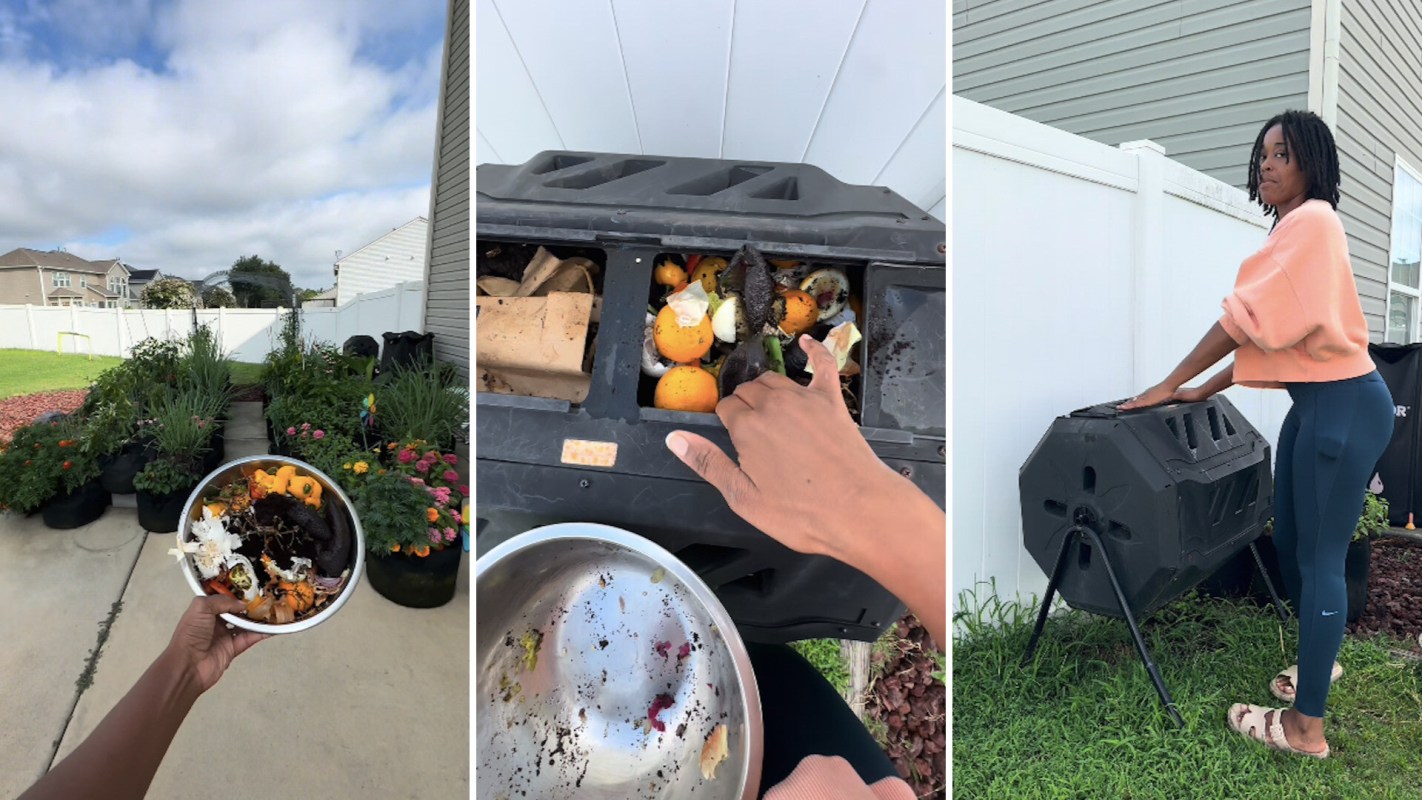
Kitchen scraps that might otherwise end up in the trash are getting a second life in one backyard, where a gardener is using leftovers such as eggshells, citrus peels, and avocado pits as compost instead of sending them to a landfill.
What happened?
Creator and home gardener Kayla (@fitmomsblog) shared a video dumping her household food waste into an outdoor composter. The contents included avocado pits, onion scraps, banana peel, oranges and lemons, grape stems, and eggshells.
@fitmomsblog Let's Compost ♻️ Composting is a great way to use food scraps as food/fertilzer for the plants. It reduces the amount of trash our home produces. I have a degree in Sustainability Management. A true tree hugger!! I love the earth. I love Mother Nature. I love gardening. I love composting. I love recycling. Reduce. Reuse. Recycle ♻️ ##gardentok##gardening##compost##fyp##gardener ♬ original sound - Kayla's Lifestyle 🦋
The creator explained as she filled the composter that "nothing goes to waste when you have a garden."
Many home gardeners who compost prove this theory.
Food waste is a major source of methane pollution when it decomposes in landfills without oxygen. Turning scraps into compost at home can help shrink that waste stream while creating a nutrient-rich soil boost for flowers, herbs, fruits, and vegetables.
Growing produce at home can help families save money at the grocery store, and many gardeners say homegrown fruits and vegetables taste better than store-bought options. Compost can also reduce the need to buy certain fertilizers or soil amendments.
TCD Picks » Quince Spotlight
💡These best-sellers from Quince deliver affordable, sustainable luxury for all




There are health benefits, too. Gardening can encourage physical activity through digging, lifting, and weeding, while time spent outdoors can support mental well-being and help relieve stress.
A pile of scraps can become healthier soil, and healthier soil can help support stronger plants.
What can I do?
If you're interested in starting your own compost, you don't need an expensive setup. Many people start by collecting fruit and vegetable scraps, coffee grounds, and crushed eggshells in a container before adding them to an outdoor compost bin or pile.
It also helps to know what to leave out. In many home compost setups, meat, dairy, oily foods, and heavily processed leftovers can attract pests or create odors, while plant-based scraps and yard trimmings are usually safer choices.
As time passes, those food scraps will decompose and turn into valuable compost that you can sprinkle or mix into soils in your garden.
The payoff can be both practical and personal: less trash, healthier soil, lower produce bills, and fresh food harvested close to home.

Get TCD's free newsletters for easy tips, smart advice, and a chance to earn $5,000 toward home upgrades. To see more stories like this one, change your Google preferences here.







