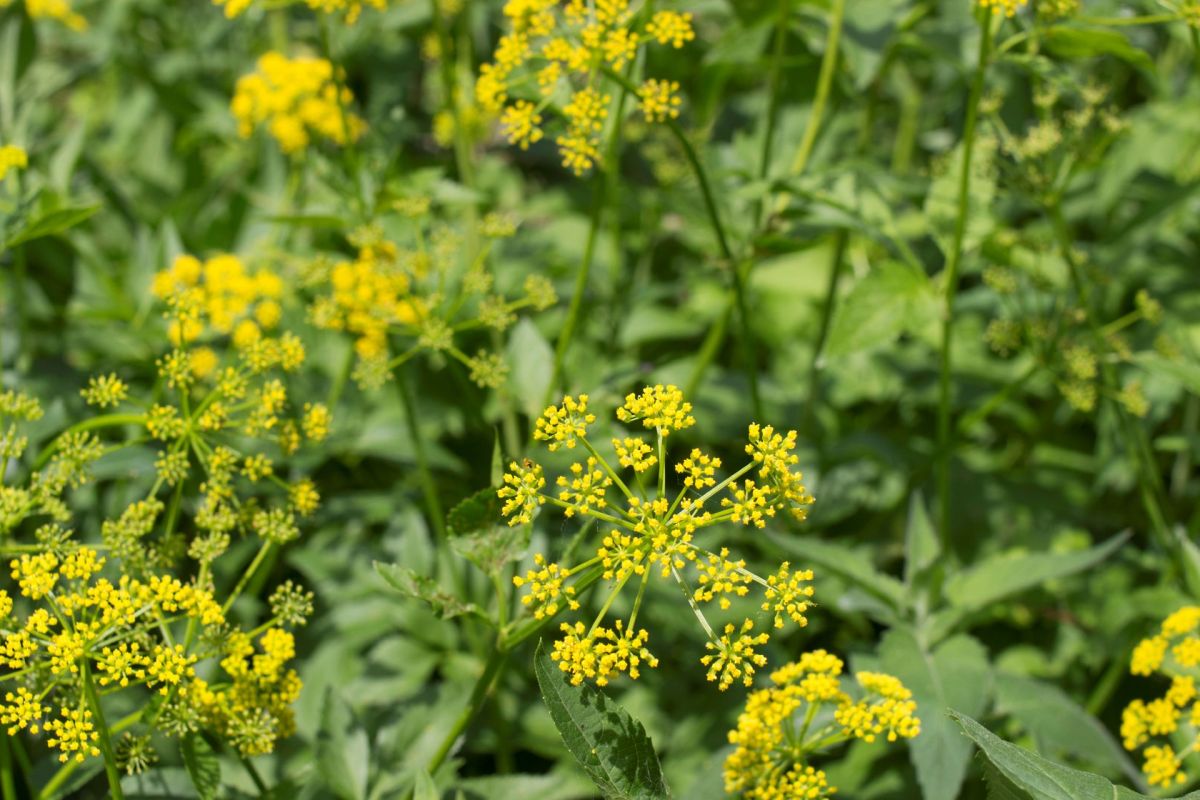
Wild parsnip, an invasive plant that can burn skin and damage local habitats, has been spreading in parts of Prince Edward Island in Eastern Canada, prompting local crews to take action.
What happened?
According to SaltWire, the P.E.I. Invasive Species Council sent coordinator Chase Guindon and other team members out by bike to locate and mark wild parsnips along the trail. SaltWire said crews intended to return to remove the plants and bring them to Charlottetown's P.E.I. Energy Systems plant.
Guindon told SaltWire the plant becomes especially dangerous when it is mature because of the sap it produces.
"It reacts with the sunlight to cause a photodermatological reaction, meaning that it causes a chemical burn on your skin that will persist for several years," Guindon said, as reported by the outlet.
SaltWire said wild parsnip has been identified in several parts of the province, including Tignish, the Confederation Trail, and eastern P.E.I. near Murray Harbour and Wood Islands.
In its first year, the outlet reported, the plant remains close to the ground in a rosette. In its second year, it grows a taller flowering stem topped with umbrella-shaped yellow blooms.
TCD Picks » Quince Spotlight
💡These best-sellers from Quince deliver affordable, sustainable luxury for all




Why does it matter?
The plant creates a safety issue for people who spend time on trails or work near roadsides and ditches.
Guindon said the council's goal is to keep public areas usable without people having to fear brushing up against wild parsnip.
Dawn McInnis, co-ordinator for the Tignish Watershed Management Group, told SaltWire that people in the community have already sustained injuries from the plant. McInnis explained her field supervisor's brother ran into the plant while cutting grass in a ditch and "sustained blisters on his legs."
Its impact is not limited to people. Guindon told SaltWire that wild parsnip can take over sites, pushing out other vegetation and reducing biodiversity by forming single-species patches.
McInnis also noted, according to SaltWire, that a stand growing near a stream raised concern because moving water could spread its seeds and create new infestations elsewhere.
What's being done?
For the council, eradicating wild parsnip is a long-term project, not a single sweep.
SaltWire reported that the effort is supported by the national Trans-Canada Trail program, and Guindon said removing the plant from a site usually requires about five years of work.
"The key for us is to get the plants before they go to seed, before the seeds go into the ground," Guindon said. "If we do that for five years or so we would have depleted the seed bank and there will be no more wild parsnip, as long as we get it all."
People doing the removal wear protective gear, including specialized head protection, and residents are being told to avoid handling the plant.
If someone is exposed, SaltWire reported that Guindon advised keeping the area out of sunlight, blotting off the oil-based sap instead of rubbing it, washing with soap and water, and seeking medical advice from a physician.

Get TCD's free newsletters for easy tips, smart advice, and a chance to earn $5,000 toward home upgrades. To see more stories like this one, change your Google preferences here.