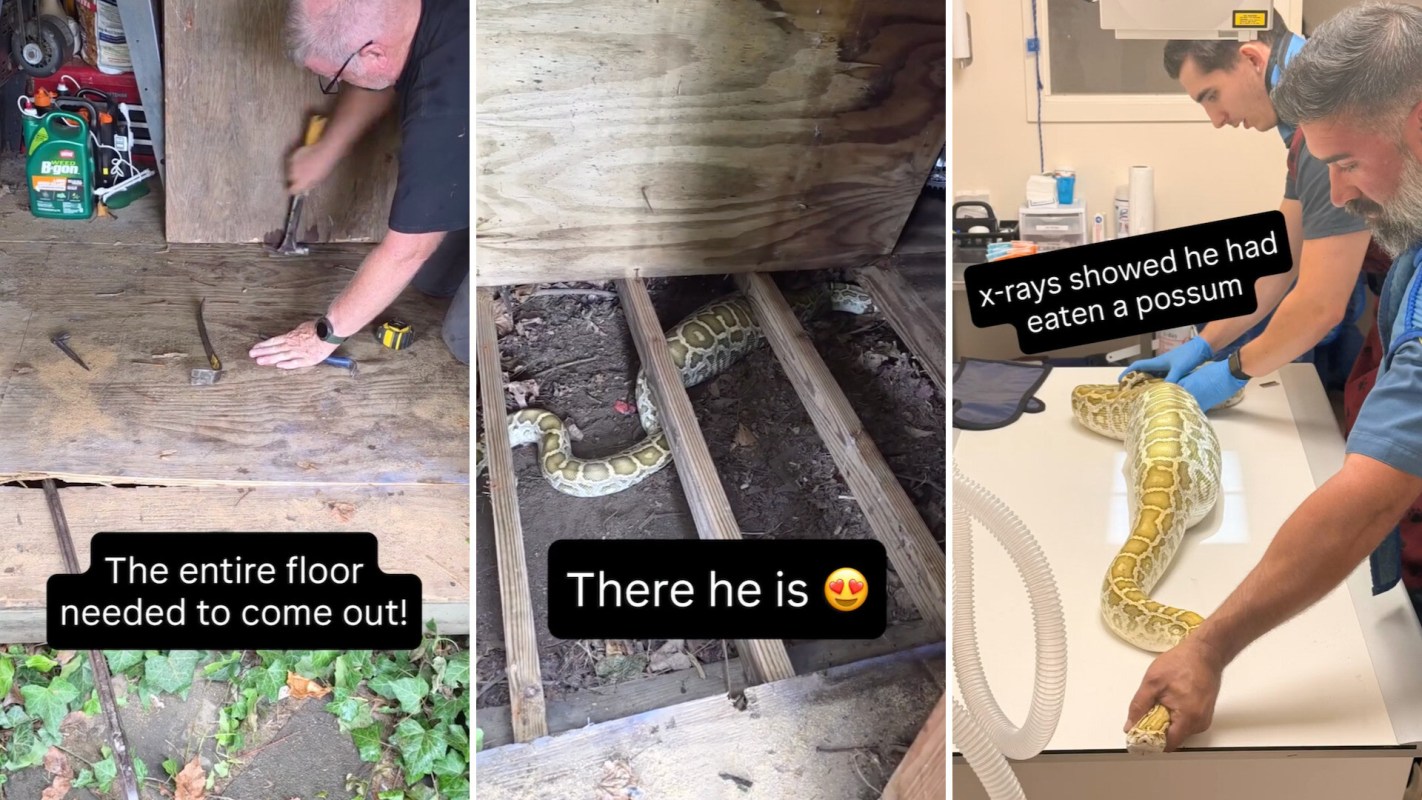
A backyard surprise in New Jersey turned into a rescue operation with a stark warning after an 8-foot Burmese python was found hiding beneath a shed after swallowing a large opossum.
As ABC7 New York reported, the startling discovery was dramatic on its own, but it also pointed to a larger issue of exotic pet escapes or releases.
What happened?
The call began with a Freehold homeowner who discovered a large snake under a shed, prompting a response from Monmouth County SPCA animal control. The SPCA elaborated on the event in a Facebook post with video.
Officers identified it as a Burmese python measuring about 8 feet long and tucked beneath the structure's flooring. Reaching the reptile took extra work, the SPCA noted in the caption.
With help from a local contractor, sections of the shed floor were removed so trained officers could safely access the animal and bring it out. A swollen area around the middle of the python's body suggested it had recently eaten.
X-rays taken by veterinary staff at the Monmouth County SPCA confirmed that the snake had swallowed a large opossum.
TCD Picks » Quince Spotlight
💡These best-sellers from Quince deliver affordable, sustainable luxury for all




After receiving evaluation and care, the python was housed in a secure enclosure instead of being put back outside. Officials then worked with reptile specialists to arrange a permanent placement with an experienced handler who had the proper permits.
Why does it matter?
The exotic pet trade can create risks for communities, native wildlife, and the animals themselves when owners are no longer able to care for them.
The SPCA put it bluntly in the caption: "Friendly Reminder: Exotic pets do NOT belong in the wild."
A Burmese python is not native to New Jersey, so its presence beneath a residential shed strongly suggests human involvement, whether through an escape or an intentional release.
TCD Picks » Quince Spotlight
💡These best-sellers from Quince deliver affordable, sustainable luxury for all
The danger is not just theoretical. Even in a place where the species is unlikely to thrive for long, a large constrictor loose in a neighborhood can still kill pets or prey on local wildlife in the meantime, as the opossum in this case already showed.
Release can also be cruel to the animal itself. Exotic species left outdoors often face stress, hunger, exposure, or injury because they are suddenly in conditions very different from the habitat they evolved to live in.
What's being done?
Officials first focused on containment and care. That meant extracting the python carefully, having veterinary staff examine it, and keeping the animal in SPCA custody rather than returning it to the outdoors.
From there, attention turned to long-term placement. The SPCA worked with reptile specialists to transfer the snake to someone with the permits, facilities, and experience needed to care for a large constrictor responsibly. Exotic reptiles can require specialized housing, feeding, and handling that most households are not equipped to provide.
Letting an exotic animal loose is not a safe solution.
"If you can no longer care for a reptile, please reach out to a local rescue or shelter instead," the SPCA advised in the post.

Get TCD's free newsletters for easy tips, smart advice, and a chance to earn $5,000 toward home upgrades. To see more stories like this one, change your Google preferences here.