


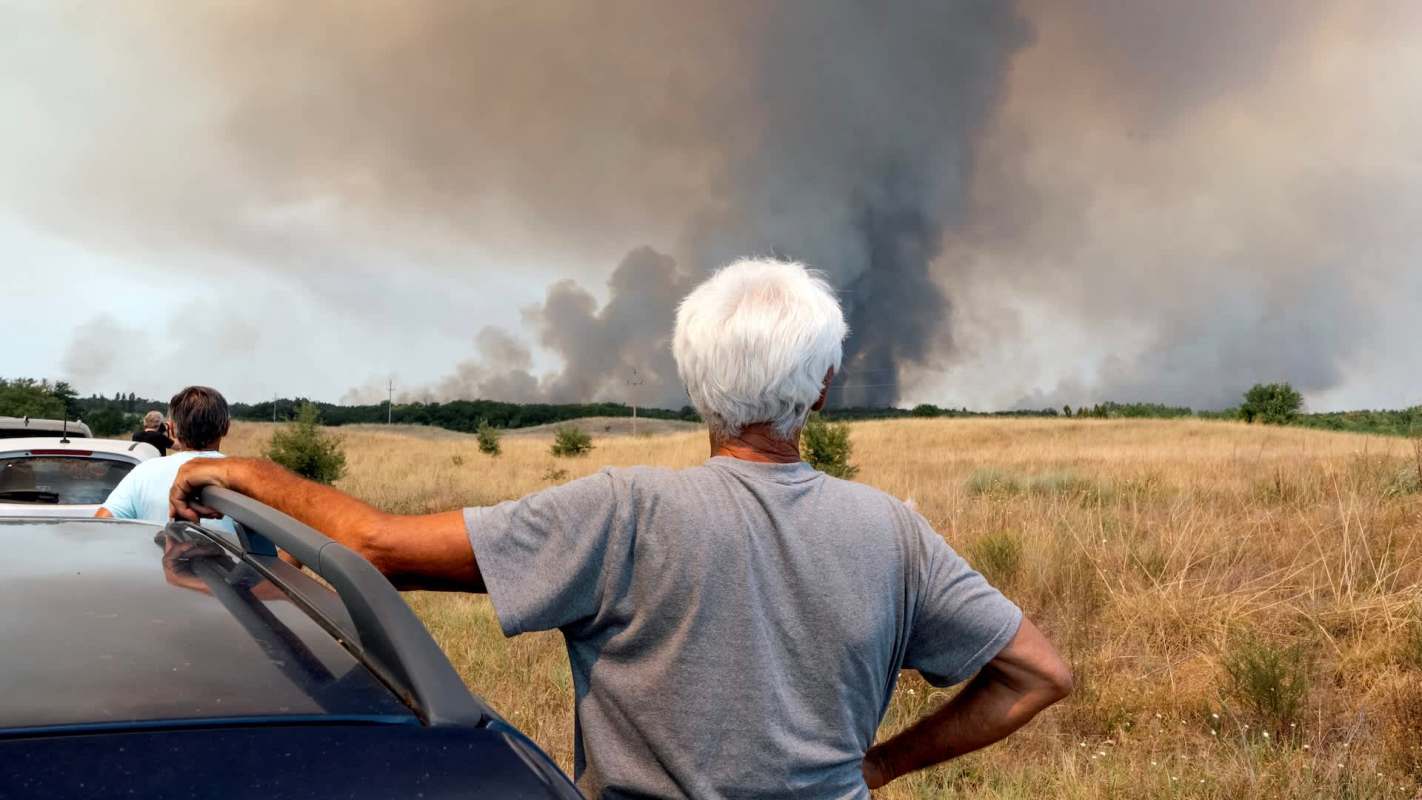
A thick cloud of gray smoke blanketed parts of northeastern Serbia as firefighters raced to contain multiple wildfires across the region. The blazes were fueled in part by a prolonged stretch of hot, dry weather and drought conditions, leaving vegetation parched and creating dangerous conditions for fires to spread rapidly.
What's happening?
According to the Associated Press, near Deliblatska Peščara — a protected nature reserve about 40 miles from Belgrade — Serbian crews worked to contain a large wildfire. Helicopters were sent to dump water on the pine forest in an effort to slow the blaze.
Serbia's fires unfolded as a larger heat wave gripped Europe. Across several countries, the same conditions drove temperatures to record levels, put pressure on energy systems through drought, and contributed to wildfire activity stretching from Western Europe to the Balkans.
Why does it matter?
When extreme heat and drought combine, forests, grasslands, and brush can dry out quickly, making it easy for a single spark to turn into a major emergency. In nature reserves, an intense fire can threaten animals, wildlife habitat, protected ecosystems, nearby communities, and the people working to contain the flames.
These worsening extreme weather disasters also endanger lives and livelihoods in direct ways. Wildfire smoke can worsen asthma and other breathing problems; intense heat can raise the risk of heat exhaustion and heat stroke; and fast-moving fires can force evacuations and damage homes, farms, and infrastructure.
The wider European heat wave adds another layer of concern. When drought reduces water availability and heat drives up electricity use, communities can face mounting pressure on the very systems they rely on to stay safe.
TCD Picks » Quince Spotlight
💡These best-sellers from Quince deliver affordable, sustainable luxury for all




What's being done?
One key part of Serbia's response was aerial firefighting near the nature reserve, with helicopters dropping water on the burning woodland. Such tactics are commonly used when fires spread through dense forest or when rough terrain makes certain hotspots difficult to reach for ground crews.
Heat and fire preparedness during prolonged hot, dry spells can include closely monitoring local emergency alerts, avoiding activities that could ignite dry vegetation, and following any restrictions related to open flames or outdoor burning.
In areas affected by heavy smoke or extreme heat, it is best to stay indoors with filtered air, limit strenuous activity during the most dangerous parts of the day, check on older neighbors and others who may be vulnerable, and prepare go-bags or evacuation plans.
With several fires burning at the same time, the smoke rising over Serbia's forests underscores a broader challenge: Prolonged heat and drought can make destructive wildfires both more likely and more difficult to control.

Get TCD's free newsletters for easy tips, smart advice, and a chance to earn $5,000 toward home upgrades. To see more stories like this one, change your Google preferences here.







