


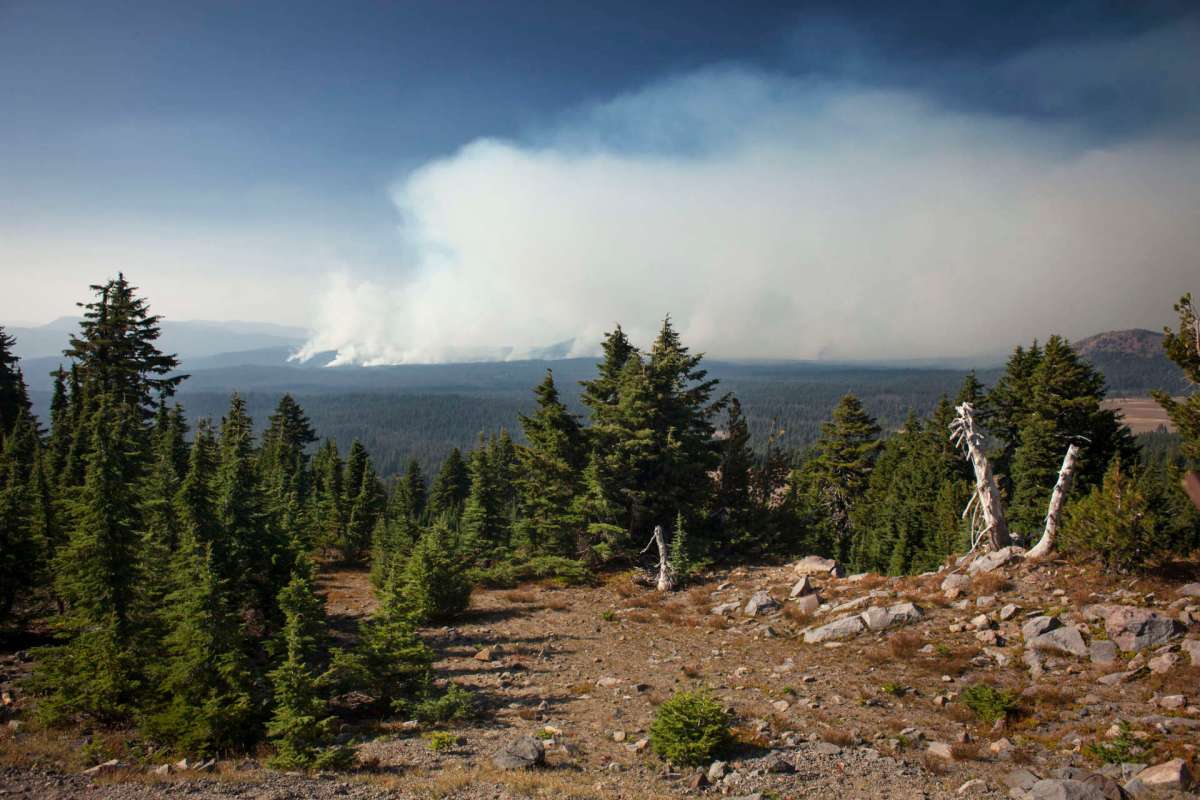
Oregon's wildfire season has already crossed a grim threshold, with more than 2 million acres burned by Aug. 3 — a new annual record for the state and a sign that the 2026 season could become even more destructive.
What happened?
A historic benchmark was reached almost as soon as August began. By Aug. 3, more than 40 wildfires in Oregon had together burned past the 2 million-acre mark, breaking the state's previous annual record from 2024, according to The Spokesman-Review.
The increase came after a burst of severe fire weather that accelerated existing fires and ignited new ones. Evacuation orders were issued in parts of southern and central Oregon, and crews were also working on the Bench Fire on the Warm Springs Indian Reservation.
Warm Springs Fire Department public information officer Javin Dimmick said the enormous size of some fires is partly linked to the U.S. Forest Service's long-standing practice of aggressively suppressing wildfires. That approach can limit short-term harm, but over time it has also allowed dead timber and other dry vegetation to accumulate, leaving more fuel available for fast-moving fires.
Extended drought has also worsened conditions, officials including Dimmick said. Following a winter with below-average snowpack and limited rainfall east of the Cascades, more than half of Oregon is now covered by 2026 emergency drought declarations.
Why does it matter?
The timing of the record adds to the concern. Wildfires in Oregon often continue into late fall, so the statewide acreage total could rise much higher before the season ends.
TCD Picks » Quince Spotlight
💡These best-sellers from Quince deliver affordable, sustainable luxury for all




Historical figures show that large fire years have become more common. Oregon topped 500,000 burned acres only three times from 2000 through 2013 but did so eight times in the 13 years that followed, including three seasons that exceeded 1 million acres, according to The Spokesman-Review. The state has gone beyond 1.9 million burned acres twice.
Worsening extreme weather disasters such as drought-driven wildfires can threaten both lives and livelihoods. Smoke can aggravate asthma and other respiratory illnesses, evacuations can force families from their homes with little warning, and damage to forests, ranchland, roads, and power systems can disrupt local businesses while straining already tight household budgets.
People are also responsible for a large share of the problem. A 2023 Oregon Department of Forestry analysis found that human activity caused more than 60% of the state's wildfires between 2013 and 2022, including 81% of fires in 2021 and 75% in 2022.
What's being done?
Fire crews are continuing to battle large blazes across Oregon while officials monitor conditions that could allow them to spread even faster. Emergency declarations and evacuation notices remain part of the immediate response as agencies work to protect communities in high-risk areas.
Officials are also stressing prevention. Lightning remains a major natural source of wildfire and accounted for 26% of Oregon fires between 2013 and 2022, but many human-caused fires can be prevented.
That includes obeying burn bans, disposing of cigarettes safely, leaving fireworks to professionals, and making sure vehicles or equipment do not throw sparks.
Forests packed with dry fuel and a climate shaped by repeated drought are making wildfire seasons increasingly difficult to control. Oregon will likely need both stronger land management and greater public caution to reduce future losses.
"Throughout the summer, it will get hotter and drier. Oregon has record-setting low snowpack and nearly half of our counties are facing persistent drought conditions," Gov. Tina Kotek said in June after declaring a state of emergency, per The Spokesman-Review. "On average, 70% of wildfires in Oregon are human-caused. Prevention starts with every Oregonian, at home, at work and out and about enjoying our great state."

Get TCD's free newsletters for easy tips, smart advice, and a chance to earn $5,000 toward home upgrades. To see more stories like this one, change your Google preferences here.







