


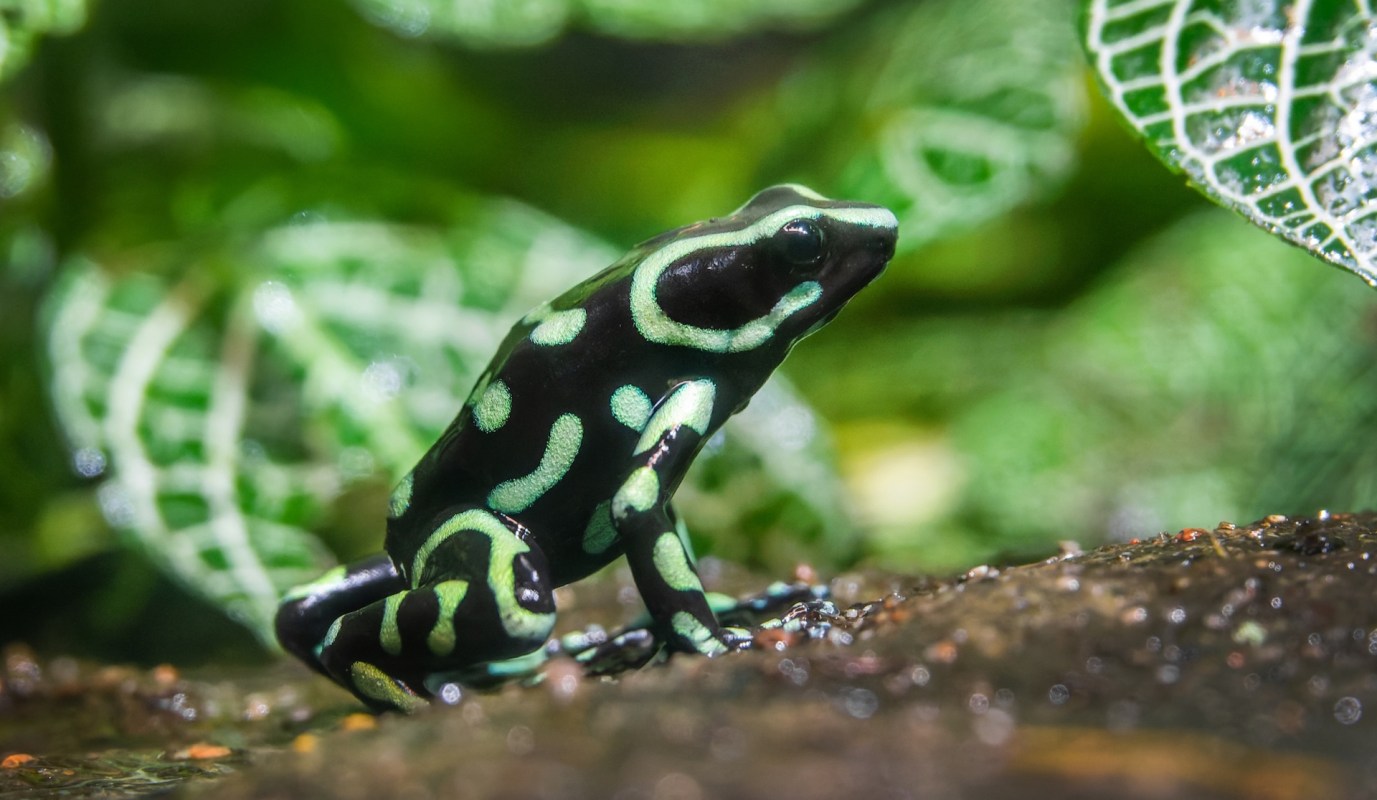
A Hawai'i resident got an unexpected start to the day when they nearly stepped on a black and green poison dart frog just outside their front door while heading to the car.
The surprising encounter drew attention online, as the tiny amphibian is both striking to look at and unusual to spot — and it also serves as a reminder that not all of Hawai'i's backyard wildlife originated there.
What happened?
In a post on Reddit's r/NatureIsF***ingLit, the original poster wrote that they had "almost stepped on" the frog while heading to work.
(Click here if the embedded video does not appear.)
Commenters mixed amazement with humor, with one writing, "He is trying his darndest to get out of your way haha."
Others focused less on the close call and more on how the frog ended up there in the first place.
TCD Picks » Quince Spotlight
💡These best-sellers from Quince deliver affordable, sustainable luxury for all




"The Hawaiian government introduced poison dart frogs to the island in 1932 in an effort to control the mosquito population," one user said. "It didn't work, but the frogs now have stable populations across the island. Also, because the specific alkaloid-rich ants and mites that make up the frogs' diet in Central/South America don't exist in Hawai'i, the Hawaiian dart frog possesses little to no toxicity and is considered safe to humans."
The conversation broadened into Hawai'i's history with introduced species.
Another commenter wrote, "According to one second of research, NO frogs are native to the Hawaiian islands!"
Why does it matter?
Hawai'i is known for its unique ecosystems, but it is especially vulnerable to invasive species because many of its native plants and animals evolved in isolation.
Commenters drew that connection.
"Everything bad is invasive. It was truly paradise," one wrote.
Another compared the frog introduction to other failed animal-control efforts, noting that imported species often create new problems instead of solving existing ones.
Invasive species can alter local habitats, affect agriculture, and pressure native wildlife.
What can I do?
If you come across unfamiliar wildlife near your home, keep your distance and avoid touching it.
That is especially true with brightly colored animals, whose markings signal toxicity in many parts of the world, even if a specific local population is less dangerous.
It is also a good idea to learn which species are native to your area and which are introduced. Understanding that distinction can help residents spot changes in local ecosystems and make better decisions about pets, gardens, and outdoor spaces.
And while the comments were full of jokes — including "Will you just lick it already" — handling or tasting wild animals is never a smart move. Observing from a safe distance protects both people and animals.

Get TCD's free newsletters for easy tips, smart advice, and a chance to earn $5,000 toward home upgrades. To see more stories like this one, change your Google preferences here.






