


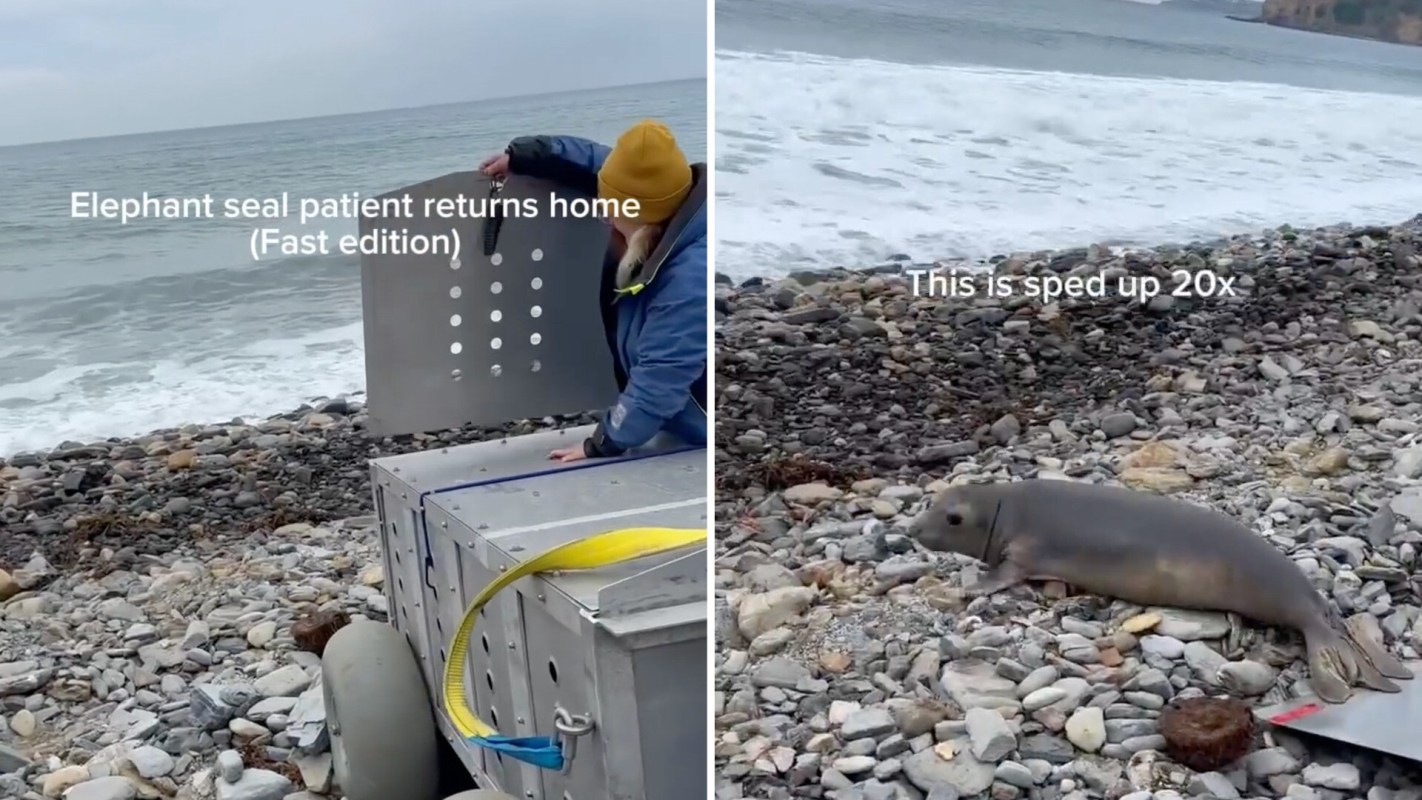
TikTok users have been watching Blue, a rescued elephant seal, heal through a fast-motion rehab clip.
By compressing slow, meticulous care into a few seconds, Marine Mammal Care (@marinemammalcare)'s video offered a hopeful picture of recovery and a second chance.
What happened?
A creator recently shared a TikTok video centered on Blue, using sped-up footage that allowed followers to truly witness the elephant seal's recovery.
@marinemammalcare 🐌 We know how much this community loves sped-up elephant seal videos... here you go! Thanks for giving Blue a second chance at life! #wildliferescue #wildliferehabilitation #animalrescue #marinemammalrescue #marinemammalrehabilitation #seals #sealions #animallovers #oceanlovers ♬ original sound - Marine Mammal Care
The post never spelled out what led Blue into rehabilitation, but it showed that the animal required help and got it.
The post represented more than just an uplifting animal update — it underscores that every successful wildlife rescue depends on people and processes working behind the scenes.
"Thanks for giving Blue a second chance at life!" Marine Mammal Care's caption read in part.
TCD Picks » Quince Spotlight
💡These best-sellers from Quince deliver affordable, sustainable luxury for all




The brief clip prompted questions from followers about elephant seal rehabilitation.
"How do you guys determine which animals get released and which have to stay in care permanently?" a user asked in the comments.
Why does it matter?
Blue's recovery is a reminder that the rescue itself is just the initial step.
After a marine mammal is taken in, the more time-consuming part can be the follow-up: observation, feeding, treatment, and behavioral checks that may continue well beyond the initial pickup.
Because elephant seals are part of coastal ecosystems, helping one return to health can mean sending a wild animal back to its habitat rather than losing it to injury, illness, or another emergency.
People often understand that stranded animals should be left undisturbed, but what happens once trained responders arrive is less widely understood.
What's being done?
In Blue's case, the video highlights the routine, hands-on labor that rehabilitation teams perform day after day.
For marine mammals in care, that work can include protected space, constant monitoring, and treatment aimed at rebuilding the strength and abilities needed to survive independently.
Watching Blue improve also led viewers to ask bigger questions about wildlife centers, including how they decide whether an animal is ready to be released or must remain in care.
Even if a short clip captures only the most visible moments, recovery still rests on patient, expert care.
At least one commenter couldn't help leaving a humorous comment about Blue's speed.
"He's just taking time to check his blind spots," they wrote.

Get TCD's free newsletters for easy tips, smart advice, and a chance to earn $5,000 toward home upgrades. To see more stories like this one, change your Google preferences here.







