


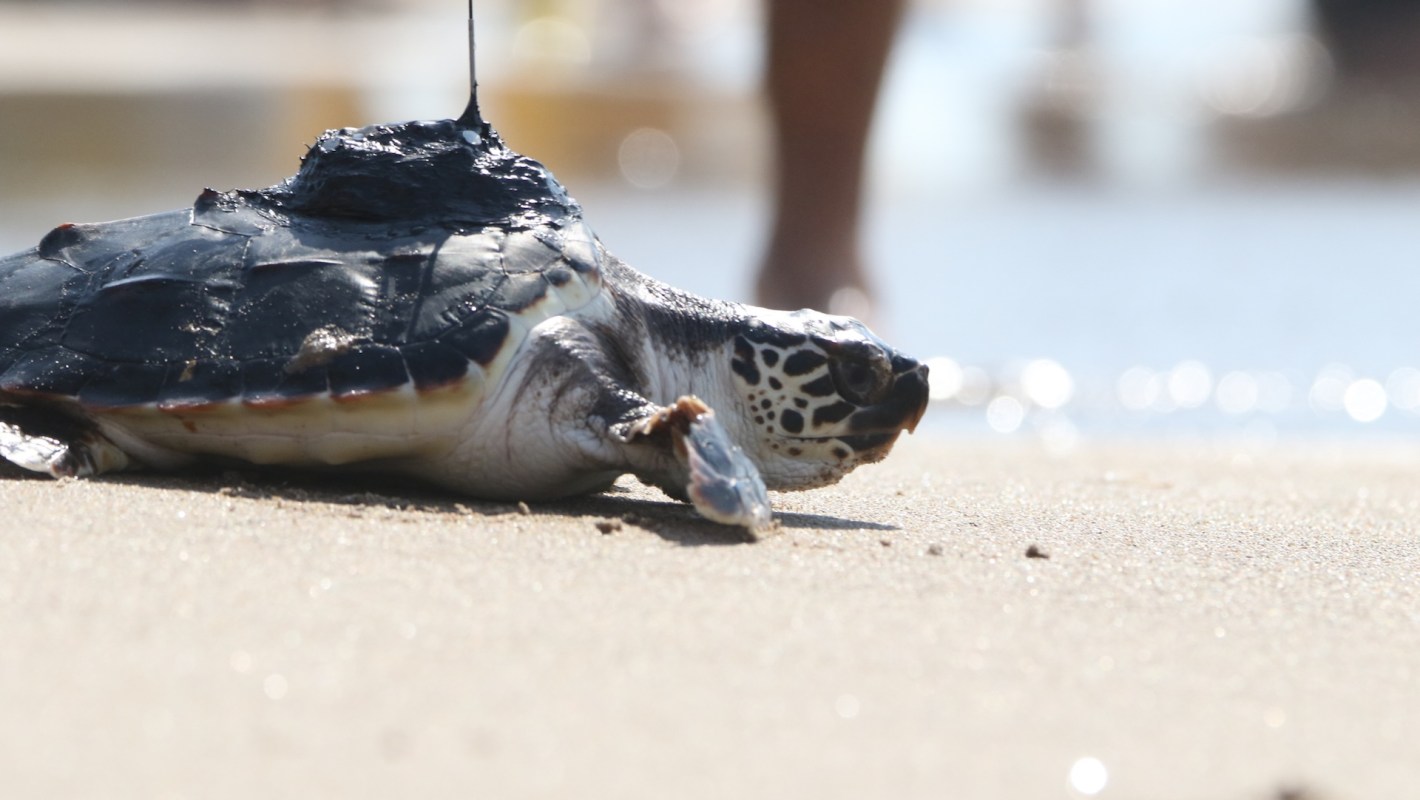
A green sea turtle missing one front flipper has made an extraordinary return to the wild in Dubai.
Foxy's release marks a milestone for a long-running marine rescue effort.
What happened?
According to Gulf News, the Dubai Turtle Rehabilitation Project has now returned 2,351 turtles to the wild since 2004. That total rose on June 12, when 23 rehabilitated sea turtles — 22 green turtles and one hawksbill — were released off Dubai's coastline shortly before World Sea Turtle Day.
Gulf News shared a video of the release on Instagram.
The event also marked the program's 100th satellite-tracked release. The turtle fitted for that monitoring was Foxy, a green turtle found off Ras Al Khaimah in January last year after an injury left her with only one front flipper, allowing conservationists to follow her movements once she was back at sea.
H.E. Sheikh Fahim Bin Sultan Bin Khalid Al Qasimi, ambassador for the Dubai Turtle Rehabilitation Project, said: "Five years ago I stood here and released a turtle with one flipper. Five years later, we saved Foxy, I actually found the turtle in Ras Al Khaimah. She is a green turtle that was missing a front flipper, and we are very proud to have a tracking program that will follow her journey."
TCD Picks » Quince Spotlight
💡These best-sellers from Quince deliver affordable, sustainable luxury for all




Barbara Lang-Lenton, executive director of biodiversity at Jumeirah, said, "We had to do surgery to repair the damage, and she has been with us since January last year. It has been a long recovery."
Why does it matter?
Sea turtles are part of healthy marine ecosystems, and stronger coastal ecosystems can support communities through cleaner shorelines, richer marine biodiversity, and more resilient waters that people rely on for recreation, tourism, and local livelihoods.
By monitoring rehabilitated turtles after release, researchers can learn where they travel, how they adapt, and whether rescue strategies are working.
Lang-Lenton said another released turtle, Fatima, may offer even more insight into migration routes. "Green turtles do not nest in the Gulf, they nest on the East Coast," she said, according to Gulf News. "We have had occasions where animals go straight to their nesting grounds after release. She is a very interesting one to track."
The project extends beyond local waters. As Sheikh Fahim put it, "These creatures do not belong to the UAE, nor to the region. They travel across oceans."
What can I do?
Recovery happens in stages. Gulf News reported that turtles are first given critical care at the aquarium facilities at Jumeirah Burj Al Arab, then later moved to rehabilitation lagoons where they can rebuild strength and return to natural behaviors.
Not every turtle recovers enough to go back to the sea, including longtime lagoon residents Humpty and Dumpty, who were struck by boats and left unable to dive normally.
Gulf News said that if you spot a turtle lying still at the surface or washed up on a beach, you should not remove barnacles or try to handle it yourself. People can also learn more at Jumeirah Al Naseem Turtle Lagoon through free public talks and feeding sessions.
"Just be really conscious citizens of this planet," said Sheikh Fahim. "Be conscious of plastic waste. Be conscious of the ocean. And if you find a turtle that needs help, call us. We will come."

Get TCD's free newsletters for easy tips, smart advice, and a chance to earn $5,000 toward home upgrades. To see more stories like this one, change your Google preferences here.






