


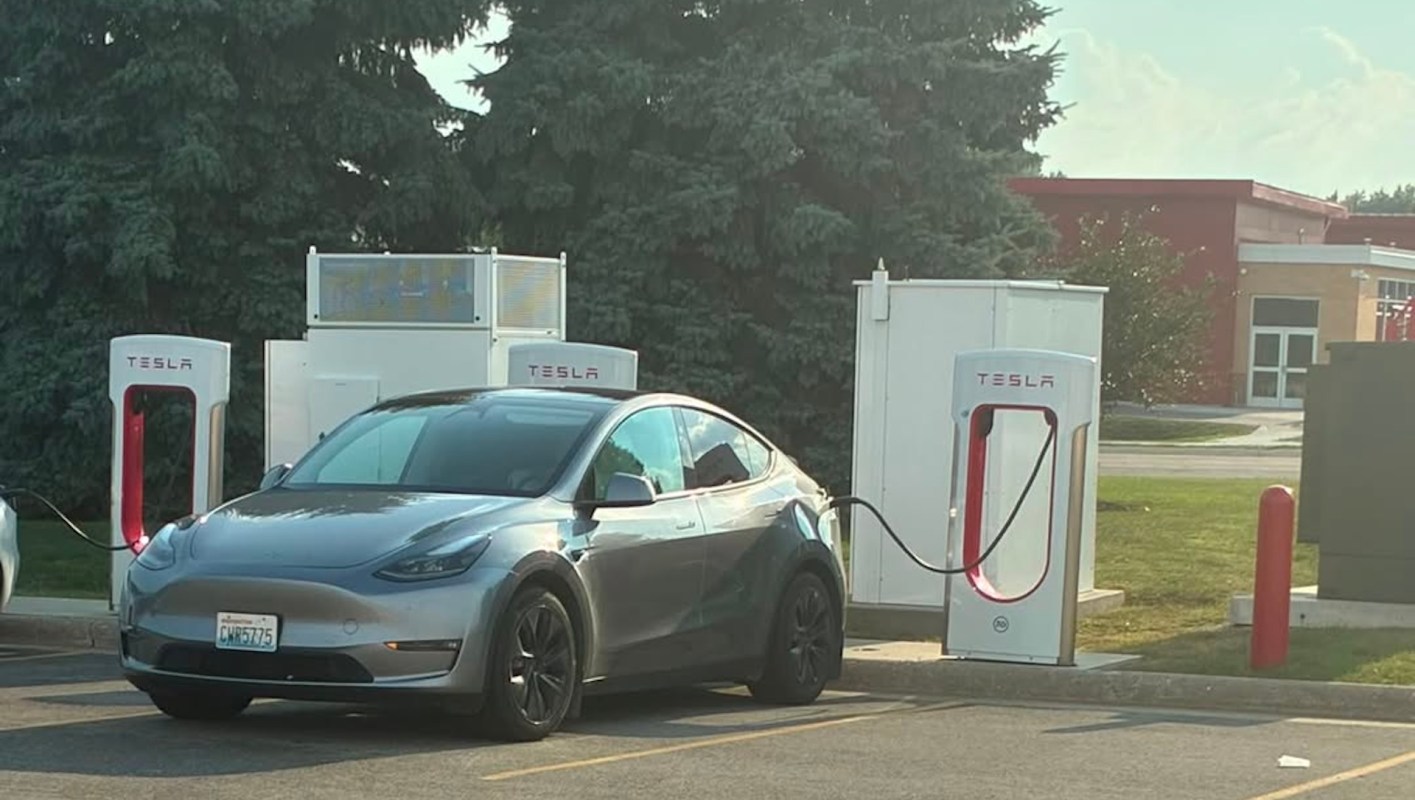
A mother-daughter road trip in a Tesla offers a useful reality check for anyone concerned that electric vehicles need ideal charging setups to handle long-distance travel.
After nearly 5,000 miles on the road, one Model Y owner said that even a regular household outlet was enough to help keep their trip going overnight, as Torque News detailed.
What happened?
During a cross-country trip with her daughter, Dee-Anna, who shared her experience in a Facebook group, said the pair had gone "nearly 5k miles so far" and that they had spent "several nights in the car." She added that the vehicle's built-in systems simplified more of the trip than she expected.
Among those tools, Dee-Anna singled out the car's route planning.
"I've tried using other apps (Google, A Better Route Planner), but the native navigation is truly the best option," she wrote. Dee-Anna suggested that using the car's "Fastest" setting on long 600- to 700-mile days saved 45 minutes.
Overnight charging also proved less problematic than she expected. She said she had spent too much time worrying about charging at Airbnbs, hotels, and even a remote cabin.
TCD Picks » Quince Spotlight
💡These best-sellers from Quince deliver affordable, sustainable luxury for all




"Plugged into a simple 110 outlet, given time, I've always been able to charge to my charge limit without trouble," she wrote.
Why does it matter?
A standard wall outlet obviously cannot replace fast charging, but Dee-Anna's experience suggests it can still be helpful when the car is parked for hours.
Torque News senior automotive reporter John Goreham stressed that limit directly, saying, "Charging a Tesla on 110V can take a day from empty to full."
But he also pointed to a more practical use case.
"I think she means she stayed in places and charged overnight on 110," Goreham guessed.
In other words, slower charging can do useful work while drivers sleep.
Torque News noted that a Model Y Performance driver logged 23,000 miles in eight months while keeping total charging costs under $1,000, though costs vary widely.
In Dee-Anna's case, every mile added overnight could mean fewer pricier fast-charging miles later.
What's being done?
Dee-Anna said she used Level 2 or fast chargers at hotels, with the car's charging estimates guiding decisions and overnight outlet access serving as a useful extra rather than the main refueling plan.
A big part of that appears to be Tesla's native navigation, which can update charging stops as the battery level, route conditions, and efficiency change in real time. That can reduce guesswork and help drivers avoid charging longer than necessary.
She also said comfort mattered. A tray, a center-console charging dock, a rear trash can, a mattress, shades, and white door-pocket liners all helped improve the experience. Dee-Anna also cited Full Self Driving for helping reduce fatigue.
Taken together, it all suggests EV ownership can be flexible in everyday use.
"You do not need a perfect charging network or a garage full of gadgets to take a Tesla across the country," Torque News concluded. "You need a car that tells you the truth about its own battery, a plan for using downtime wisely, and a little patience with a wall outlet when that is all you have."

Get TCD's free newsletters for easy tips, smart advice, and a chance to earn $5,000 toward home upgrades. To see more stories like this one, change your Google preferences here.






