


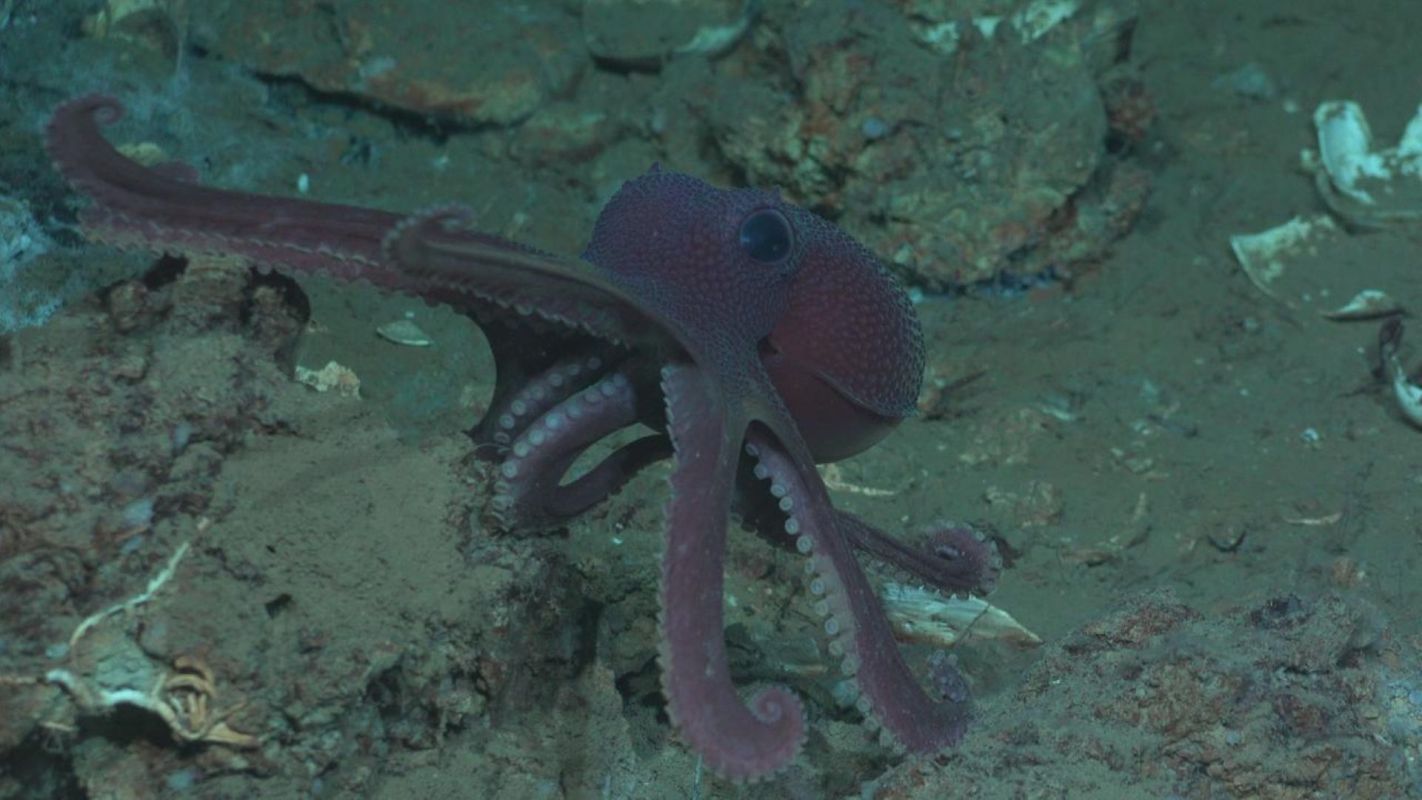
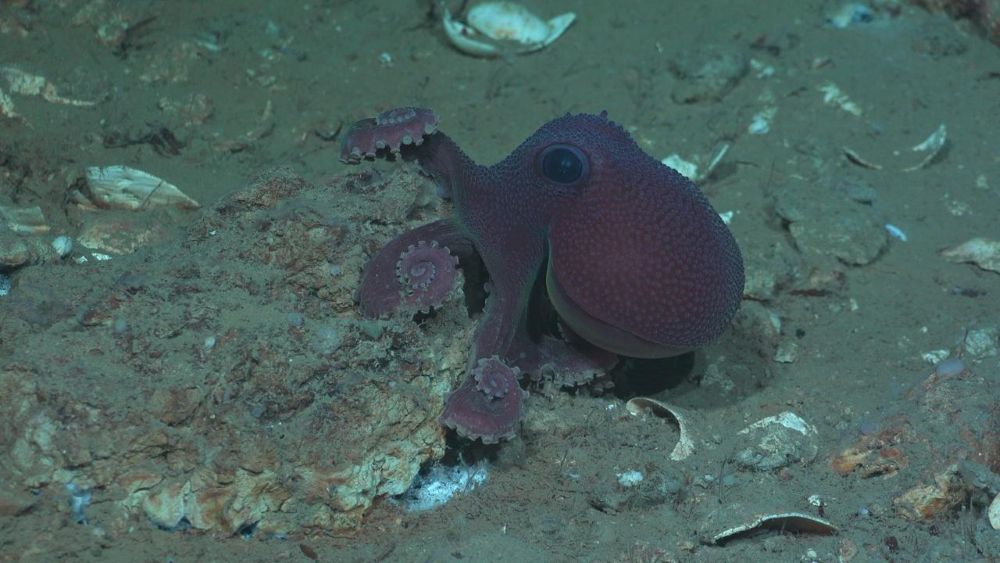
A deep-sea expedition off the coast of Trinidad and Tobago may have uncovered an octopus species previously unknown to science.
If confirmed, the animal would be represented by a single known specimen, and the find came during Trinidad and Tobago's first locally led deep-sea scientific mission.
What happened?
Aboard Schmidt Ocean Institute research vessel Falkor (too), scientists collected the possible new octopus during a 28-day expedition that ran from June 29 to July 28, 2026.
Dr. Diva Amon, a Trinbagonian deep-sea biologist with SpeSeas, led the expedition, which also included researchers from UWI St. Augustine, the T&T Institute of Marine Affairs, and several international institutions.
Before this voyage, scientists had examined less than 0.001% of Trinidad and Tobago's deep waters, and nothing deeper than 6,562 feet (2,000 meters) had been surveyed, TechTimes reported.
To determine whether it truly represents a new species, researchers still need to study the animal's anatomy and DNA before formally naming it.
TCD Picks » Quince Spotlight
💡These best-sellers from Quince deliver affordable, sustainable luxury for all




The team described the significance of the mission, saying, "Every dive has the potential to reveal something the world has never seen before."
Why does it matter?
Because about 93% of the country's marine jurisdiction lies beyond scuba depth, most of Trinidad and Tobago's ocean territory has remained largely unseen by both scientists and policymakers.
Without baseline data, it becomes much more difficult for any country to determine where marine protected areas should be established, how fisheries should be managed, or how deep-sea activity should be regulated.
Scientists have previously recorded 451 species in Trinidad and Tobago's deep waters, but they suspect the true number may be greater than 1,600.
The expedition is also exploring methane seeps, mud volcanoes, and mesophotic reefs, all of which are unusual ecosystems.
A better understanding of these habitats can help protect biodiversity, strengthen conservation strategies, and inform decisions that affect food systems, tourism, and coastal resilience.
It also shows a growing change in Caribbean science as local researchers take the lead in studying local waters.
What's being done?
The expedition is using several technologies to help build that missing picture of the seafloor.
To document those deep habitats, researchers are using the remotely operated vehicle SuBastian to map, film, and collect samples.
They are also testing DORIS, a much cheaper deep-ocean camera lander meant to help countries study their waters without multimillion-dollar robotic systems.
With a base unit priced under $10,000, DORIS is far less expensive than operating a full ROV program. That could make deep-sea observation more accessible for smaller island nations that need foundational data to guide conservation and policy decisions.
The team is also testing a simpler cryopreservation method using temperatures achievable in a standard shipboard freezer, which could make it easier to preserve tissues from delicate marine animals for future research.
The expedition has been livestreaming ROV dives as they happen, giving the public a real-time look at ecosystems that had previously remained out of sight.
"This expedition is an unprecedented opportunity to uncover the mysteries of our ocean, while creating opportunities for national engagement in science, education and environmental stewardship," Amon said.
"We have seen a minuscule fraction of the deep seafloor," said Ocean Discovery League founder Dr. Katy Croff Bell. "Only through scalable, innovative solutions like DORIS and expanding the community of global ocean explorers will we be able to make significant progress in characterizing this barely explored ecosystem."

Get TCD's free newsletters for easy tips, smart advice, and a chance to earn $5,000 toward home upgrades. To see more stories like this one, change your Google preferences here.






