


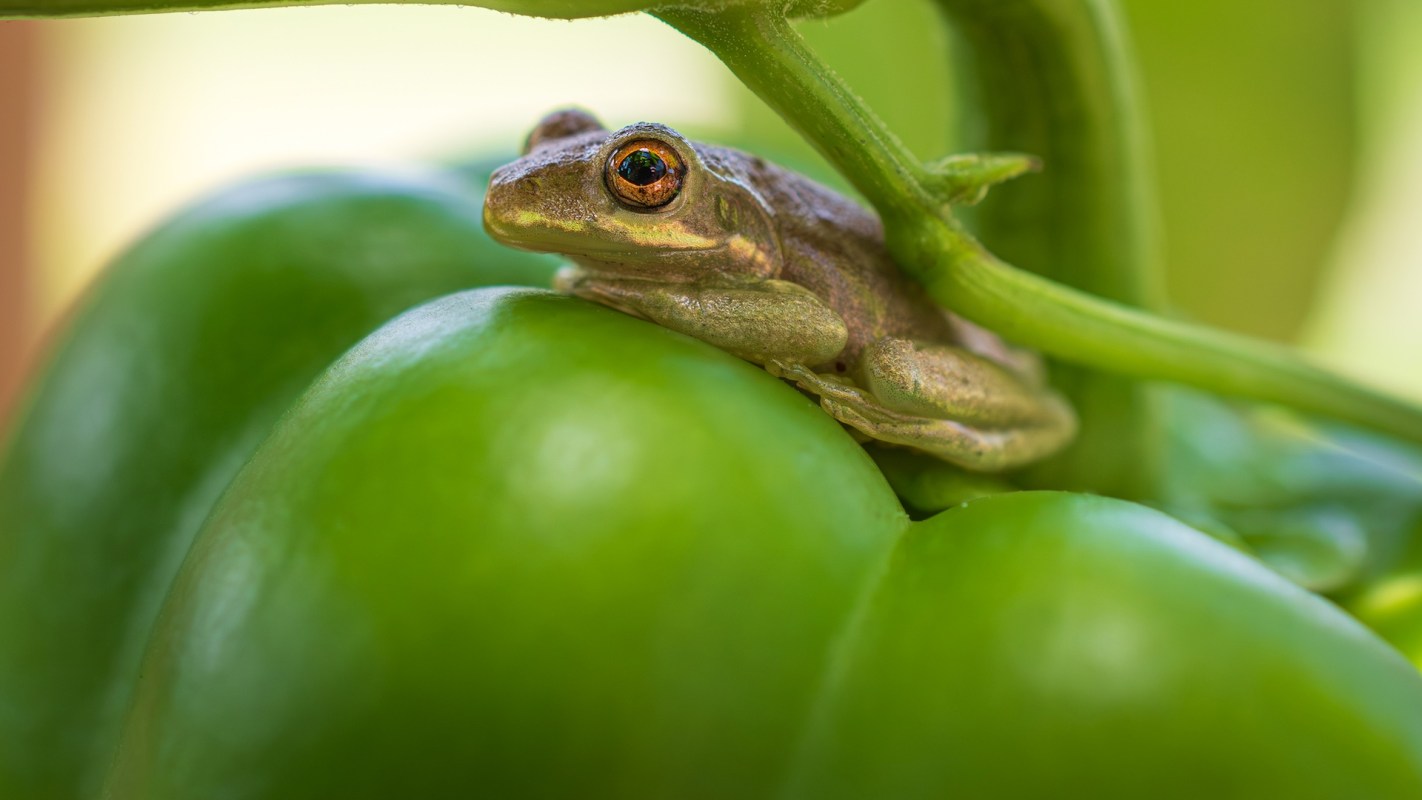
Hidden among the boxes of an onion shipment to a Stop & Shop in Provincetown, Massachusetts, was a live Cuban tree frog, a creature far from its native habitat that has since taken on a permanent role on Cape Cod.
What happened?
A worker unloading onions at the store found the frog in late January, the Cape Cod Times reported.
According to Stop & Shop employee Heather Swenson, a colleague who "noticed the frog on top of one of the onion boxes" caught it and brought it to her in a box.
Swenson knew that releasing the frog outside was not an option.
"I needed to give this little guy a chance," she told the newspaper, so she arranged for the animal to be taken to Wild Care in Eastham.
By the time it reached the nonprofit, the frog — now named Onion — was in poor condition, wildlife rehabilitator Chelsea Peck said.
TCD Picks » Quince Spotlight
💡These best-sellers from Quince deliver affordable, sustainable luxury for all




"When Onion first arrived he was extremely dehydrated — wrinkly skin, sunken eyes, dark grayish-brown in color," Peck told the Times.
After just a few hours with water and proper humidity, the frog had recovered enough to regain "a normal tan with green blotches."
Instead of being released, Onion will remain at Wild Care permanently as an education animal.
Why does it matter?
In the southeastern United States, Cuban tree frogs — native to Cuba, the Bahamas, and the Cayman Islands — are considered invasive.
Introduced frogs can disrupt local ecosystems by preying on other frogs, and Cuban tree frogs are the largest tree frog in North America, according to the Times.
"In non-native areas, they can easily cause a decline in native frog species," Peck explained, per the paper.
Modern produce supply chains can transport animals beyond their native ranges, putting them at risk while also creating ecological problems in the places where they end up.
Peck has encountered other non-native species that had hitched rides in one way or another.
"Accidental transport is common. In the past we have received anoles — lizards from the South — that were found on tropical plants at Agway from southern state shipments," she told the Times.
What's being done about it?
Wild Care is turning Onion's survival story into an educational example.
A release is not feasible in part because the creature's origin is unknown.
"We release our patients where they were found, since they are familiar with the area," Peck said, according to the Times.
Instead, Onion is being cared for in a habitat designed to mimic a natural environment. Onion also gets to hunt live insects, including dubia roaches and beetles. A larger, more complex enclosure is being planned.
Wild Care Executive Director Stephanie Ellis told the Times that the organization is raising money for Onion's future home, which Peck said will be a bioactive habitat with living elements "including a waterfall."
"In Onion's case, we can show the impact that human activity has on wildlife sometimes without us even knowing we are affecting them," Peck said.

Get TCD's free newsletters for easy tips, smart advice, and a chance to earn $5,000 toward home upgrades. To see more stories like this one, change your Google preferences here.







