


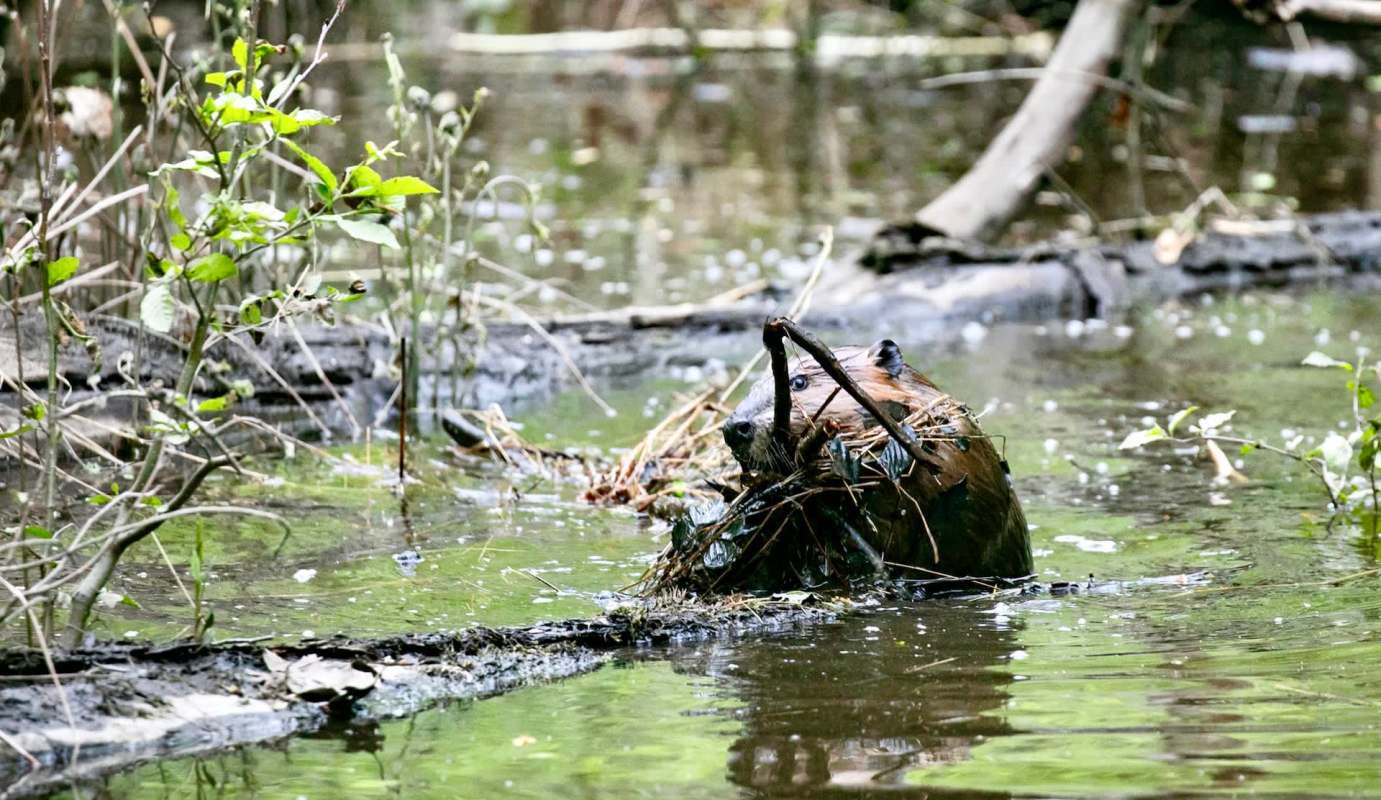
What was once a sediment-buried reach of Washington's North Fork Toutle River is now functioning as wetland habitat, thanks in part to beavers working more than four decades after Mount St. Helens erupted.
But as Mongabay reported, a federal flood-control plan may send new sediment over the same ground and threaten that recovery.
What's happening?
Recovery began to take shape in 2021, when Eco Park Resort owners Mark and Dawn Smith and their family worked with tribal natural resource staff and conservation groups to reintroduce beavers at the site.
Emily Fairfax, a geography professor at the University of Minnesota, told Mongabay that 58 beavers were brought there over the last five years, including animals that might otherwise have been euthanized after conflicts with humans in other areas.
Since then, the beavers have built dams and what Smith described as "honeycomb" canals that deepened ponds, helped willows and alders return, and created habitat for ducks, elk, Chinook salmon, and rainbow trout.
The effort came after decades in which the Smith family watched volcanic debris from the 1980 eruption accumulate across their property.
TCD Picks » Quince Spotlight
💡These best-sellers from Quince deliver affordable, sustainable luxury for all




The carnage worsened when the U.S. Army Corps of Engineers built a sediment retention structure in 1989 to hold back material and reduce flood risks for downstream communities and shipping routes, per Mongabay.
Now, the progress could be undone by plans to elevate the crest by 10 feet once again to protect against flood risks.
Why does it matter?
Nature-based restoration can help revive places many people assume are too damaged to recover. Beavers are doing work that benefits both wildlife and surrounding communities by reconnecting water across the landscape and rebuilding habitat.
"It is really amazing to see how their engineering activities are essentially helping regreen this volcanic wasteland," Jonah Piovia-Scott, a Washington State University biology professor, told Mongabay.
In the region, healthy waterways support fish populations, biodiversity, and local livelihoods.
While communities need protection from flooding, projects focused on hard infrastructure can sometimes end up threatening ecosystems that are already providing environmental value.
What's being done?
Smith has filed notice of his intent to sue the Corps and is advocating for nature-based solutions instead of more gray infrastructure, according to Mongabay.
His challenge targets the U.S. Army Corps of Engineers' plan, which he argues would cause sediment to build up again and bury the restored wetlands and fish habitat.
Some beavers remain at the resort, while others have already moved through connected waterways into nearby areas, extending the project's impact beyond a single property. Even if the habitat is damaged, Smith has said that his family will help the animals begin again.
"I'm 67 now, and I've been here 35 years on this property and I've watched it die twice and I'm gonna have to watch it die again," he concluded warily to Mongabay.

Get TCD's free newsletters for easy tips, smart advice, and a chance to earn $5,000 toward home upgrades. To see more stories like this one, change your Google preferences here.






