


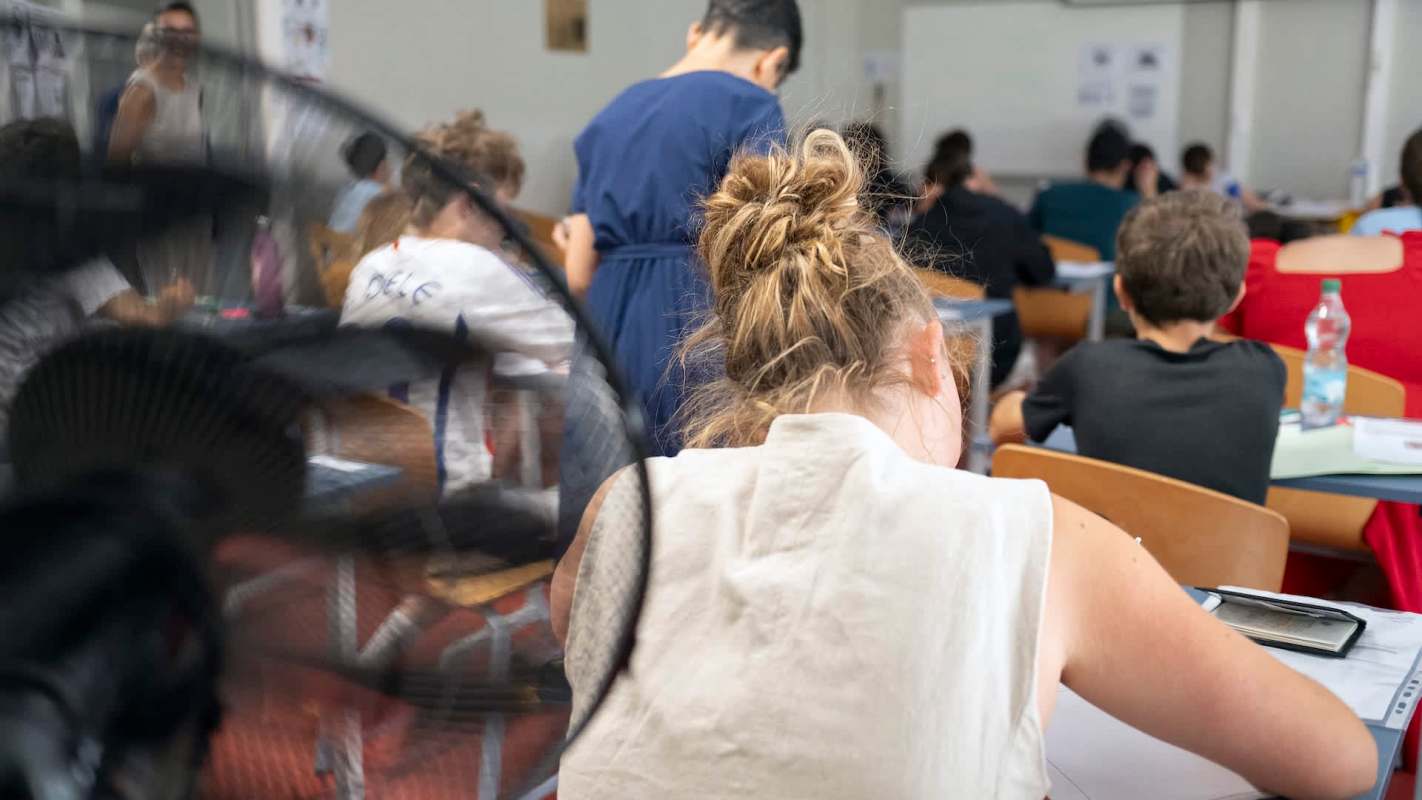
California students are heading into increasingly hot school years with a troubling reality: Many campuses know their aging air-conditioning systems are failing, but the state ended a major upgrade program before most districts could receive funding for repairs.
That has left schools with assessments showing widespread problems, long lists of broken equipment, and few clear options for protecting students and staff from extreme heat.
What happened?
Schools were supposed to use the CalSHAPE program, launched in 2020, to first assess plumbing and HVAC systems and then apply for repair funding based on what those inspections found, according to CalMatters. But in 2024, after districts had used the initial grants to uncover serious infrastructure issues, the California Energy Commission ended the program two years ahead of schedule.
By the time CalSHAPE closed, inspections had flagged damaged heating and cooling systems at more than 4,500 schools, yet only 172 campuses received money for upgrades. A 2025 audit by the California Public Utilities Commission said the energy commission's cumbersome funding rules created a bottleneck that ultimately shut down applications.
The program's first phase did identify major needs. Torrance Unified School District found 300 air-conditioning units that had effectively aged out, and Temecula Valley Unified School District discovered that roughly one-third of its systems were approaching replacement. Even so, neither district secured phase two funding.
Why does it matter?
It means students and educators are spending late summer and early fall in classrooms that can become dangerously hot while districts scramble for temporary fixes.
TCD Picks » Quince Spotlight
💡These best-sellers from Quince deliver affordable, sustainable luxury for all




As Earth's warming drives more severe heat waves, the consequences go beyond discomfort — research cited by CalMatters found that higher temperatures can reduce learning.
Stephanie Seidmon of UndauntedK12, a nonprofit focused on healthy school environments, said, "We need ways to make sure that we can keep students and staff safe in a changing climate, and HVAC is one of the best ways that we can do that."
If the remaining funds are returned to utilities, many families may see little practical benefit. Nearly $191 million remains unspent, but potential refunds would total only a few dollars to about $25 over the course of a year, even as electricity rates have risen sharply in recent years.
What's being done?
Advocates for schools are urging lawmakers to reopen CalSHAPE so that the remaining funds can still be used. Senate staff have supported an extension, but the outcome will be decided in negotiations between the Legislature and Gov. Gavin Newsom's administration.
Officials are also weighing a different use for some of the money generated by the unspent funds. About $70 million in interest could instead be directed to a virtual power plant effort that links home batteries, solar systems, and smart thermostats to ease power demand during heat waves.
Not everyone agrees the funds should have gone to school HVAC projects in the first place; some ratepayer advocates say utility bill money was the wrong source from the start, according to CalMatters. School leaders, however, argue that changing course now leaves students paying for the state's mistakes.
Keith Butler, deputy superintendent of Torrance Unified School District, said, "This was money that was pulled back unjustifiably."
For now, districts are left patching together short-term solutions and hoping the state reverses course before more systems break down.
"We've been band-aiding what we have," Butler said, "but there will be a point where they are not working in the not too distant future."

Get TCD's free newsletters for easy tips, smart advice, and a chance to earn $5,000 toward home upgrades. To see more stories like this one, change your Google preferences here.






