


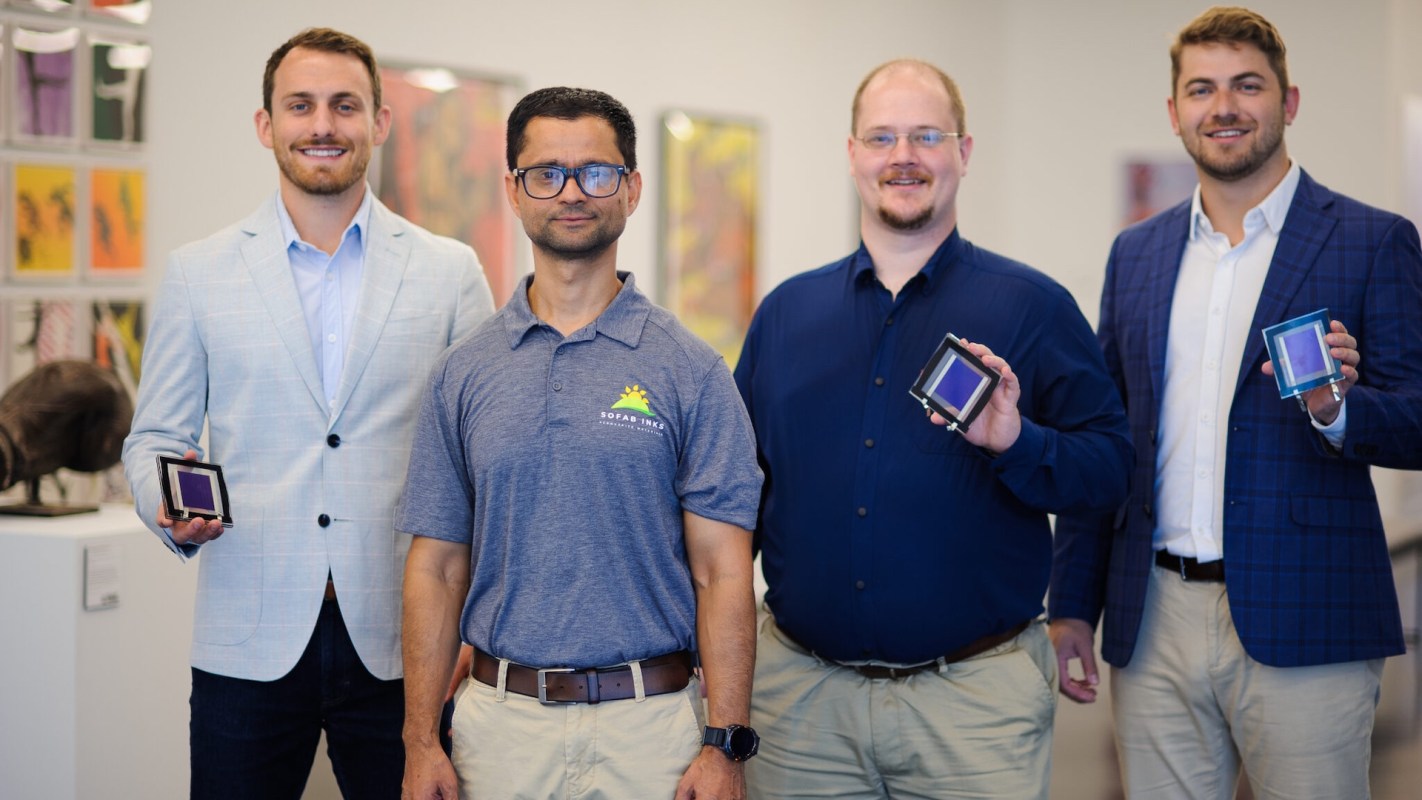
Kentucky startup Sofab Inks has raised $6 million in seed funding to scale a nanoparticle layer designed to help a specialized type of solar cell work better and last longer.
Higher-efficiency panels could eventually give households and businesses more ways to cut energy costs, especially when paired with rooftop solar, community solar, or battery storage.
What happened?
According to PV magazine, Sofab Inks, which is based in Louisville, said it will use the new capital to drive adoption of Tinfab, its electron transport layer material for advanced perovskite solar cells.
Cloudberry Ventures led the seed round, which was announced a few months after Sofab disclosed a durability milestone, according to PV magazine.
Perovskite solar technology has long been seen as highly promising, but difficult to commercialize at scale.
The company says Tinfab is meant to replace C60, a standard layer widely used in lab work that has also been singled out as a vulnerability in real-world use.
TCD Picks » Quince Spotlight
💡These best-sellers from Quince deliver affordable, sustainable luxury for all




Former Google executive Mahir Sahin, whose firm Cloudberry Ventures launched in 2024, said in a statement: "Sofab Inks is redefining the ROI of climate investment by making solar panels significantly more efficient than anything available today."
Why does it matter?
This kind of behind-the-scenes materials improvement could eventually produce more powerful solar panels that generate more electricity from the same rooftop, parking canopy, or solar farm footprint.
That could help homeowners, businesses, and cities get more value from solar installations while reducing reliance on dirty energy sources.
When cleaner electricity replaces fossil fuels, communities can also benefit from lower levels of air pollution, which is linked to serious health risks.
If manufacturers can solve the technical bottlenecks of perovskite solar, the material could move closer to the durable, mass-produced products needed to make a meaningful dent in energy costs.
What's being done?
Sofab said the new funding will help move the company from promising test results toward high-speed production.
CEO Blake Martin said the company plans to triple its engineering team as it manages the scale-up.
The company also said it is already working with much of the industry. Sofab reported that it's in business talks with about 90% of the perovskite sector and counts Halocell, SunXT, Alpha Precision Systems, and Energy Materials Corporation among its current partners.
Materials suppliers, equipment makers, and product developers all have to align before a new technology reaches store shelves or project sites.
"A perovskite cell is only as good as its weakest layer, and the industry has been stuck with C60, a fullerene," said Martin, adding, "that's the layer we replace."

Get TCD's free newsletters for easy tips, smart advice, and a chance to earn $5,000 toward home upgrades. To see more stories like this one, change your Google preferences here.






