


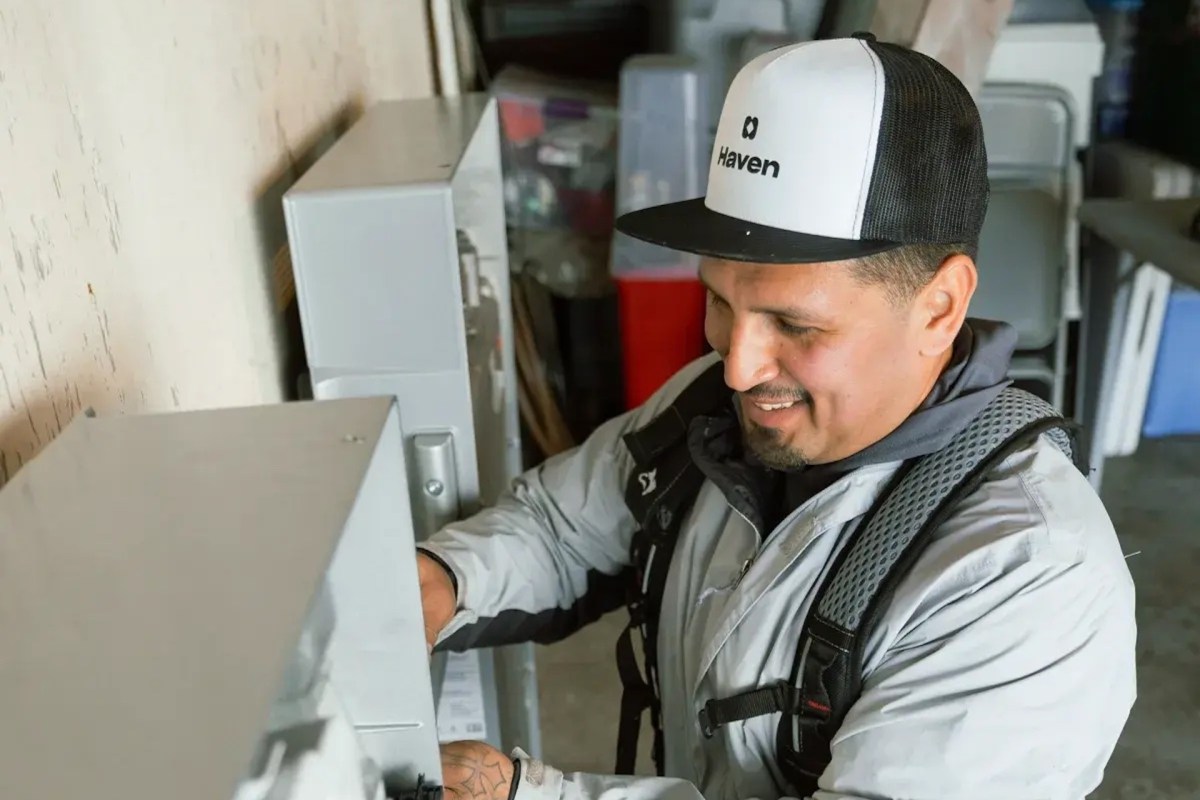
In Massachusetts, startup Haven Energy is introducing a way to get home battery backup without treating it like a major one-time splurge.
Rather than asking homeowners to spend more than $15,000 at installation, the company is starting subscriptions at a much more reasonable $29 per month, as Canary Media detailed.
What's happening?
Haven Energy's new offering covers four counties in southeastern Massachusetts and includes a fully installed 15-kilowatt-hour battery for as little as $29 monthly through a 10-year agreement.
That is notably below the cost of purchasing a comparable system outright, which can run past $15,000.
"Think of Haven as a low-cost battery backup subscription," CEO Vinnie Campo told Canary Media.
The rollout arrives as homeowners seek both backup electricity during blackouts and ways to trim power costs. Tesla recently unveiled its own lower-priced monthly battery option in Massachusetts and Connecticut, the outlet noted.
TCD Picks » Quince Spotlight
💡These best-sellers from Quince deliver affordable, sustainable luxury for all




One reason the economics work in Massachusetts is the state's ConnectedSolutions program, which pays battery owners to send stored electricity back to the grid during peak-demand periods such as very hot afternoons.
A typical battery can bring in about $1,375 a year through that program, and homes in areas with especially congested grids may be eligible for additional payments through ConnectedSolutions+, the outlet added.
Why does it matter?
Price has kept many interested households from adopting home batteries. Spreading the cost into a smaller monthly charge can put blackout protection within reach for families that would not make a five-figure purchase.
As heat intensifies, storms grow stronger, and the grid faces more strain, losing power can become more disruptive. Batteries can keep basics such as lights, refrigeration, internet access, and medical equipment operating during an outage.
"We are always prioritizing backup power for the customer," Campo relayed to Canary Media.
When large numbers of home batteries act in concert, utilities can lean less on expensive peaker plants that also produce more pollution during spikes in demand.
Distributed battery capacity can also ease stress on the electric system and postpone infrastructure expansions whose costs are often ultimately borne by customers.
What's being done?
Both Haven and Tesla are offering batteries under arrangements where the company keeps ownership. As Canary Media explained, that lets the provider capture revenue from ConnectedSolutions and other incentives and use those funds to reduce customers' monthly payments.
It can also remove the burden of tracking rebates, forms, and eligibility rules. Instead, customers can enroll in a simpler service model and get battery backup more quickly.
"We take a complicated stack of rebates and incentives and dramatically simplify that so it's an easy-to-understand product," Campo said, per Canary Media.
These kinds of financing experiments are part of a broader push to make clean energy equipment more affordable, easier to set up, and more usable for ordinary households.
"It's like subscribing to cable or garbage pickup," Todd Olinsky-Paul of the nonprofit Clean Energy Group told the outlet. "I think it's going to be quite popular."

Get TCD's free newsletters for easy tips, smart advice, and a chance to earn $5,000 toward home upgrades. To see more stories like this one, change your Google preferences here.






