


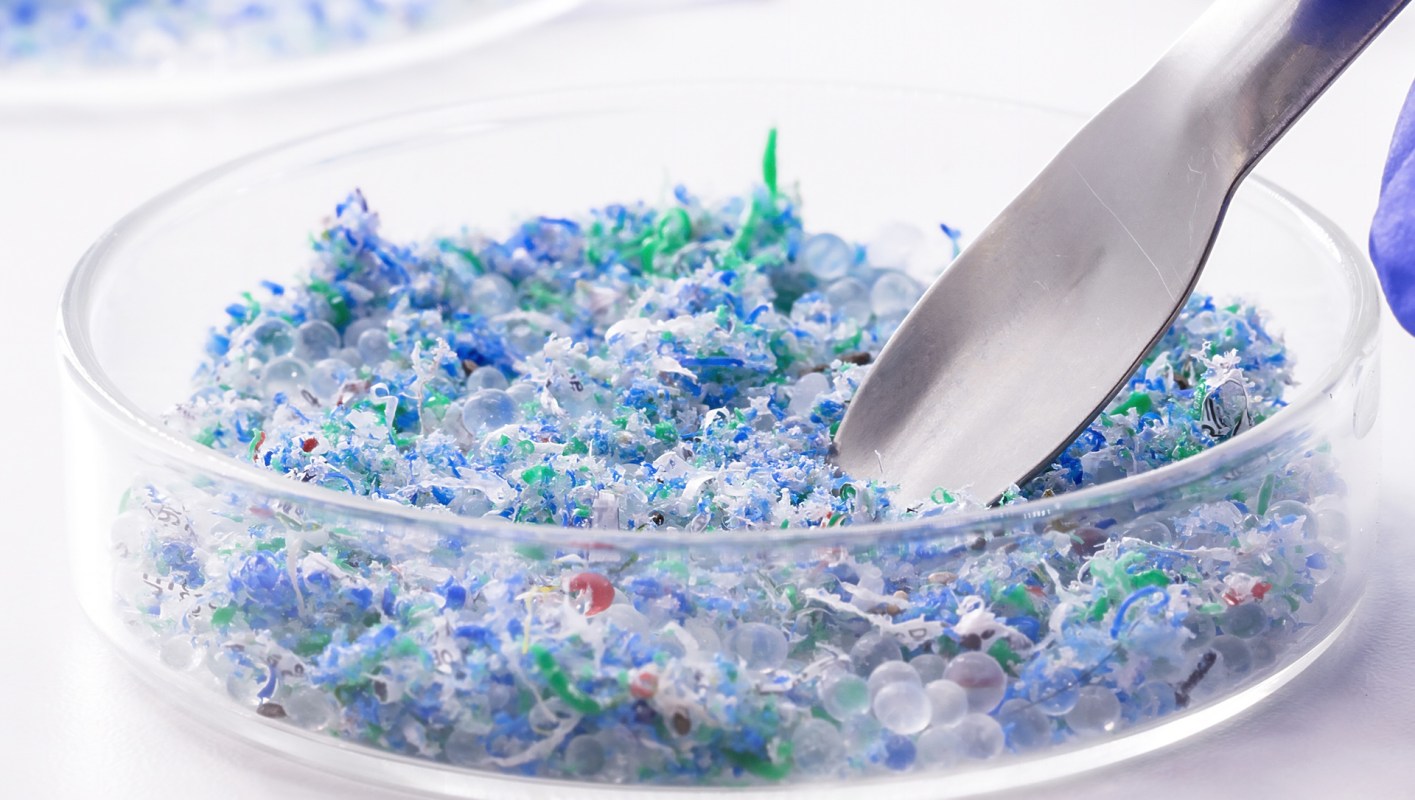
Researchers at Ewha Womans University in South Korea and UCLA say one stubborn waste problem could help address another major energy challenge: turning plastic trash into clean hydrogen fuel.
They detailed a process that turns mixed plastic waste into high-purity hydrogen without the very high temperatures many similar systems depend on, which could make it a more practical option for hard-to-recycle materials, according to Gizmodo.
What's happening?
The method, called alkaline thermal treatment, or ATT, uses heat and sodium hydroxide to break down common plastics and generate hydrogen gas.
ATT is designed to tackle two major hurdles at once: the higher temperatures associated with gasification and the extensive sorting that helps make conventional recycling so expensive.
That matters because plastic recycling still handles only a small share of the material produced worldwide.
Research cited in the report found that just 9% of plastic was recycled in 2022, while 40% went to landfills and 34% was burned.
TCD Picks » Quince Spotlight
💡These best-sellers from Quince deliver affordable, sustainable luxury for all




Those figures are especially concerning because plastic use is projected to rise from about 511 million tons (464 megatons) in 2020 to about 974 million tons (884 megatons) by 2050.
Woo Jae Kim, a professor of chemical engineering and materials science at Ewha Womans University in South Korea and a co-author of the study, said the condition of discarded products showed why mixed plastic waste is so difficult to process.
"In practice, discarded plastics are often mixed, contaminated with food, adhesives, labels, dyes and other additives, or combined in multilayer packaging," Kim said.
In lab experiments, the researchers used ATT on PET, PE, and PP — three of the world's most common plastics — and produced high-purity hydrogen with yields comparable to pyrolysis and gasification, while reporting negligible direct carbon emissions from the reaction itself.
Why does it matter?
If ATT can be expanded beyond the lab, it could give cities and companies a more workable way to handle dirty, difficult-to-sort plastic while also producing a fuel that does not release carbon dioxide when used.
That could mean less waste going to landfills, less harmful air pollution from incineration, and lower costs tied to handling plastic waste.
Recovering something useful from mixed trash could also make waste systems more efficient, instead of sending costly leftover material to dumps or for incineration.
The researchers present ATT as an alternative to two existing methods. Pyrolysis usually works better with cleaner, better-sorted plastic streams, while gasification can process mixed plastics but requires much higher temperatures and more energy.
ATT is meant to sit between those options by reducing sorting needs, lowering heat demands, and producing cleaner output.
Julie Zimmerman, an endowed professor of chemical and environmental engineering and vice provost for planetary solutions at Yale University, said the study looks promising, though it is still at an early stage.
What's being done?
The team adapted ATT from an earlier approach developed to turn biomass feedstocks such as seaweed into hydrogen without increasing net carbon, per Gizmodo.
In the plastic-focused version, PET broke down more easily, while PE and PP performed better after a mild pre-oxidation step before the main reaction.
Before the process can move closer to real-world use, the researchers need to test contaminated plastic waste, improve efficiency, and figure out how to recycle the sodium hydroxide used in the reaction.
They also need a full life-cycle analysis to measure the overall carbon footprint once energy inputs and materials are included.
The process will also need to operate reliably at larger scales and prove economically sensible for waste managers, manufacturers, and energy providers.
Taken together, the findings suggest plastic might one day be used as more than just waste in a cleaner energy system.
Zimmerman described the study as an "interesting and potentially important reaction concept," but said the current results "establish chemical feasibility rather than technical or economic viability."

Get TCD's free newsletters for easy tips, smart advice, and a chance to earn $5,000 toward home upgrades. To see more stories like this one, change your Google preferences here.






