


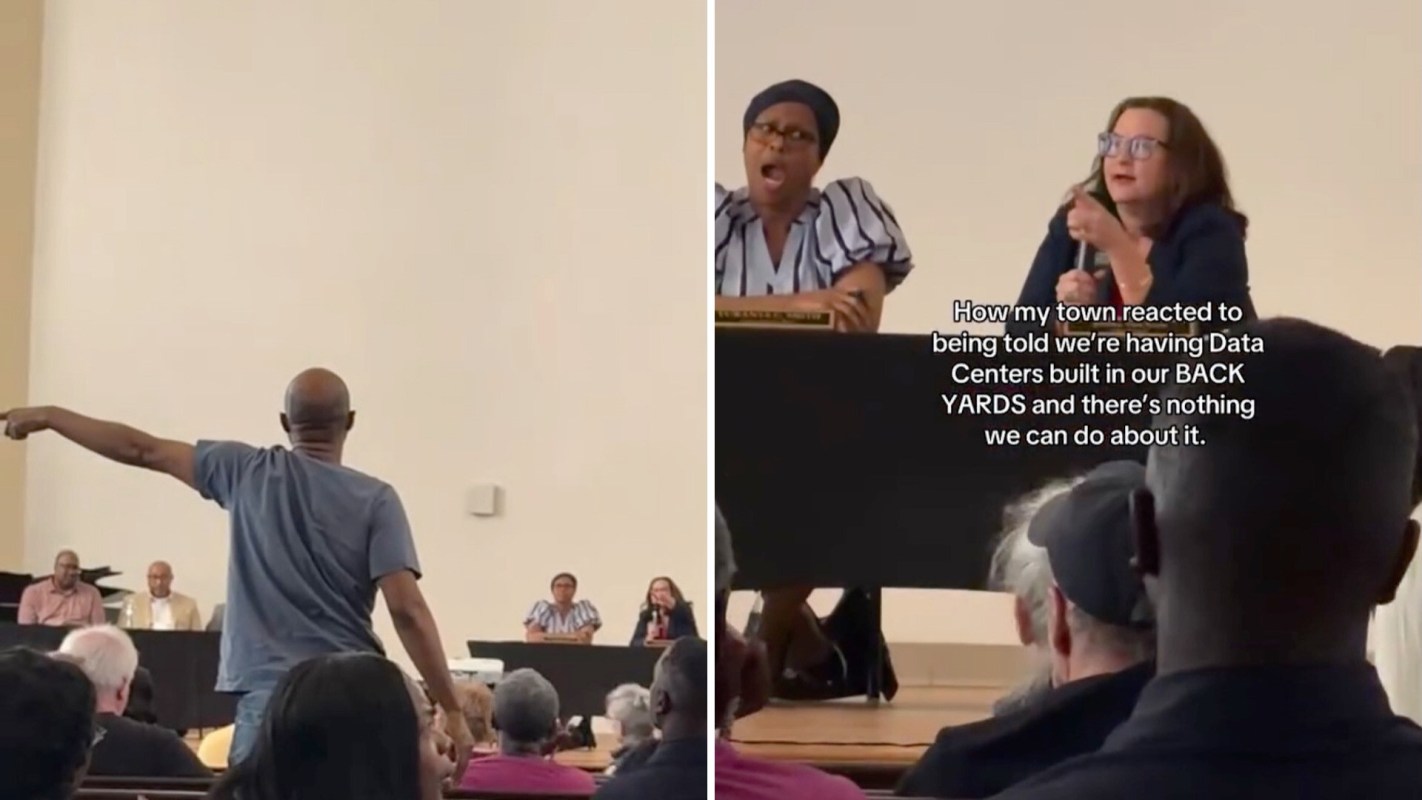
A heated local meeting over a proposed artificial intelligence data center boiled over when residents began chanting "vote her out!" at a commissioner who supported the project.
What happened?
A video posted by Alexandria Rose (@AlexandriaRoseMusic) on Instagram shows a crowded meeting in Rockdale County, Georgia, turning contentious over a proposed AI data center.
After a developer tries to tout the benefits of the project, the crowd angrily responds. That prompts a commissioner to scold one attendee in particular and tell him she'll kick him out if he doesn't follow the rules.
When other people in the room question the rules themselves, the commissioner responds defensively by saying she has the right to change the rules. That hubris angers the crowd and leads to the chants calling for her ouster.
Scenes like that are showing up more often as towns and counties deal with data center proposals connected to the AI boom.
While such projects can deliver jobs, tax revenue, and investment, they also prompt concerns about land use, noise, infrastructure, and whether residents will be stuck with the drawbacks long after a ribbon-cutting.
TCD Picks » Quince Spotlight
💡These best-sellers from Quince deliver affordable, sustainable luxury for all




"Our representatives hold the power to say no to data centers in Rockdale County," Rose wrote in her caption. "Tonight we learned that we are obstinately being sold out to billionaire corporations that don't care about our health or our livelihoods."
Why does it matter?
The electric grid is becoming more closely linked to AI because advanced systems need enormous computing power to train and operate, and that computing is housed in data centers that use large amounts of energy.
AI can provide benefits in some situations, including boosting grid efficiency, predicting renewable energy production, and fine-tuning cleaner-energy systems.
At the same time, the fast pace of expansion brings tradeoffs such as high electricity use, significant water needs for cooling, security concerns, misuse, and the risk that households could see higher utility bills if infrastructure comes under added strain.
Residents are frequently the ones asking who stands to benefit, who will bear the costs, and whether public resources are being handled responsibly.
The effects of these developments can extend beyond changes to an industrial site and increased tax revenue. They can influence local power demand, public services, traffic, and utility planning.
What's being done?
Before signing off on major tech projects, a growing number of communities around the country are pushing for more transparency. Residents are relying on public meetings, local organizing, and closer scrutiny of elected officials to gain a larger role in decisions about AI-related infrastructure.
Local governments, for their part, can require better disclosure of projected energy and water use, push for stronger community benefits, and ensure residents know what a project could mean for their utility bills and local resources.
Whatever happens to this proposal, the meeting revealed that communities are watching how AI expansion gets approved, and which officials are doing the approving.
"We aren't angry enough," Rose concluded of the scene in her caption.

Get TCD's free newsletters for easy tips, smart advice, and a chance to earn $5,000 toward home upgrades. To see more stories like this one, change your Google preferences here.






