


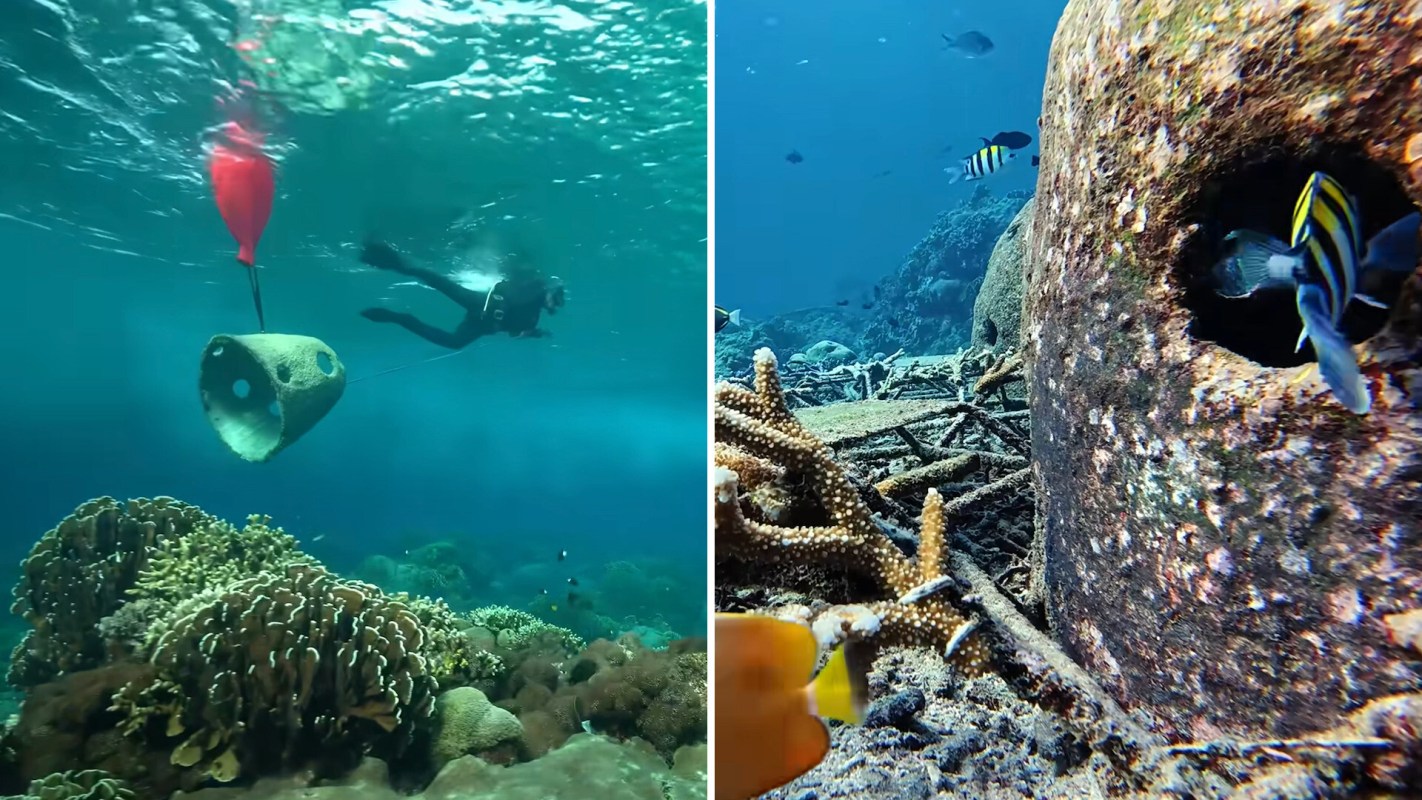
At a coral restoration site off Nusa Penida, Indonesia, researchers are trying to help a damaged reef recover by echoing processes the ecosystem already uses on its own.
Their approach is to place human-made forms that resemble the kinds of surfaces and shapes corals naturally settle on as broken reef areas begin to regenerate.
What happened?
A YouTube update from Mossy Earth Field Notes (@MossyEarth-FieldNotes) follows Yudi, a Mossy Earth team member featured in the group's Field Notes vlog, as he explains the latest stage of the effort.
For this trial, the team is evaluating three reef structures: the hexagonal frame that has been part of the project from the start, the flat "reef plate" modeled after fallen table coral, and the taller "reef bell," which adds more vertical space.
At the site, the broader goal is to repair damaged coral habitat and increase biodiversity. Mossy Earth notes that reefs, often called the "rainforests of the sea," support roughly 25% of marine species.
Reefs matter to people as well, helping provide food, employment, coastal defense, and broader economic benefits.
TCD Picks » Quince Spotlight
💡These best-sellers from Quince deliver affordable, sustainable luxury for all




At the center of the experiment is a basic restoration question: Which kind of surface best allows coral to settle and develop naturally?
Yudi pointed to the hexagonal structures as an encouraging example, saying: "It is actually capturing new coral settlements, which is the foundations of a new reef."
The reef bells appear to be drawing in marine life quickly, too. Four months after deployment, the team found sergeant major damsel eggs on one of them, suggesting fish are already using the new habitat.
Why does it matter?
Reefs play a major role in protecting shorelines from wave energy, supporting fisheries, and underpinning tourism-related livelihoods in many coastal communities.
As reefs decline, those functions become less reliable too.
Efforts like this explore more than coral attachment alone; they also ask how a damaged reef might restart longer-term recovery.
One example is the reef plate. The design comes from observing table corals that die and topple, leaving behind hard surfaces where coral larvae can settle. If restoration can recreate that opportunity sooner, the resulting recovery may be stronger and more varied.
According to Mossy Earth, the project's long-term objective is to improve connections between fragmented reefs and safeguard endangered coral species, with expert local divers and marine biologists guiding the work and community members participating.
What's being done?
To test the designs, the team is placing grouped sets of structures in several parts of the restoration area and then comparing how each setup performs.
Some of those locations already include structures with coral attached nearby, while others are being left bare — including the reef bells, plates, and frames — so the team can watch what passive restoration looks like over time.
That comparison could show whether existing coral growth helps seed nearby structures — or whether simply stabilizing rubble and adding settlement surfaces is enough to bring life back.
Yudi said the team wants to know what happens if they create more surface for coral recruits to land on.
The project footprint is growing as well. Area 5 is roughly halfway finished, Mossy Earth said, and a fundraising campaign there went beyond its goal of 1,500 structures.
The team also updated its measurements for area 6, estimating that the 1,500-square-meter (16,100-square-foot) rubble zone would require about 3,500 structures for full coverage.
When restoration is built around the way an ecosystem already works, it can benefit both biodiversity and the people who rely on it.
"This is truly one of the coolest projects being documented here on YT. The fish village makes me too happy," one commenter wrote.
"Great people doing great work," another added.

Get TCD's free newsletters for easy tips, smart advice, and a chance to earn $5,000 toward home upgrades. To see more stories like this one, change your Google preferences here.






