


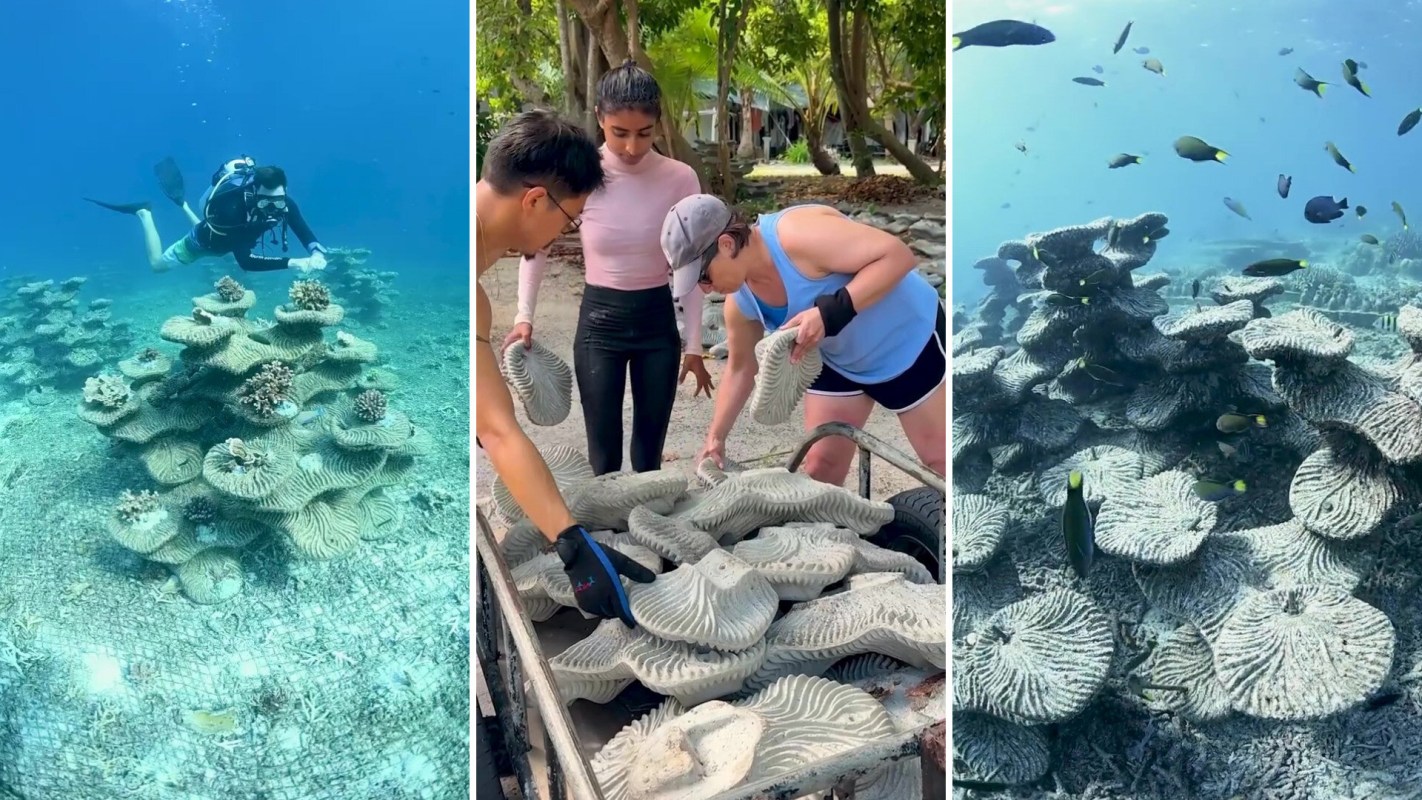
A New York Times TikTok is putting fresh focus on a hopeful climate story near Pom Pom Island in Malaysia, where conservationists are trying to restore coral reefs damaged by climate change and blast fishing.
What happened?
Posted by The Times' TikTok account, the video centers on reef restoration in the waters off Pom Pom Island, north of East Malaysia. The clip notes "miles of coral reef … have been ruined by climate change and blast fishing," and reports that a conservation group is installing concrete forms meant to resemble natural reefs and make it easier for marine life to return.
@nytimes Miles of coral reef around Pom Pom Island in Malaysia have been ruined by climate change and blast fishing. A conservation group hopes to restore the area by installing concrete structures that mimic natural reefs. Video by Jon Hazell and Axel Boada/The New York Times #ocean #climate #reefs #coral ♬ original sound - The New York Times
Using engineered underwater reef structures, the project, led by the conservation group Tracc, is intended to rebuild habitat in a severely degraded area and create conditions that could support coral growth over time.
Why does it matter?
Coral reefs are far more than just scenic underwater ecosystems. They support fisheries, shield shorelines from erosion and storm surge, and help sustain local economies tied to food and tourism. When reefs disappear, coastal communities can lose both income and a critical buffer against extreme weather.
Concrete reef structures are not a cure-all for our overheating planet, but they can help jump-start recovery in damaged areas by creating places for coral larvae, fish, and other marine species to settle.
In places affected by blast fishing — an illegal practice that can shatter reefs in seconds — that kind of physical rebuilding can be an essential first step.
TCD Picks » Quince Spotlight
💡These best-sellers from Quince deliver affordable, sustainable luxury for all




In the region, the video notes that fishermen for decades have been "desperate for bigger catches." They have turned to homemade dynamite to kill schools of fish.
Miles of ecosystem-vital coral reefs have been damaged in the process.
Protecting oceans also means protecting communities whose livelihoods depend on healthy coastal waters.
Tracc said marine life has already taken to the artificial structures, and it plans to install 100 more.

Get TCD's free newsletters for easy tips, smart advice, and a chance to earn $5,000 toward home upgrades. To see more stories like this one, change your Google preferences here.






