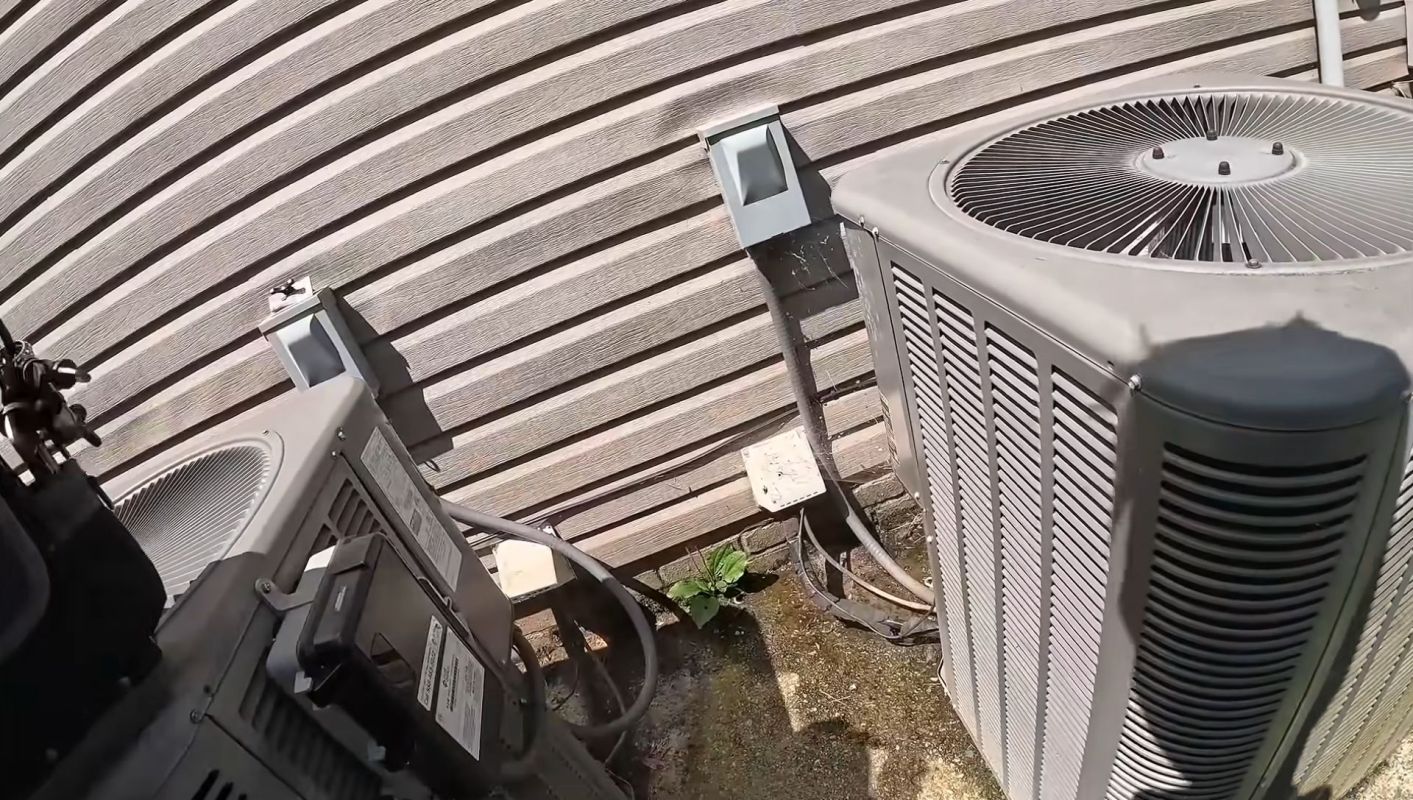
When temperatures soar, a broken air conditioner can quickly become the only thing on your mind. A recent YouTube video gives us an inside view into the job of an HVAC technician, who gives a walk-through of a real-life repair and proof that not all summer breakdowns are a total system failure.
Sometimes the problem is hiding in plain sight. You just need to know where to look.
What's happening?
Creator JustintimeHVAC recently shared a YouTube video showing an actual service call during severe heat, using the visit to explain the troubleshooting process as it happened. The caption summed up the scenario perfectly: "The hottest day of the year means one thing for HVAC technicians … no cooling calls."
The key clue showed up at the outdoor unit. After verifying that the indoor blower was still operating, the technician found a failed capacitor outside, with a top that was swollen and raised instead of flat. The creator identifies this tell as an obvious visual sign that the part had gone bad.
From there, the creator moved into the repair itself, explaining the terminal markings, showing how the wires are arranged, and discussing why the replacement voltage rating matters.
Why does it matter?
If the issue is diagnosed correctly, replacing a small failed part can be far less expensive than replacing a compressor or approving an entirely new system.
TCD Picks » Quince Spotlight
💡These best-sellers from Quince deliver affordable, sustainable luxury for all




That difference can be especially important during a heat wave, when people may feel pushed to say yes to costly work just to get air conditioning back quickly. By showing the diagnostic steps, the video gives viewers a better sense of what technicians are actually checking.
Losing cooling on the hottest day of the year can be more than an inconvenience, especially for older adults, young children, and anyone with underlying health conditions.
Even a simple understanding of what can fail helps people ask better questions when they call for service.
What can I do?
The video also makes it clear that this is not risk-free work: capacitors can hold electricity, and the creator specifically says checking them under load is "the most dangerous way." For most homeowners, that makes this more useful as an educational resource than as a DIY guide.
There are also practical ways to reduce downtime and potentially save money before assuming the worst. Check whether the indoor blower is running, whether any breakers have tripped, and whether the thermostat is calling for cooling. Sharing those details can help a technician narrow the problem more quickly, which may shorten labor time and reduce diagnostic costs.
Scheduling preventive maintenance before peak summer heat can also help. Replacing worn components early may prevent a same-day emergency call during the hottest stretch of the year, when repair demand and stress are both high.
One forward-thinking commenter wrote: "I have learned the issues of my AC unit. I know by sound when a capacitor is failing. I know when my evap line is clogged."
"Cap's are going out everywhere… Nice job explaining details," another wrote.

Get TCD's free newsletters for easy tips, smart advice, and a chance to earn $5,000 toward home upgrades. To see more stories like this one, change your Google preferences here.