


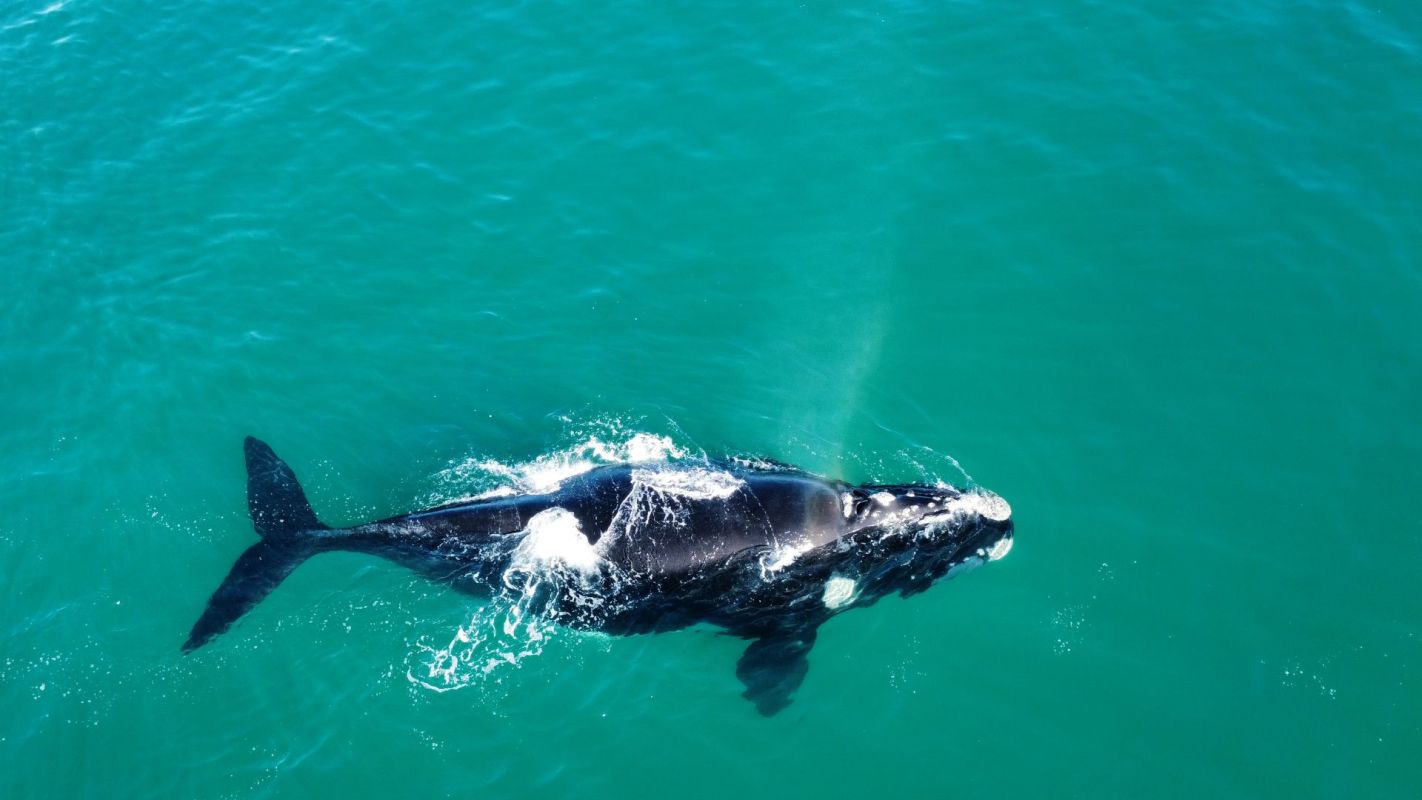
After days of dragging four buoys and about 328 feet of rope from its tail, a southern right whale was freed in a difficult rescue near New Zealand's southern coast.
The effort drew on coastal communities, responders, and fishers working together to protect a species once on the brink of extinction.
What happened?
Officials said the incident marked the first documented case of a southern right whale, or tohorā, becoming entangled in New Zealand waters. According to The Guardian, fishers first saw the 29.5-foot whale off Rakiura early Saturday, and rescuers later confirmed it was caught in a cod pot and line.
Jennifer Ross, the Department of Conservation's Rakiura operations manager, said the whale's condition didn't appear critical, though it showed signs of distress and could develop an infection from a wound on its tail.
The rescue was especially challenging because, as Ross told The Guardian, "Tohorā are among the most difficult whale species to disentangle."
When the call came in, Zac Penman, the Department of Conservation's expert in large whale disentanglement, was about 500 miles away at a surfing competition. He quickly headed in to assist.
TCD Picks » Quince Spotlight
💡These best-sellers from Quince deliver affordable, sustainable luxury for all




By Monday, the team had located the whale. A cod pot on the trailing rope had lodged among rocks below, keeping the animal in one place.
After the whale moved overnight toward Bluff and a ferry detour confirmed its location, rescuers reached it by boat Tuesday and spent 45 minutes cutting away the gear.
Why does it matter?
Southern right whales were hunted so heavily that they nearly vanished, and the Department of Conservation estimates that roughly 1,000 to 5,000 remain in New Zealand waters.
"This is an animal that every single one in this population counts," Penman told The Guardian.
Protecting vulnerable wildlife preserves marine ecosystems that coastal communities rely on for cultural identity, local economies, and biodiversity.
Fishers reported the whale, ferry staff helped responders save valuable time, and trained crews carried out the dangerous work needed to free it.
Public vigilance has helped save other whales in trouble, too, from a community-reported rescue of a humpback whale in Alaska to the ongoing effort to free an entangled North Atlantic right whale in Canada.
For Ngāi Tahu, the largest iwi, or tribe, on New Zealand's South Island, tohorā are a sacred species, adding another layer of significance to the effort.
What's being done?
The Department of Conservation used satellite tracking, specialized disentanglement training, and coordination with local crews to safely free the whale.
Ross called the outcome "excellent" and urged fishers to avoid setting more line than necessary, especially during migration season.
Officials also emphasized that whale rescues should be left to experts. "Whale disentanglement is extremely dangerous and should never be attempted by anyone without the right training and gear," Ross told The Guardian.
Rapid response can make a major difference as whales move through busy waters shared with boats and fishing activity.
"You think, 'Holy moly, I'm in the presence of something so much bigger than me,'" Penman told The Guardian.
Ross added, "But people reporting sightings quickly has meant we're able to get the right people in place to try and free the whale."

Get TCD's free newsletters for easy tips, smart advice, and a chance to earn $5,000 toward home upgrades. To see more stories like this one, change your Google preferences here.







