


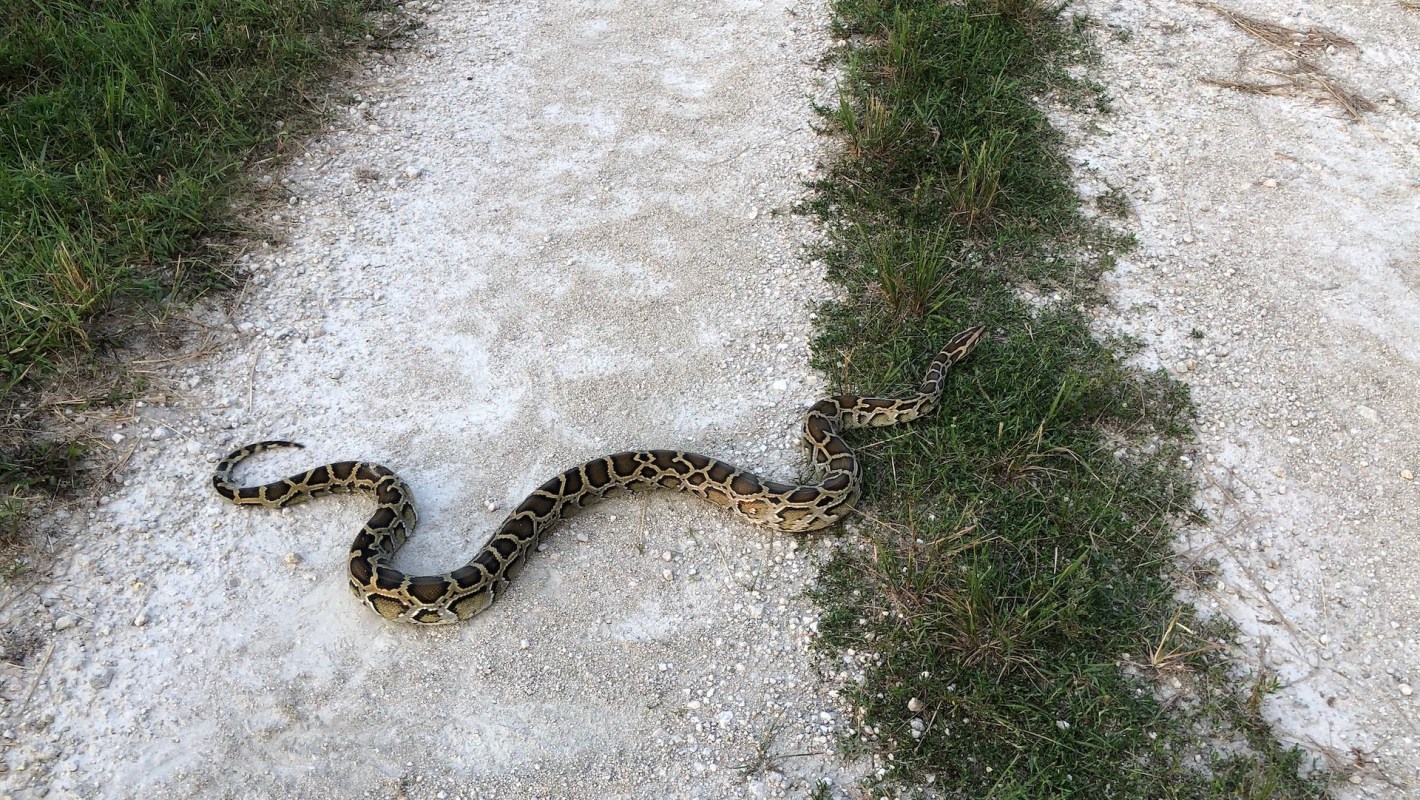
Updated maps of Burmese python sightings are sharpening worries about how much territory the invasive snakes now occupy in Florida.
With the state's annual Python Challenge having begun on Friday, July 10, wildlife officials have warned that the reptiles may be spreading beyond their longtime concentration in the Everglades.
What's happening?
Newsweek reported that Charlotte County in Southwest Florida has become a new focus of concern. Burmese pythons may be establishing themselves outside their longstanding South Florida range.
According to the U.S. Geological Survey's Nonindigenous Aquatic Species database, Burmese pythons can reach 20 feet long and 250 pounds.
Native to Southeast Asia, the snakes took hold in Florida after animals from the exotic pet trade escaped or were released, according to the National Invasive Species Information Center at the U.S. Department of Agriculture. Since then, they have thrived in Florida's warm, wet habitats with abundant prey.
State officials still consider the Everglades the center of the invasion, but the snakes may be moving naturally along the state's canals, wetlands, and other waterways, per Newsweek.
TCD Picks » Quince Spotlight
💡These best-sellers from Quince deliver affordable, sustainable luxury for all




Why does it matter?
Burmese pythons are top predators that can dramatically change ecosystems. They eat raccoons, opossums, rabbits, birds, deer, alligators, and even pets such as cats and dogs.
According to the Florida Fish and Wildlife Conservation Commission, Burmese pythons have helped drive steep declines among native species in South Florida. In Everglades National Park, observations of certain mammals, including raccoons and bobcats, dropped by 95% once pythons took hold.
Pythons have already turned up around South Florida homes, including one found coiled inside a tractor-trailer engine near Miami.
The farther the snakes spread, the harder and more expensive it could become for the state to protect native habitats, manage public lands, and limit risks to pets and local wildlife.
What's being done?
Florida is again turning to a mix of public awareness and targeted removal through the annual Florida Python Challenge, run by the FWC and the South Florida Water Management District.
The 2026 challenge opened at 12:01 a.m. on July 10 and runs until 5 p.m. on July 19. Competitors comb designated public lands in South Florida, including parts of the Everglades, and humanely remove pythons after finishing a mandatory online training course.
Ahead of this year's hunt, the FWC also urged searchers to work levee banks and treelines rather than wade in after pythons, since the water favors the snakes.
This year's event offers $25,000 in total prizes, including a $10,000 Ultimate Grand Prize for the person who removes the most pythons. The FWC said hunters have taken more than 27,000 Burmese pythons out of the wild in Florida since 2000, and last year's challenge drew 934 hunters from 30 states and Canada, who set a record with 294 removals.
Whether the snakes are breeding outside the Everglades isn't settled. But one female python may produce over 100 eggs in a clutch, and Florida officials said that makes the population hard to control once pythons settle somewhere new.

Get TCD's free newsletters for easy tips, smart advice, and a chance to earn $5,000 toward home upgrades. To see more stories like this one, change your Google preferences here.







